Musk Says He Will Give SpaceX Shares to American Children
Elon Musk says he plans to give each American child a SpaceX share next year, but eligibility and the number of shares involved remain unclear.

The short answer: According to EVANNEX, Elon Musk said he plans to give one of his SpaceX shares to every child in America next year. The age limit and other terms have not been announced.
Elon Musk says he plans to give one of his SpaceX shares to every child in America next year, according to EVANNEX. The announcement concerns Musk’s holdings in another company, but it draws attention from the EV industry because of his prominence in it. For now, the central question is how the proposed gift would work: the age limit, the number of recipients and the terms of distribution have not been announced.
EVANNEX reports that Musk made the announcement on X on October 19. In the post quoted by the outlet, Musk wrote, “Next year, I will give one of my SpaceX shares to every kid in America.” He added, “This will be the first of many.” The first sentence describes a gift of one share per child. The second suggests further distributions, but it gives no schedule, recipient criteria or share amounts for anything after the initial gift.
The distinction matters because even the size of the first distribution depends on who qualifies as a child. EVANNEX says the age criteria are unclear. A calculation in its report assumes eligibility through age 12, but Musk’s quoted statement does not set that limit. The outlet’s resulting estimates describe what would happen under its assumption; they do not establish the number of children who will receive shares.
What EVANNEX’s estimate assumes
Using its age cutoff, EVANNEX puts the number of U.S. children from birth through age 12 at 50.6 million. One share for each of those children would require 50.6 million shares. A broader or narrower definition of “kid” would change that total. The number also depends on the final eligibility rules, which have not been announced. Musk’s post states an intention to give a share to every child in America, while the outlet’s calculation assigns a specific age range so it can estimate the scale.
EVANNEX estimates that a gift of 50.6 million shares from Musk’s personal holdings would amount to $7.4 billion. That dollar figure rests on the outlet’s assumed recipient count and its valuation of the shares. It should therefore be read as an illustration of one possible distribution, rather than a confirmed value for the proposed gift. Musk did not give a dollar value in the statement quoted by EVANNEX.
The outlet also reports that SpaceX has 13.18 billion shares in total and that Musk owns 6.420 billion of them, representing a 48.71% beneficial equity stake. Under its 50.6 million share example, EVANNEX calculates that he would retain 6.3694 billion shares, or a 48.33% stake. The difference between those percentages is 0.38 percentage points. Those figures illustrate how the assumed gift would affect the holding described by EVANNEX; they do not settle how many shares Musk will ultimately transfer.
That calculation also assumes the shares would come from Musk’s personal holding. The quoted announcement says “one of my SpaceX shares,” but it does not describe the steps for transferring them. Until the recipient rules and distribution terms are announced, the precise number of shares, their eventual recipients and the size of Musk’s remaining stake cannot be determined from the announcement alone.
How the shares may reach children
EVANNEX reports that President Donald Trump said the shares would be distributed through Trump Accounts. The outlet quotes a post from his official X account thanking Musk for giving SpaceX stock to millions of American children through those accounts. That statement identifies a proposed route for distribution, but EVANNEX does not report a timetable or detailed rules for the transfer. The reference to “millions” likewise does not identify an age cutoff or a final recipient count.
The proposed use of Trump Accounts gives the announcement a possible delivery method, yet several practical questions remain open. EVANNEX does not report how a qualifying child would receive a share through an account, when a transfer would take place next year or how eligibility would be determined. Those details matter to families trying to understand whether the plan applies to a particular child. They also matter to any estimate of the total shares involved: a distribution method alone does not define who qualifies.
Musk’s phrase “the first of many” leaves a separate question about future gifts. EVANNEX suggests some children might eventually receive multiple shares, but that is a possibility raised by the outlet, not a term of the announcement it quotes. The reported commitment is one share for each child in the initial distribution next year. Neither the number of later distributions nor the number of shares in any later gift has been announced.
What the share estimates mean
EVANNEX presents a projection in which a share grows 25% each year for 10 years. That is an assumed growth rate, not an announced return or an outcome established by Musk’s proposed gift. The projection cannot tell families what a share will be worth when a child receives it or later holds it. A child’s eventual financial benefit would depend on the value of the share at the relevant time, which the quoted announcement does not establish.
The outlet argues that giving shares to children could build an attachment to SpaceX and interest in science and engineering. Those are EVANNEX’s expectations about a possible effect of broad ownership. They are distinct from the concrete proposal Musk described. A share transfer would put a company interest in a recipient’s hands under the terms eventually used; it would not, by itself, establish how children will respond to the gift or what choices they will make as they grow older.
EVANNEX also describes the proposal as a way to spread SpaceX ownership across American households. The scale of that outcome depends on the final rules. Under the outlet’s age assumption, the gift would reach tens of millions of children. Without a published age limit, the 50.6 million figure remains a scenario. The same qualification applies to EVANNEX’s estimates for the value of the gift and its effect on Musk’s percentage ownership.
What happens next
The next concrete step would be an announcement of eligibility and distribution terms. Those terms would show whether EVANNEX’s age 12 assumption resembles the actual plan, how many shares Musk intends to transfer and how Trump Accounts would be used. They would also clarify whether the proposed gift reaches every child described in Musk’s post and when recipients could expect a transfer.
For now, the account from EVANNEX establishes a public pledge and reports Trump’s statement about a possible distribution route. The outlet’s numerical estimates help show the scale if its assumptions hold, while its growth projection remains hypothetical. For EV readers following Musk’s business interests, the immediate development is the proposed SpaceX share gift; its reach and value will depend on details still to come.
Frequently asked questions
What did Elon Musk say he would give American children?
According to EVANNEX, Musk said he would give one of his SpaceX shares to every child in America next year.
What ages qualify for the proposed gift?
The age criteria have not been announced. EVANNEX used children through age 12 for its estimate.
How many shares could the gift involve?
EVANNEX estimates 50.6 million shares if every U.S. child from birth through age 12 receives one. The final total depends on the eligibility rules.
How would children receive the shares?
According to EVANNEX, President Donald Trump said the shares would be distributed through Trump Accounts. Detailed transfer rules have not been announced.
Related stories

Kansas Has the Lowest Average Public EV Charging Cost
Kansas had the lowest average public EV charging rate in late November, while Hawaii had the highest, highlighting wide state differences and pricing hurdles.
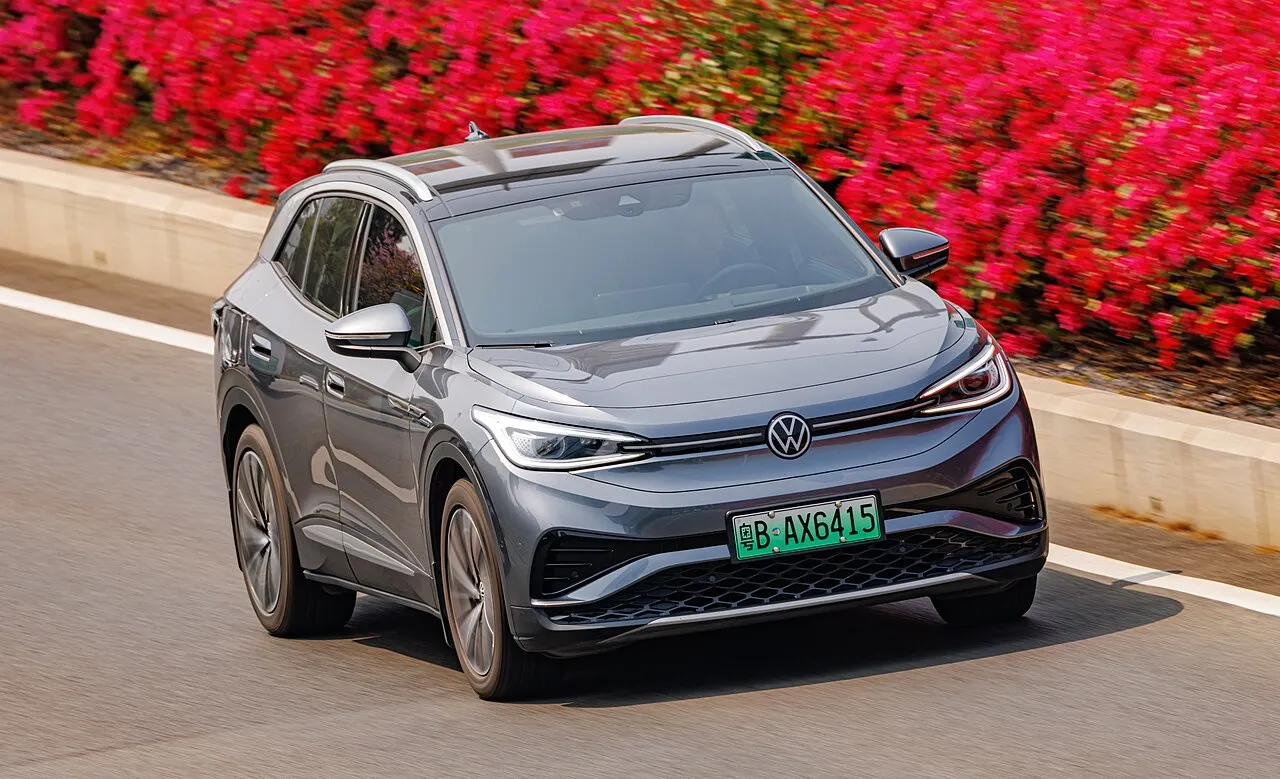
German Economist Floats Selling Volkswagen to Chinese Buyers
Moritz Schularick says Germany should consider selling Volkswagen while keeping production at home. No buyer, offer or takeover talks have been reported.

Senate Renews Push to Release NRMA EV Charging Report
Australia’s Senate has set a third deadline for the release of an NRMA report on delays to a national charging network, but its findings remain redacted.