Mitsubishi ASX VR-e Starts at A$45,990 in Australia
Mitsubishi’s electric SUV reaches Australia before the end of 2026 with four trims, up to 403 km of WLTP range and a conditional 10-year vehicle warranty.

The short answer: The Mitsubishi ASX VR-e will launch in Australia from A$45,990 drive-away, with arrivals expected before the end of 2026. Four trims share a 57.7-kWh battery, with WLTP range stretching from 328 km for the all-wheel-drive GSR to 403 km for the rear-wheel-drive LS.
Mitsubishi has announced Australian pricing for the ASX VR-e electric SUV, opening at A$45,990 drive-away ahead of showroom arrivals expected before the end of 2026, according to The Driven. The four-trim lineup gives compact electric SUV buyers another option, pairing a shared 57.7-kWh battery with a choice of rear-wheel drive or a performance-focused, dual-motor flagship.
The launch marks Mitsubishi’s second electric car for Australia, almost 16 years after the i-MiEV hatchback, The Driven reports. It also brings a clear choice within the range: the entry-level LS has the lowest price and longest rated driving range, while the GSR adds all-wheel drive and much quicker acceleration at a higher price and with less range.
Launch pricing puts the LS below the Kia EV3
The LS has a recommended retail price of A$46,740 before on-road costs, but its special launch offer reduces the total drive-away price to A$45,990 nationwide, according to The Driven. Those are different price measures: the retail figure excludes on-road costs, while the launch offer is the drive-away amount. All prices in this article are Australian dollars.
At the other end of the range, the GSR costs A$64,990 before on-road costs or A$68,990 drive-away, according to CarExpert. The Driven reports that Mitsubishi is offering promotional drive-away pricing across all four trims. Between the LS and GSR sit the Aspire and Exceed, giving buyers two additional equipment levels within the same battery-powered lineup.
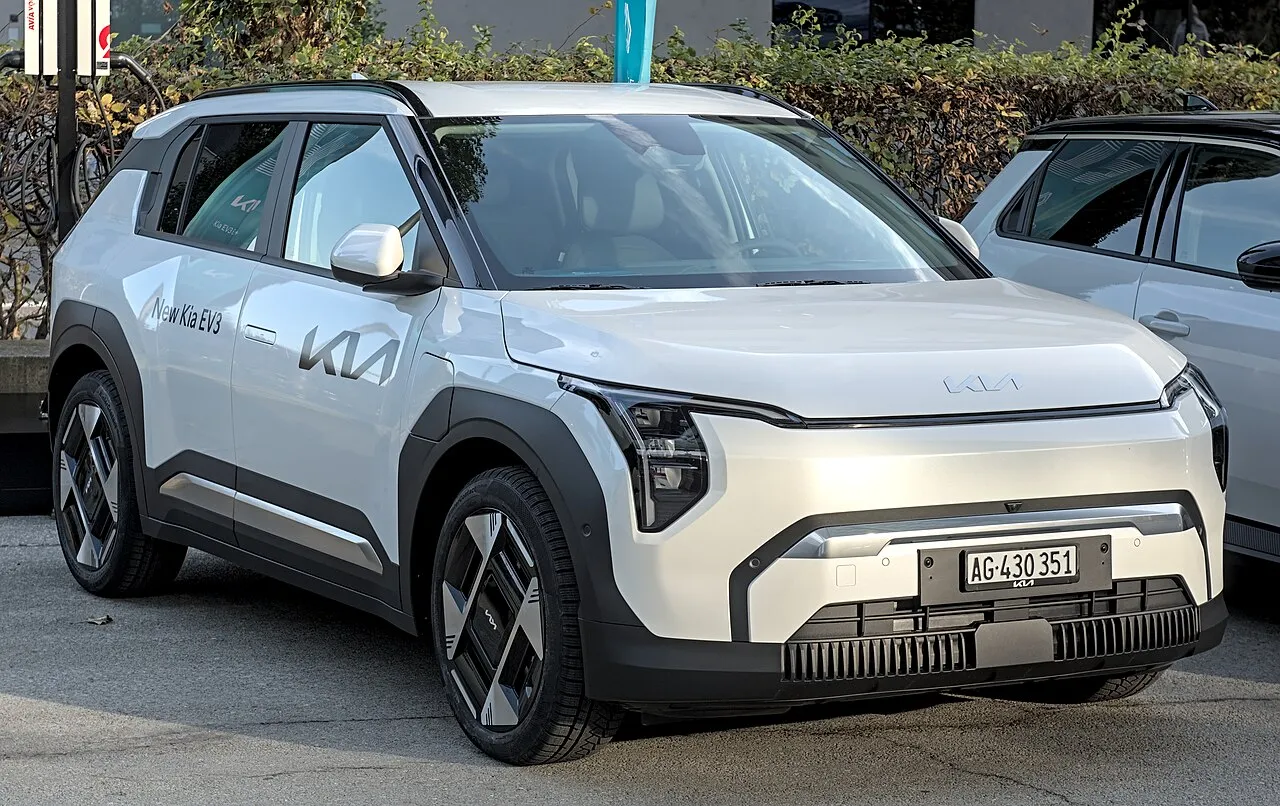
CarExpert places the ASX VR-e against the similarly sized Kia EV3, which costs A$47,600 to A$63,950 before on-road costs in Australia. Larger alternatives include the BYD Atto 3 Evo at A$41,990 to A$46,990 and Geely EX5 at A$41,990 to A$45,990, also before on-road costs. On that basis, Mitsubishi’s entry retail price falls below the Kia’s but above the starting prices of those two larger rivals.
One battery, four different range ratings
Every ASX VR-e uses a 57.7-kWh lithium iron phosphate battery from CATL, according to CarExpert and EV Central. Battery capacity therefore stays the same as buyers move through the range. The distance each version can cover under the WLTP test cycle varies, with the rear-drive LS delivering the longest rating and the dual-motor GSR the shortest.
EV Central reports the following Australian-market WLTP ratings:
| Trim | WLTP range |
|---|---|
| LS | 403 km |
| Aspire | 398 km |
| Exceed | 380 km |
| GSR | 328 km |
The GSR’s rating is 75 km below the LS despite their common battery capacity, according to EV Central. The smaller steps between the rear-drive versions also matter: the Aspire retains nearly all of the LS’s rated range, while the Exceed falls to 380 km. These are WLTP test-cycle figures for the Australian lineup, rather than EPA ratings.
The GSR counters its shorter range with a 342-kW dual-motor powertrain, EV Central reports. According to The Driven, Mitsubishi claims a 0–100 km/h time of 3.9 seconds, making it the fastest car the company has launched in Australia. That puts the flagship’s emphasis on acceleration and all-wheel-drive capability, while the LS remains the range leader.
Charging and power export across the lineup
Mitsubishi claims a 10–80% DC charging session takes approximately 30 minutes, with peak charging power of 134 kW, according to EV Central. AC charging reaches a maximum of 6.6 kW, with a 10–100% charge taking about 10 hours at that rate. The two quoted times cover different battery charge windows and different charging methods.
A portable Mode 2 charging cable comes standard, while a Mode 3 cable is available as a dealer accessory, EV Central reports. All four trims also have vehicle-to-load capability, allowing compatible external electrical equipment to draw power through the charging port. CarExpert says that capability can run small electrical appliances through an external outlet.
Drivers get five stages of regenerative braking and a dedicated one-pedal driving mode, according to CarExpert. Eco, comfort and sport driving modes are standard across the lineup, alongside light, standard and heavy steering settings. The GSR adds an adjustable front-to-rear power split, ranging from 50:50 to 30:70, giving the flagship another control beyond its extra motor.
A separate vehicle from the gasoline ASX
Despite sharing the ASX name, the electric SUV is unrelated to Mitsubishi’s existing gasoline-powered ASX, according to CarExpert. The ASX VR-e is built in Taiwan and based on the Foxtron Bria. Its arrival therefore introduces a different vehicle to Mitsubishi’s Australian range rather than an electric powertrain option for the current gasoline model.
CarExpert reports that Mitsubishi says the SUV underwent ride and handling development in Australia, Taiwan and Japan. Changes include revised damper tuning and larger rear bump-stop bushings intended to improve ride comfort. Mitsubishi also retuned the power steering to improve on-center feel and straight-line stability while reducing vibration, according to the outlet.
Inside, The Driven reports a 15.6-inch central display and a 9.2-inch instrument display behind the steering wheel. Apple CarPlay and Android Auto are available, and the cabin retains some physical buttons alongside touchscreen controls. Mitsubishi also supports over-the-air software updates, adding a way to update the vehicle’s software after purchase.
A dedicated phone app lets owners check charging status, estimated charging completion time and charging history, according to EV Central. Remote functions include climate control, locks and windows. For parking, CarExpert reports that Aspire and higher trims add a surround-view camera and front sensors; the LS has two rear parking sensors, compared with six on the other versions.
The long warranty comes with service conditions
The ASX VR-e’s vehicle warranty can run for 10 years or 200,000 km, whichever comes first, if scheduled servicing is completed on time at a Mitsubishi dealership, according to EV Central. Otherwise, coverage is five years or 100,000 km. The longer term is therefore tied to how owners maintain the vehicle, rather than applying automatically throughout ownership.
The battery has separate coverage of eight years or 160,000 km, with a guarantee of at least 70% of usable energy capacity over that period, EV Central reports. CarExpert also reports an initial 12 months of roadside assistance, extendable to a maximum of 10 years through servicing with Mitsubishi.
Scheduled maintenance is due every 12 months or 15,000 km, whichever comes first. According to EV Central, the first visit costs A$199, the first five services total A$1,495 and the first 10 total A$4,490. The sixth, eighth and tenth visits are the most expensive at A$799 each. The capped-price schedule covers 10 years or 150,000 km, whichever comes first, and work outside scheduled servicing costs extra.
Dealer arrivals expected before year-end
The first ASX VR-e vehicles are expected to reach Mitsubishi’s Australian dealer network before the end of 2026, according to The Driven. CarExpert reports that the model has yet to be assessed by ANCAP, the independent safety authority. Pricing, range, charging claims and scheduled maintenance costs are now established ahead of that arrival, giving buyers a clearer basis for choosing among the four trims.
Frequently asked questions
How much does the Mitsubishi ASX VR-e cost in Australia?
The LS launches at A$45,990 drive-away nationwide, according to The Driven. CarExpert reports that the flagship GSR costs A$68,990 drive-away, or A$64,990 before on-road costs.
What is the ASX VR-e’s driving range?
According to EV Central, Australian-market WLTP range is 403 km for the LS, 398 km for the Aspire, 380 km for the Exceed and 328 km for the GSR. All four use a 57.7-kWh CATL lithium iron phosphate battery.
How quickly can the ASX VR-e charge?
According to EV Central, Mitsubishi claims approximately 30 minutes for a 10–80% DC charge, with peak power of 134 kW. AC charging tops out at 6.6 kW, with a 10–100% charge taking about 10 hours at that rate.
Does the ASX VR-e have a 10-year warranty?
Vehicle coverage extends to 10 years or 200,000 km if scheduled servicing is completed on time at Mitsubishi dealerships, according to EV Central. Otherwise, it is five years or 100,000 km; the battery has separate eight-year or 160,000-km coverage with a 70% usable-capacity guarantee.
When will the ASX VR-e reach Australian dealers?
The Driven reports that the first vehicles are expected to arrive at Mitsubishi’s Australian dealer network before the end of 2026.
Related stories

Chevrolet Blazer EV SS Earns Its Place in SS History
Car and Driver says the 615-hp Blazer EV SS is worthy of Chevrolet’s Super Sport badge, pairing quick acceleration with upgraded brakes and tires.
Kia EV3 Loses Australian Buyers to BYD on Price and Features
A couple who considered Kia’s EV3 chose a BYD Atto 3 instead, weighing price, equipment, styling, dealer experience and concerns about long-term support.

Nio Launches ES8 Mirror Black Edition 2.0 in China
Nio’s ES8 Mirror Black Edition 2.0 adds black-and-gold trim and starts at 434,800 yuan in China, while retaining the standard ES8’s core hardware.