Kia EV9 vs Volvo EX60: Which Electric SUV Should You Buy?
Compare Kia EV9 and Volvo EX60 EPA range, charging, battery size, performance and US pricing, with clear distinctions between US and European versions.
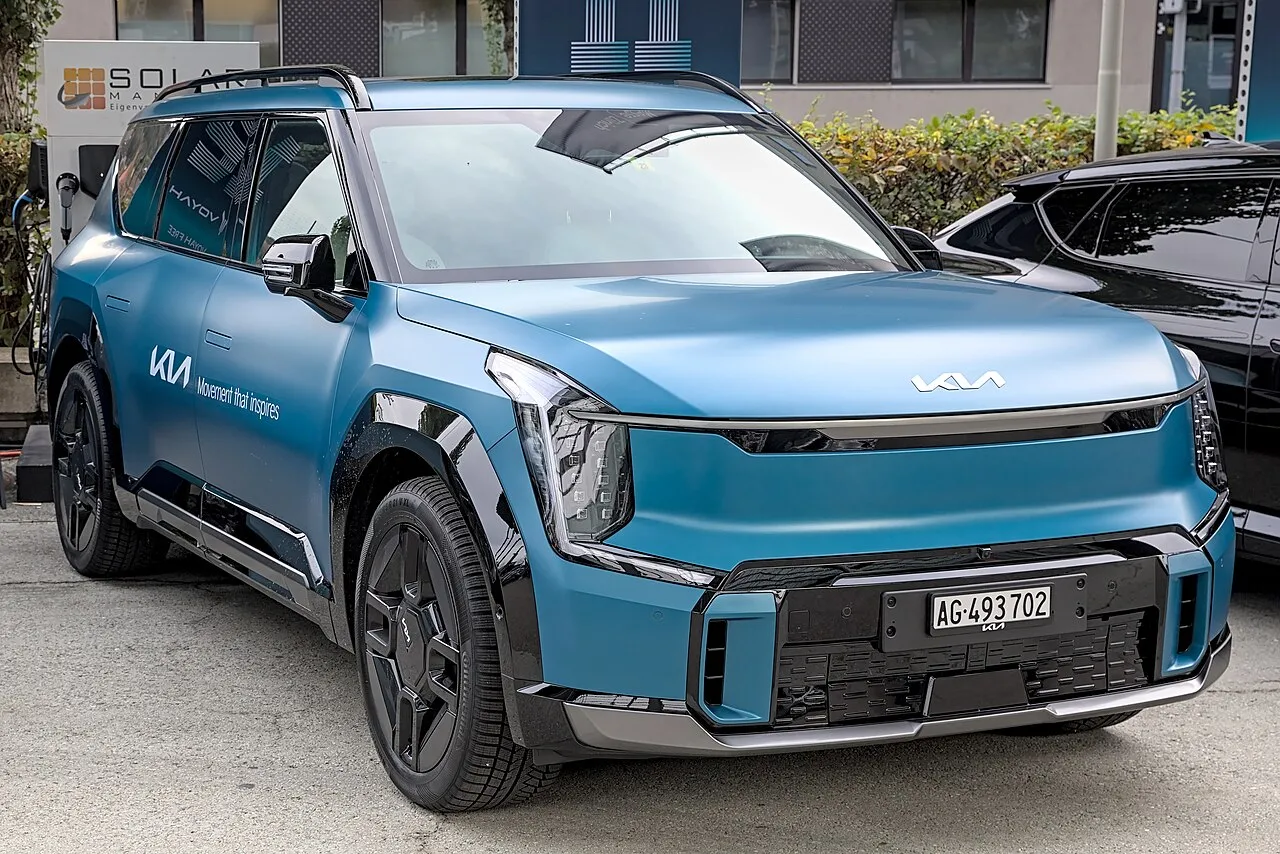
The short answer: The Volvo EX60 leads on US EPA range, with up to 330 miles versus the Kia EV9’s 305 miles, and has shorter published Level 2 charging times. The EV9 is larger in the European versions compared here, while the EX60 P6 has a published US starting price of $58,400; a US EV9 starting price has not been published.
The Volvo EX60 is the stronger choice for a US shopper prioritizing EPA range and shorter published Level 2 charging times. The Kia EV9 makes more sense for someone seeking a larger SUV, based on European dimensions. Price cannot yet settle the comparison: the US EX60 P6 has a published starting price of $58,400, dated October 2026, while a US EV9 starting price has not been published.
The comparison needs two distinct frames. US EPA ratings support direct range comparisons for the 2027 models. Battery capacities, peak charging power, acceleration and most dimensions below describe European versions, according to EVDB. Those figures help explain the vehicles, but they do not establish identical capabilities for US trims.
US range, charging and price at a glance
The table identifies each version’s market, model year and measurement basis. EPA and WLTP range figures belong to different testing systems and should be read separately. Manufacturer dimensions and charging power are not range-test results; where no test protocol is identified, that limitation is explicit.
| Vehicle and version | Market and model year | Range and test standard | Battery, charging, performance, size or price | Source and measurement basis |
|---|---|---|---|---|
| Kia EV9 Standard Range RWD | US, 2027 | 230 miles, EPA | Level 2 full charge: 8.1 hours | US EPA fueleconomy.gov; EPA range and published Level 2 time |
| Kia EV9 Long Range RWD | US, 2027 | 305 miles, EPA | Level 2 full charge: 10.7 hours | US EPA fueleconomy.gov; EPA range and published Level 2 time |
| Kia EV9 Long Range AWD | US, 2027 | 283 miles, EPA | Level 2 full charge: 10.7 hours | US EPA fueleconomy.gov; EPA range and published Level 2 time |
| Kia EV9 Long Range AWD GT-Line | US, 2027 | 280 miles, EPA | Level 2 full charge: 10.5 hours | US EPA fueleconomy.gov; EPA range and published Level 2 time |
| Volvo EX60 P6 Electric, RWD | US, 2027 | 307 miles, EPA | Level 2 full charge: 8 hours; starting price: $58,400, October 2026 | US EPA fueleconomy.gov; EPA range, published Level 2 time and US price record |
| Volvo EX60 P6 Electric, RWD, 22-inch wheels | US, 2027 | 295 miles, EPA | Level 2 full charge: 8 hours | US EPA fueleconomy.gov; EPA range and published Level 2 time |
| Volvo EX60 P10 AWD Electric | US, 2027 | 330 miles, EPA | Level 2 full charge: 9 hours | US EPA fueleconomy.gov; EPA range and published Level 2 time |
| Volvo EX60 P10 AWD Electric, 22-inch wheels | US, 2027 | 312 miles, EPA | Level 2 full charge: 9 hours | US EPA fueleconomy.gov; EPA range and published Level 2 time |
| Kia EV9 Air RWD | Europe, 2025 | 563 km, WLTP | Battery: 99.8 kWh gross and usable; AC: 11 kW; peak DC: 233 kW; output: 160 kW, 350 Nm; 0–100 km/h: 8.3 seconds; length/width/height: 5,010/1,980/1,755 mm; wheelbase: 3,100 mm | EVDB; WLTP range, published technical figures; other test protocols unspecified |
| Kia EV9 GT AWD | Europe, 2025 | 490 km, WLTP | Battery: 99.8 kWh gross and usable; AC: 11 kW; peak DC: 233 kW; output: 379 kW, 700 Nm; 0–100 km/h: 4.3 seconds; length/width/height: 5,015/1,980/1,755 mm; wheelbase: 3,100 mm | EVDB; WLTP range, published technical figures; other test protocols unspecified |
| Volvo EX60 P10 AWD | Europe, 2027 | 660 km, WLTP | Battery: 95 kWh gross, 91 kWh usable; AC: 22 kW; peak DC: 370 kW; output: 375 kW, 710 Nm; 0–100 km/h: 4.6 seconds; length/width/height: 4,690/1,910/1,630 mm; wheelbase: 2,870 mm | EVDB; WLTP range, published technical figures; other test protocols unspecified |
| Volvo EX60 P12 AWD | Europe, 2027 | 810 km, WLTP | Battery: 117 kWh gross, 112 kWh usable; AC: 22 kW; peak DC: 370 kW; output: 500 kW, 790 Nm; 0–100 km/h: 3.9 seconds; length/width/height: 4,690/1,910/1,630 mm; wheelbase: 2,870 mm | EVDB; WLTP range, published technical figures; other test protocols unspecified |
EPA range favors the EX60, especially with AWD
For the 2027 US models, EPA ratings put the EX60 P10 AWD at 330 miles and the EV9 Long Range RWD at 305 miles. That gives Volvo the higher maximum even though the Kia achieving its best range uses rear-wheel drive.
Comparing AWD versions makes the difference more pronounced. The US 2027 EV9 Long Range AWD earns 283 miles, against 330 miles for the EX60 P10 AWD. The Kia GT-Line’s 280-mile rating is slightly lower again. Buyers who want both AWD and the longest EPA-rated range have a clear reason to favor the Volvo.
The rear-wheel-drive comparison is closer. The US 2027 EX60 P6’s 307-mile EPA rating sits just above the EV9 Long Range RWD’s 305 miles. Wheel choice changes that result: the P6 with 22-inch wheels earns 295 miles. The P10 also drops with that wheel configuration, to 312 miles. Choosing the exact version matters more than comparing model names alone.
Battery size requires a European comparison
US battery capacities have not been published. EVDB identifies a 99.8-kWh battery, both gross and usable, for the European 2025 EV9 Air RWD and GT AWD. For the European 2027 EX60, it gives the P10 a 95-kWh gross battery with 91 kWh usable, and the P12 a 117-kWh gross battery with 112 kWh usable.
Usable capacity describes the energy available for driving, while gross capacity describes the total pack capacity. Keeping those measures separate prevents an uneven comparison. On EVDB’s usable figures, the European EX60 P10 has a smaller battery than either European Kia here, while the P12 has a larger one.
EVDB’s European range figures use WLTP: 563 km for the EV9 Air, 490 km for the EV9 GT, 660 km for the EX60 P10 and 810 km for the EX60 P12. These describe different versions from the US EPA entries. The P12’s WLTP result cannot serve as a US range claim, and a US P12 EPA rating has not been published.
Charging time and peak charging power tell different stories
US EPA fueleconomy.gov gives the 2027 EX60 P6 an eight-hour Level 2 full-charge time and the P10 nine hours. The equivalent published times for the 2027 EV9 run from 8.1 hours for Standard Range RWD to 10.7 hours for Long Range RWD and Long Range AWD. GT-Line takes 10.5 hours.
That favors the Volvo in published full-charge duration, particularly when comparing the longer-range versions. However, those times do not establish equal charging conditions or equal amounts of energy added. A full-charge duration also answers a different question from how quickly a vehicle can replenish energy during a highway stop.
For DC charging, EVDB gives both European 2025 EV9 versions a 233-kW peak, versus 370 kW for both European 2027 EX60 versions. Their AC ratings are 11 kW and 22 kW, respectively. These are power figures for European vehicles. A peak alone does not reveal sustained charging performance, and comparable charging-session times have not been published.
Performance and size favor different priorities
EVDB’s European acceleration figures distinguish the performance choices. The 2025 EV9 Air RWD reaches 100 km/h in 8.3 seconds; the GT AWD takes 4.3 seconds. The 2027 EX60 P10 AWD takes 4.6 seconds, while the P12 AWD takes 3.9 seconds. These are published 0–100 km/h figures, not US 0–60 mph results.
The European EV9 GT and EX60 P10 also have similar power outputs: 379 kW and 375 kW, respectively. The EX60 P12 moves higher at 500 kW. Those figures support a comparison of these European trims, but US acceleration and output figures have not been published.
For exterior size, EVDB’s European 2025 EV9 Air is longer, wider and taller than the European 2027 EX60 P10 and P12. It also has the longer wheelbase. That makes the Kia the larger vehicle in this comparison, although exterior dimensions alone do not establish passenger space or cargo capacity.
Which buyer suits each SUV?
Choose the EX60 if EPA range leads your priorities. The US 2027 P10 AWD combines the highest EPA range here with AWD, while the P6 offers almost the same EPA range as the longest-range EV9. Its published US starting price gives shoppers a concrete entry point, though pricing for other US EX60 versions has not been published.
Consider the EV9 if you want a larger SUV. Its European dimensions support that distinction, and the US Long Range RWD offers its strongest EPA range. Buyers considering AWD should weigh the lower EPA ratings against their drivetrain preference. A final value judgment must wait for a published US EV9 starting price; European prices cannot establish what either vehicle costs an American buyer.
Frequently asked questions
Which has more EPA range, the Kia EV9 or Volvo EX60?
For US 2027 models, the Volvo EX60 P10 AWD has the highest EPA rating at 330 miles. The Kia EV9’s highest rating is 305 miles for Long Range RWD, according to US EPA fueleconomy.gov.
What are their US starting prices?
The US 2027 Volvo EX60 P6 Electric has a published starting price of $58,400, dated October 2026. A US Kia EV9 starting price has not been published.
Does the Volvo EX60 charge faster than the Kia EV9?
US EPA fueleconomy.gov gives the 2027 EX60 Level 2 full-charge times of eight or nine hours, versus 8.1–10.7 hours for the 2027 EV9. EVDB reports higher peak DC power for European 2027 EX60 versions than European 2025 EV9 versions, but those peaks do not establish comparable charging-session times.
Which SUV is larger?
EVDB’s European dimensions show the 2025 Kia EV9 Air RWD is longer, wider and taller, with a longer wheelbase, than the 2027 Volvo EX60 P10 and P12. These dimensions do not establish US passenger or cargo capacity.
How do 22-inch wheels affect the EX60’s EPA range?
For US 2027 models, EPA ratings fall from 307 to 295 miles for the EX60 P6 and from 330 to 312 miles for the P10 AWD when comparing their versions with 22-inch wheels.
Related stories

How to Choose an EV When Homes Share a Transformer
A shared transformer can limit when several homes charge at once. Learn what to ask your utility and installer before choosing an EV or charger.

How to Choose an EV for Caregiving and Support Trips
Compare passenger access, rear-seat comfort, equipment storage and charging routines to find an EV that fits recurring appointments and support trips.

Choosing 120V or 240V Charging for an EV at Home
A standard outlet may work for an EV that sits parked for long stretches. A 240V setup adds charging power, which can matter when daily driving uses more energy.