Kia EV4 vs. Volkswagen ID.7: Choosing a Family Sedan
The EV4 and ID.7 suit different family-car needs. Compare their published range, charging and size figures, and see where seating and cargo details remain unclear.
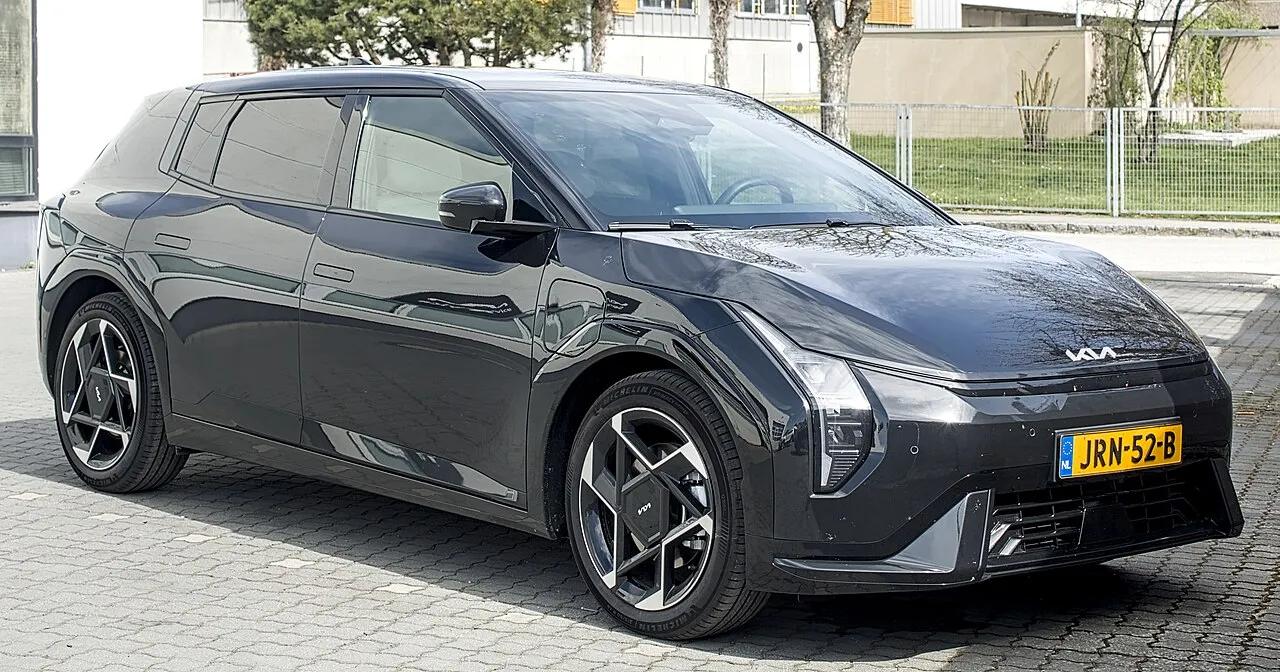
The short answer: The Kia EV4 is the more compact choice, with Canadian 2026 range ratings that vary by trim; the Volkswagen ID.7 is a larger European sedan with longer WLTP range in some versions and higher listed peak DC charging power. The figures do not settle which has more usable passenger or cargo space, since comparable seating and cargo details have not been published here.
For families choosing between the Kia EV4 and Volkswagen ID.7, the EV4 is the more compact sedan, while the ID.7 is a larger car with a longer wheelbase and higher peak DC charging figures in the European versions shown here. The better fit depends on whether you value a smaller footprint or the ID.7’s longer stated WLTP range in some trims. There is not enough comparable information to declare a winner for seating comfort, cargo capacity, real-world efficiency or ride quality.
That distinction matters because the available figures cover different markets, model years and test standards. Kia’s Canadian 2026 range ratings use NRCan; the European 2025 EV4 and 2026 ID.7 range ratings use WLTP. They should be read within their own standards, not compared as if they were measured on the same basis. The table also includes European charging and size figures from EVDB, Kia charging information from Open EV Data (Kilowatt), and Canadian Level 2 charging times and power from Natural Resources Canada.
Published figures by market and version
| Vehicle and version | Market, model year and source | Range and standard | Charging | Size and power |
|---|---|---|---|---|
| Kia EV4 Light | Canada, 2026; Natural Resources Canada | 391 km, NRCan | Level 2 full charge: 5.9 hours; 150 kW | Not published |
| Kia EV4 Wind | Canada, 2026; Natural Resources Canada | 552 km, NRCan | Level 2 full charge: 8.1 hours; 150 kW | Not published |
| Kia EV4 Wind Premium | Canada, 2026; Natural Resources Canada | 515 km, NRCan | Level 2 full charge: 8.1 hours; 150 kW | Not published |
| Kia EV4 GT-Line | Canada, 2026; Natural Resources Canada | 488 km, NRCan | Level 2 full charge: 9.1 hours; 150 kW | Not published |
| Kia EV4 58.3 kWh | Europe, 2025; EVDB | 458 km, WLTP | AC: 11 kW; peak DC: 135 kW | Length: 4,610 mm; wheelbase: 2,830 mm; power: 150 kW |
| Kia EV4 81.4 kWh | Europe, 2025; EVDB | 625 km, WLTP | AC: 11 kW; peak DC: 135 kW | Length: 4,635 mm; wheelbase: 2,830 mm; power: 150 kW |
| Kia EV4 Fastback 58.3 kWh | Europe, 2025; EVDB | 450 km, WLTP | AC: 11 kW; peak DC: 135 kW | Length: 4,430 mm; wheelbase: 2,820 mm; power: 150 kW |
| Kia EV4 Fastback 81.4 kWh | Europe, 2025; EVDB | 633 km, WLTP | AC: 11 kW; peak DC: 135 kW | Length: 4,430 mm; wheelbase: 2,820 mm; power: 150 kW |
| Volkswagen ID.7 Pro | Europe, 2026; EVDB | 628 km, WLTP | AC: 11 kW; peak DC: 175 kW | Length: 4,961 mm; wheelbase: 2,966 mm; power: 210 kW |
| Volkswagen ID.7 Pro S | Europe, 2026; EVDB | 709 km, WLTP | AC: 11 kW; peak DC: 200 kW | Length: 4,961 mm; wheelbase: 2,966 mm; power: 210 kW |
| Volkswagen ID.7 GTX | Europe, 2026; EVDB | 595 km, WLTP | AC: 11 kW; peak DC: 200 kW | Length: 4,961 mm; wheelbase: 2,971 mm; power: 250 kW |
European Kia dimensions, battery details, drive layouts and performance figures are from EVDB; the European Standard Range hatchback’s 55 kWh usable battery, 80 kW AC charging and 100 kW peak DC charging are from Open EV Data (Kilowatt). Canadian range, charging time and power are from Natural Resources Canada. The table includes selected versions to keep the market and test-standard differences visible. It does not imply that every trim is available in the United States.
Size and everyday maneuvering
The size gap is clear in the European figures. The ID.7 Pro is 4,961 mm long, compared with 4,610 mm for the European EV4 58.3 kWh sedan and 4,635 mm for the 81.4 kWh sedan. The ID.7’s wheelbase is also longer: 2,966 mm for the Pro and Pro S, against 2,830 mm for those EV4 sedans. These measurements make the ID.7 the larger car on paper, but exterior dimensions alone do not establish how much room passengers have inside.
A smaller outside footprint can make parking and fitting into a tight space easier in principle; a longer wheelbase can be useful when a car is designed to allocate space to its cabin. Those are practical considerations, not measured results for these particular models. No turning circle, cabin measurements or direct parking comparison is published here, so a buyer should treat the dimensions as a guide to overall scale rather than a complete account of ease of use.
The European EV4 Fastback adds another shape to consider. Its listed length is 4,430 mm, shorter than the European EV4 sedan, and its wheelbase is 2,820 mm. A sloping fastback roof can affect how a vehicle opens and how tall objects fit, but the figures here do not specify the Fastback’s cargo opening or usable cargo volume. The name and measurements alone cannot establish whether its rear space is more convenient for a family’s gear.
Seating, cargo access and ride comfort
Neither the passenger count nor comparable rear-seat measurements are published for these versions. There are also no headroom, legroom or child-seat fit figures. That leaves an important family-car question unanswered: the larger ID.7 cannot be assumed to have more comfortable rear seating just from its longer wheelbase, and the EV4 cannot be dismissed as cramped based on its shorter length. Families comparing them should look for market-specific cabin information and assess the actual seating position and access they need.
Cargo capacity and opening dimensions are also missing, so there is no sound basis here for ranking trunk volume, loading height, stroller access or the ease of carrying bulky items. A sedan’s rear opening and a fastback’s hatch-style access can make a practical difference, but the body-style label is not a substitute for measured opening size or a clear description of how the rear compartment is arranged. The European EV4 has sedan and Fastback entries, while the European ID.7 versions shown are Pro, GTX and Pro S sedans.
There are no ride-comfort evaluations, suspension details or noise measurements for a direct comparison. A longer wheelbase is a dimension, not proof of a smoother ride. Wheel and tire equipment, road surface, suspension tuning and passenger expectations can all affect comfort, and this information does not establish how either car performs on a particular trip. The sensible conclusion is that comfort needs a separate, version-specific assessment rather than a verdict based on size alone.
Range, efficiency and charging
For European versions, the ID.7 Pro S has the highest listed WLTP range among the versions in the table at 709 km. The European EV4 sedan ratings are 458 km for the 58.3 kWh version and 625 km for the 81.4 kWh version; the Fastback entries are 450 km and 633 km. Those figures identify rated range under WLTP. They do not establish how far a family will travel in everyday conditions, and they do not amount to a direct efficiency comparison because energy consumption figures are not included.
Kia’s Canadian 2026 EV4 ratings show a different trim pattern under NRCan: the Wind is rated at 552 km, Wind Premium at 515 km, GT-Line at 488 km and Light at 391 km. They are Canadian figures using a different test standard from the European WLTP numbers. The rating for one market should not be used to claim that a version is more efficient than a vehicle rated in another market.
European EVDB figures give the ID.7 a peak DC charging rate of 175 kW for Pro and 200 kW for Pro S and GTX. The European EV4 versions in the table are listed at 135 kW peak DC. Both cars are listed with 11 kW AC charging in these European entries. Peak power is a maximum figure, not a promise that charging will stay at that rate throughout a session; charging time also depends on conditions and the charging equipment. The Canadian EV4 entries give Level 2 full-charge times and 150 kW power, but do not provide a directly comparable ID.7 figure for that market.
For home charging, the Canadian EV4 Light is listed at 5.9 hours for a Level 2 full charge, compared with 8.1 hours for Wind and Wind Premium and 9.1 hours for GT-Line. These are model-specific ratings from Natural Resources Canada. They make clear that the reported time differs across trims, but do not support an equivalent comparison with the European AC charging rates or with an ID.7 version.
Which one fits better?
The EV4 is the more promising starting point for a shopper prioritizing a shorter sedan, especially if choosing among the Canadian versions with their NRCan range ratings or comparing European EV4 battery options. The ID.7 is the stronger paper fit for someone prioritizing a larger vehicle and the longer listed WLTP range of the Pro S, along with higher peak DC charging figures in its European versions. Neither conclusion predicts real-world range or charging time.
For a family, the final choice turns on details the published figures here cannot resolve: rear-seat fit, ease of loading, actual cargo capacity and ride comfort. Those details should be checked for the exact market and body style under consideration. The range and dimensions help narrow the comparison, but they are not enough to establish which car will carry a particular family more comfortably or conveniently.
Frequently asked questions
Which has the longer published range, the Kia EV4 or Volkswagen ID.7?
Among the European versions shown, the Volkswagen ID.7 Pro S has a 709 km WLTP rating. The European Kia EV4 entries range from 450 to 633 km WLTP. Canadian EV4 ratings use NRCan and should not be compared directly with WLTP figures.
Which car is larger?
The European Volkswagen ID.7 Pro is 4,961 mm long with a 2,966 mm wheelbase. The European Kia EV4 sedans listed are 4,610 or 4,635 mm long, with a 2,830 mm wheelbase.
Does the EV4 or ID.7 have more cargo space?
Comparable cargo capacities and opening dimensions have not been published for the versions discussed, so the figures here do not establish which carries more or is easier to load.
Which has the higher listed peak DC charging power?
The European ID.7 Pro S and GTX are listed at 200 kW peak DC, while the European EV4 versions shown are listed at 135 kW. These are peak ratings, not charging-session times.
Related stories

How to Build a Flexible EV Charging Routine for Work
Build charging around the miles you need for your next drive, using home, work, or public charging as your schedule allows. Keep a practical buffer.

How to Choose an EV When It’s Your Household’s Only Car
Compare home charging, everyday range flexibility, and service access to find an EV that can handle your household’s needs without a backup car.

How to Check Whether an EV Can Carry a Roof Tent
Compare an EV’s roof-load limit, approved mounting points and tent hardware before buying. Then account for added wind resistance, noise and energy use.