Kia EV3 vs. Volkswagen ID.4: Which Electric SUV Fits?
The Kia EV3 is the smaller choice, while the Volkswagen ID.4 has a longer body. Compare U.S. EPA range and charging figures, with market differences in view.
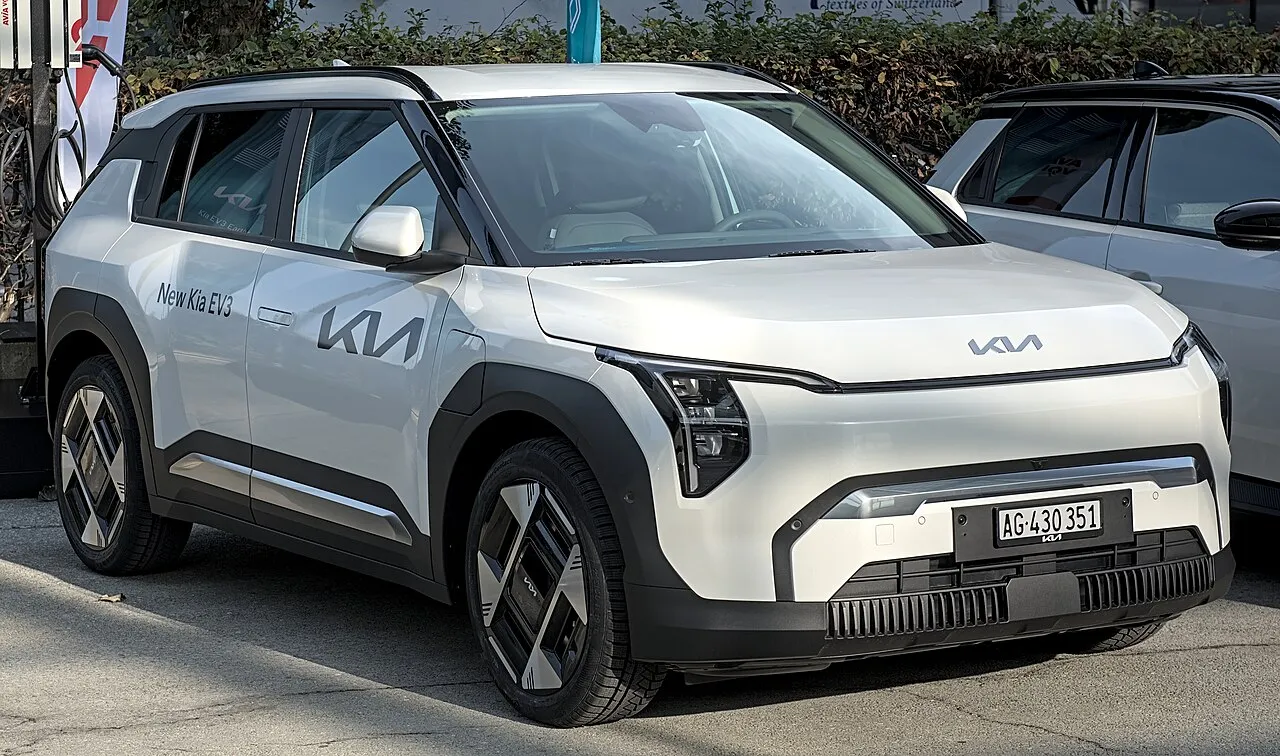
The short answer: The Kia EV3 is the better fit if you want a smaller SUV and the longest EPA range among the listed U.S. versions: its Long Range FWD is rated at 321 miles. The Volkswagen ID.4 is longer in the European dimensions listed here and its U.S. RWD version is rated at 291 miles, but cabin and cargo capacity figures are not available for a direct comparison.
For a smaller footprint and the longest EPA-rated range among the U.S. versions listed here, choose the Kia EV3 Long Range FWD. If you want the larger-bodied SUV, the Volkswagen ID.4 is the longer vehicle in the European dimensions available for both models; its U.S. RWD version is EPA-rated at 291 miles. The right choice depends on whether you value the EV3’s shorter body and higher front-wheel-drive range, or the ID.4’s larger exterior dimensions and the range offered by its particular drivetrain.
Those figures describe different model years and trims, and the dimensions come from European versions. They do not establish how much passenger room or cargo space either U.S. model has. EPA range is the relevant comparison for U.S. shoppers; European WLTP figures should be read separately, not ranked against EPA ratings.
Range depends on market and drivetrain
For U.S. model year 2027, the EV3 has three listed Long Range choices: FWD at 321 miles, AWD at 280 miles, and Long Range GT AWD also at 280 miles. Its Standard Range FWD is rated at 221 miles. The 41-mile gap between the Long Range FWD and AWD versions shows why it is important to compare trims as well as model names. All of these figures are EPA ratings from US EPA fueleconomy.gov.
The 2026 U.S. ID.4 is EPA-rated at 291 miles in RWD form and 263 miles in AWD form, also according to US EPA fueleconomy.gov. That makes the EV3 Long Range FWD’s rating higher than the listed ID.4 RWD rating, while the ID.4 RWD rating is higher than the EV3 Long Range AWD ratings. The comparison changes with the chosen version, so a broad claim that one nameplate always has more range would be misleading.
EPA range is a standardized estimate, not a promise of the distance available on every trip. Speed, weather, terrain, cabin heating or cooling, and driving style affect energy use. The rating is most useful for comparing U.S. versions assessed under the same standard. For a shopper, the next step is to consider which version’s rating leaves enough room for regular routes and occasional longer drives.
Size and cabin utility
European 2025 model figures put the EV3 at 4,300 millimeters long, 1,850 millimeters wide, and 1,560 millimeters high, with a 2,680-millimeter wheelbase. The European 2025 ID.4 Pro and GTX are listed at 4,584 millimeters long, 1,852 millimeters wide, and 1,642 millimeters high. Their wheelbases are 2,765 millimeters. These measurements point to a meaningful difference in overall length and height, while the listed widths are close.
That size distinction can matter in tight parking spaces, narrow garages, or streets where turning and positioning a vehicle takes care. But exterior dimensions do not tell the whole story of everyday utility. Wheelbase alone cannot establish rear-seat comfort, and vehicle length does not reveal how much luggage fits behind the rear seats. Cargo volume, interior measurements, seat-folding details, and U.S. dimensions are not published here, so a precise cabin or load-space verdict would go beyond what these figures support.
For practical shopping, compare the vehicles in person if possible: sit in the front and rear seats, bring the child seats or bulky items you regularly use, and check the cargo opening and loading height. Those checks answer fit questions that exterior measurements cannot. The available dimensions still offer a useful first filter: the EV3 is the more compact shape in the European comparison, while the ID.4 occupies more length and height.
Home charging and longer stops
For U.S. model year 2027, EPA listings give the EV3 Standard Range FWD a Level 2 full-charge time of 6.2 hours. The EV3 Long Range FWD is listed at 8.8 hours; the Long Range AWD is listed at 7.9 hours; and the Long Range GT AWD is listed at 8.8 hours. The U.S. 2026 ID.4 RWD and AWD are each listed at eight hours for a Level 2 full charge by US EPA fueleconomy.gov.
These are stated full-charge times, useful for a broad home-charging comparison. Actual charging time depends on the charging equipment and conditions, and a routine overnight session usually does not need to begin with an empty battery or end at full. A driver who can charge at home may care more about whether regular overnight charging replenishes their typical daily use than about the time from empty to full.
Peak DC charging figures appear for the European versions, not the U.S. trims in the EPA entries. EVDB lists 128 kilowatts for the 2025 European EV3 Long Range and 102 kilowatts for its Standard Range. For the 2025 European ID.4, EVDB lists 135 kilowatts for Pro and GTX, and 175 kilowatts for Pro 4Motion. Those peak figures alone cannot establish which vehicle will finish a public charging stop sooner: charging time also depends on the charging curve, battery conditions, and the station. They also describe European versions, so they should not be treated as U.S. charging specifications.
What the European figures add
European WLTP ratings offer another view of the vehicles, but they use a different test standard from EPA. EVDB lists the 2025 EV3 Long Range at 605 kilometers and Standard Range at 410 kilometers. For the 2025 ID.4, OpenEV Data and EVDB list the Pro at 520 kilometers and GTX at 480 kilometers; EVDB lists the Pro 4Motion at 498 kilometers. These ratings are useful when considering those European versions, but they are not directly comparable to the U.S. EPA mile ratings.
The European entries also show that range varies within each model family. The EV3 Long Range has an 85-kilowatt-hour gross battery and an 81.4-kilowatt-hour usable capacity; the Standard Range has 60 and 58.3 kilowatt-hours, respectively. The listed ID.4 versions each have an 82-kilowatt-hour gross battery and a 77-kilowatt-hour usable capacity. Battery capacity by itself does not determine range: vehicle efficiency and test conditions matter too.
Which one makes more sense?
Start with the U.S. versions you can actually buy and the trips you need them to cover. The EV3 Long Range FWD stands out on the listed EPA figures, while its AWD versions carry a lower rating. The ID.4’s listed RWD rating sits between the EV3 Long Range FWD and AWD figures. If AWD matters, compare the specific AWD versions: the listed EV3 Long Range AWD is rated at 280 miles and the ID.4 AWD at 263 miles under EPA testing.
Then consider where the vehicle needs to fit and what it needs to carry. European dimensions indicate the ID.4 is longer and taller, but they do not settle the question of U.S. cabin comfort or cargo usefulness. For home charging, the listed Level 2 times are close enough that charging access, daily mileage, and the chosen trim deserve more attention than a small difference in a full-charge estimate.
The EV3 is the clearer starting point for a shopper prioritizing a smaller exterior and, in FWD Long Range form, the highest listed U.S. EPA range. The ID.4 is a reasonable candidate for shoppers who prefer its larger exterior dimensions and accept the range of the selected drivetrain. A final decision should follow a comparison of the exact U.S. trims and a check of seating and cargo fit in person.
Vehicle figures by market
U.S. range and Level 2 times are from US EPA fueleconomy.gov. European range and dimensions are from the sources named below. WLTP and EPA ratings use different test standards.
| Vehicle and version | Market, model year, test standard | Rated range | Level 2 full charge | Other listed figures |
|---|---|---|---|---|
| Kia EV3 Standard Range FWD | U.S., 2027, EPA | 221 mi | 6.2 hours | Source: US EPA fueleconomy.gov |
| Kia EV3 Long Range FWD | U.S., 2027, EPA | 321 mi | 8.8 hours | Source: US EPA fueleconomy.gov |
| Kia EV3 Long Range AWD; Long Range GT AWD | U.S., 2027, EPA | 280 mi each | 7.9 hours; 8.8 hours, respectively | Source: US EPA fueleconomy.gov |
| Volkswagen ID.4 RWD; AWD | U.S., 2026, EPA | 291 mi; 263 mi, respectively | 8 hours each | Source: US EPA fueleconomy.gov |
| Kia EV3 Long Range; Standard Range | Europe, 2025, WLTP | 605 km; 410 km, respectively | Not listed here | Length 4,300 mm for each; source: EVDB |
| Volkswagen ID.4 Pro; GTX; Pro 4Motion | Europe, 2025, WLTP | 520 km; 480 km; 498 km, respectively | Not listed here | Pro and GTX length 4,584 mm; source: OpenEV Data and EVDB. Pro 4Motion source: EVDB |
Frequently asked questions
Which has the longer U.S. EPA range, the Kia EV3 or Volkswagen ID.4?
The listed 2027 Kia EV3 Long Range FWD is rated at 321 miles. The listed 2026 Volkswagen ID.4 RWD is rated at 291 miles. Other trims have different ratings.
How does the EV3’s range change with AWD?
The 2027 EV3 Long Range FWD is EPA-rated at 321 miles, while the Long Range AWD and Long Range GT AWD are each rated at 280 miles.
Which SUV is larger?
In the European 2025 dimensions listed here, the Volkswagen ID.4 is longer and taller than the Kia EV3. Those figures do not establish U.S. cabin or cargo capacity.
Are European WLTP range figures directly comparable to U.S. EPA ratings?
No. WLTP and EPA are different test standards. Compare each vehicle using figures from the same market and standard.
Related stories

How to Build a Flexible EV Charging Routine for Work
Build charging around the miles you need for your next drive, using home, work, or public charging as your schedule allows. Keep a practical buffer.

How to Choose an EV When It’s Your Household’s Only Car
Compare home charging, everyday range flexibility, and service access to find an EV that can handle your household’s needs without a backup car.

How to Check Whether an EV Can Carry a Roof Tent
Compare an EV’s roof-load limit, approved mounting points and tent hardware before buying. Then account for added wind resistance, noise and energy use.