Kia EV2 and BYD ATTO 2: Which Small SUV Has More Room?
The Kia EV2 is shorter and narrower, while the BYD ATTO 2 is taller and has a longer wheelbase. See what those dimensions mean for small SUV space.
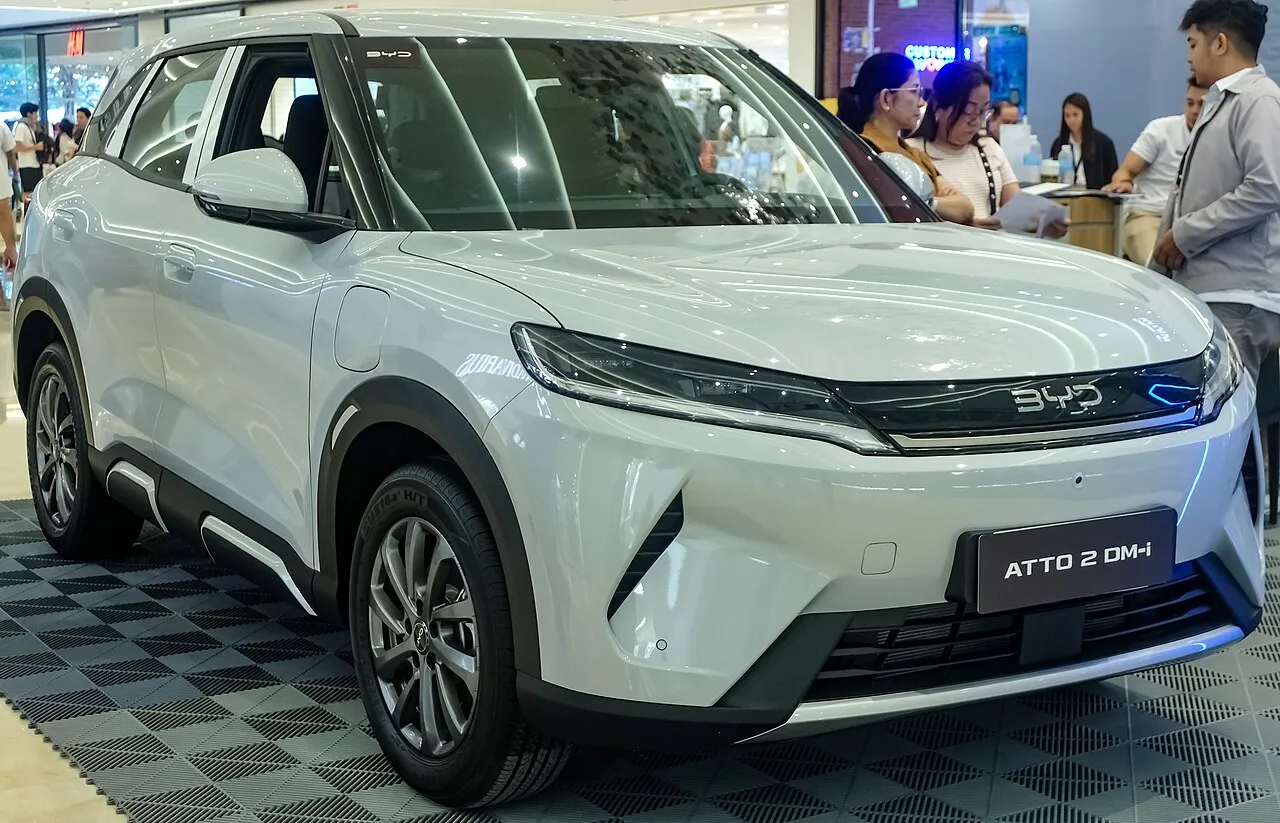
The short answer: The BYD ATTO 2 has the larger exterior footprint, with more length, width, height, and wheelbase than the Kia EV2. That suggests more potential cabin and cargo flexibility, but published passenger and cargo volume figures have not been published here.
The BYD ATTO 2 is the larger vehicle by exterior measurement, while the Kia EV2 is shorter, narrower, lower, and slightly shorter between its axles. For shoppers focused on fitting a small SUV into tight spaces, the Kia has the advantage. For shoppers looking for the strongest possibility of extra cabin or cargo room, the BYD’s longer wheelbase and larger body give it the edge.
That conclusion comes with an important limit: passenger room and cargo volume figures have not been published in the figures used here. Exterior dimensions can show how much space the designers had to work with, but they do not establish actual legroom, headroom, shoulder room, or trunk capacity.
Published dimensions at a glance
| Vehicle and version | Market, model year and standard | Length | Width | Height | Wheelbase | Curb weight | Source |
|---|---|---|---|---|---|---|---|
| BYD ATTO 2 Standard | Europe, 2025; WLTP range standard | 4,310 mm | 1,830 mm | 1,675 mm | 2,620 mm | 1,645 kg | EVDB |
| BYD ATTO 2 Superior | China, 2025; CLTC range standard | 4,310 mm | 1,830 mm | 1,675 mm | 2,620 mm | 1,540 kg | OpenEV Data |
| BYD ATTO 2 Superior | China, 2024; CLTC range standard | 4,310 mm | 1,830 mm | 1,675 mm | 2,620 mm | 1,540 kg | OpenEV Data |
| Kia EV2 Air 61.0 kWh | UK, 2026; WLTP range standard | 4,060 mm | 1,800 mm | 1,575 mm | 2,565 mm | 1,630 kg | Editorial entry |
| Kia EV2 First Edition 42.2 kWh | UK, 2026; WLTP range standard | 4,060 mm | 1,800 mm | 1,575 mm | 2,565 mm | 1,620 kg | Editorial entry |
| Kia EV2 GT-Line 61.0 kWh | UK, 2026; WLTP range standard | 4,065 mm | 1,800 mm | 1,585 mm | 2,565 mm | 1,665 kg | Editorial entry |
| Kia EV2 GT-Line S 61.0 kWh | UK, 2026; WLTP range standard | 4,065 mm | 1,800 mm | 1,585 mm | 2,565 mm | 1,665 kg | Editorial entry |
The table combines versions from different markets. The BYD figures come from EVDB for the European Standard version and OpenEV Data for the Chinese Superior versions. The Kia figures come from an Editorial entry for UK versions. The range standards shown in the table apply to the range figures associated with each market; WLTP and CLTC results should not be treated as equivalent.
The BYD ATTO 2 is larger outside
The BYD ATTO 2 measures 4,310 mm long in both the European 2025 Standard version and the Chinese Superior versions. The Kia EV2 measures 4,060 mm in Air and First Edition form, or 4,065 mm in GT-Line and GT-Line S form. That gives the BYD an exterior length advantage of 245 to 250 mm, depending on the Kia version.
A difference of that size can matter when parking, maneuvering in a garage, or judging whether a vehicle fits a particular curbside space. It can also create more room for the body structure, seating system, and cargo area. However, length is distributed across many parts of an SUV. A longer hood, different overhangs, or crash structures can use space without increasing room for occupants or luggage.
The BYD is also 1,830 mm wide, compared with 1,800 mm for the Kia. The 30 mm difference is modest in isolation, but width affects the room available across the cabin and the space between the vehicle’s outside edges and nearby objects. It can help a vehicle accommodate broader seating or more usable shoulder room, although actual interior width depends on the door panels, seats, console, and other design choices.
The extra width also has a practical tradeoff. A vehicle that is wider on paper can be less comfortable in narrow parking spaces and tight city lanes. The Kia’s narrower body may be easier to place in those situations, especially for buyers who regularly use compact parking structures.
Wheelbase gives the BYD more packaging potential
The BYD ATTO 2 has a 2,620 mm wheelbase. Every Kia EV2 version in the figures here has a 2,565 mm wheelbase, leaving the BYD 55 mm longer between the front and rear axles.
Wheelbase is one of the more useful exterior measurements when considering passenger space. Moving the axles farther apart can create more room for the passenger compartment, especially for rear-seat legroom. It can also help create a longer, more flexible cargo floor. That is a packaging opportunity rather than a promise: seat design, battery placement, wheel arch intrusion, and the position of the dashboard all affect the space occupants actually receive.
The Kia’s shorter wheelbase may still suit buyers who value maneuverability. A shorter distance between the axles can make a vehicle easier to turn in confined areas, though turning-circle figures have not been published here. The EV2 therefore has a clear size advantage for urban use only in terms of its shorter body and narrower width; the available figures do not establish a complete comparison of maneuverability.
Height changes the shape of the comparison
The BYD ATTO 2 is 1,675 mm tall. The Kia EV2 is 1,575 mm tall in Air and First Edition form and 1,585 mm tall in the GT-Line versions. The BYD therefore stands 90 to 100 mm taller, depending on the Kia trim.
More exterior height can create additional headroom or make it easier to design a taller cargo opening. It can also support a more upright seating position. None of those outcomes can be confirmed from exterior height alone. Roof shape, seat height, floor height, and the design of the liftgate opening all influence the result.
The Kia’s lower roof may be helpful for buyers with a low garage entrance or a preference for a lower step-in height, but step-in height has not been published. The lower body also contributes to the EV2’s smaller overall footprint, which is relevant for city parking even though it says little about the comfort of either vehicle’s interior.
What the battery figures suggest about usable space
The European BYD ATTO 2 Standard uses a 51.1 kWh gross battery and has 45.1 kWh usable. The Chinese Superior version is shown with a 45.1 kWh battery, with gross and usable capacity both recorded as 45.1 kWh. Both use LFP battery chemistry.
The Kia EV2 versions are shown with either a 61.0 kWh or 42.2 kWh battery. Battery size is relevant to vehicle packaging because the battery typically occupies space beneath the passenger compartment, but capacity alone cannot establish which SUV has more cabin or cargo room. A larger battery may affect floor height or weight, while the shape and placement of the battery pack also matter.
Curb weight varies within the model ranges. The BYD figures are 1,645 kg for the European Standard version and 1,540 kg for the Chinese Superior versions. The Kia ranges from 1,620 kg to 1,665 kg across the versions shown. These differences reflect more than interior packaging, including battery configuration and trim equipment, so they should not be used as a direct measure of passenger or cargo space.
Range figures need separate labels
The European BYD ATTO 2 Standard is rated at 312 km under WLTP. The Chinese Superior version is rated at 401 km under CLTC. The Kia EV2 is rated from 314 km to 444 km under WLTP, depending on version.
Those figures describe different test standards where the BYD is compared across markets. CLTC and WLTP results are not equivalent, so the Chinese BYD rating cannot be read as a direct range advantage over the European BYD or the UK Kia versions. Range also does not answer the space question, although a buyer may weigh it alongside the vehicle’s dimensions when choosing between versions.
Which one makes more sense for a small SUV shopper?
Choose the Kia EV2 if exterior compactness is the priority. It is about a quarter of a meter shorter than the BYD, 30 mm narrower, and at least 90 mm lower. Those measurements make it the easier candidate for buyers working with tight parking spaces or a low garage, subject to checking the actual space available.
Choose the BYD ATTO 2 if the priority is the larger body and the greater packaging potential that comes with it. Its longer wheelbase, greater width, and taller body could support more generous passenger or cargo accommodation. The published figures do not confirm that outcome, so shoppers should check official interior measurements and physically test the rear seats and cargo area before making a decision.
The clearest comparison is therefore about priorities. The Kia EV2 occupies less space outside, while the BYD ATTO 2 offers more exterior volume to work with. Until passenger and cargo measurements are published for matching versions and markets, exterior dimensions can guide the shortlist but cannot settle the question of which cabin is roomier.
Frequently asked questions
Which is larger, the Kia EV2 or BYD ATTO 2?
The BYD ATTO 2 is larger in every published exterior dimension used here. It is longer, wider, taller, and has a longer wheelbase than the Kia EV2.
Which has the longer wheelbase?
The BYD ATTO 2 has a 2,620 mm wheelbase, while the Kia EV2 has a 2,565 mm wheelbase.
Does the BYD ATTO 2 definitely have more cargo space?
That has not been established by the published figures here. The BYD has a larger exterior footprint, but passenger and cargo volume measurements have not been published.
Which SUV is easier to fit into a tight parking space?
The Kia EV2 is the smaller vehicle outside. It is 245 to 250 mm shorter and 30 mm narrower than the BYD ATTO 2, depending on the Kia version.
Can the BYD and Kia range figures be compared directly?
Only figures using the same test standard should be compared directly. The European BYD and Kia figures use WLTP, while the Chinese BYD figure uses CLTC.
Related stories
Sedan or Hatchback: Kia EV4 and Volkswagen ID.3 Compared
The Kia EV4 sedan and Volkswagen ID.3 hatchback take different approaches to space, cargo access, range and charging. Here is how they compare.

How to Choose an EV for Frequent Public AC Charging
If you often charge at public AC stations, compare the car’s onboard charger, connector access and how long it will usually be parked there.

How to Confirm EV Charging Access in an Apartment Building
Before buying an EV, confirm who controls your parking space, whether charging is allowed, and what electrical work the building can support.