Hyundai KONA Electric vs Kia EV3: Space and Charging Compared
The Kia EV3 offers higher EPA range ratings in comparable US versions. Cabin fit and cargo access need a closer look because range figures cannot settle either question.
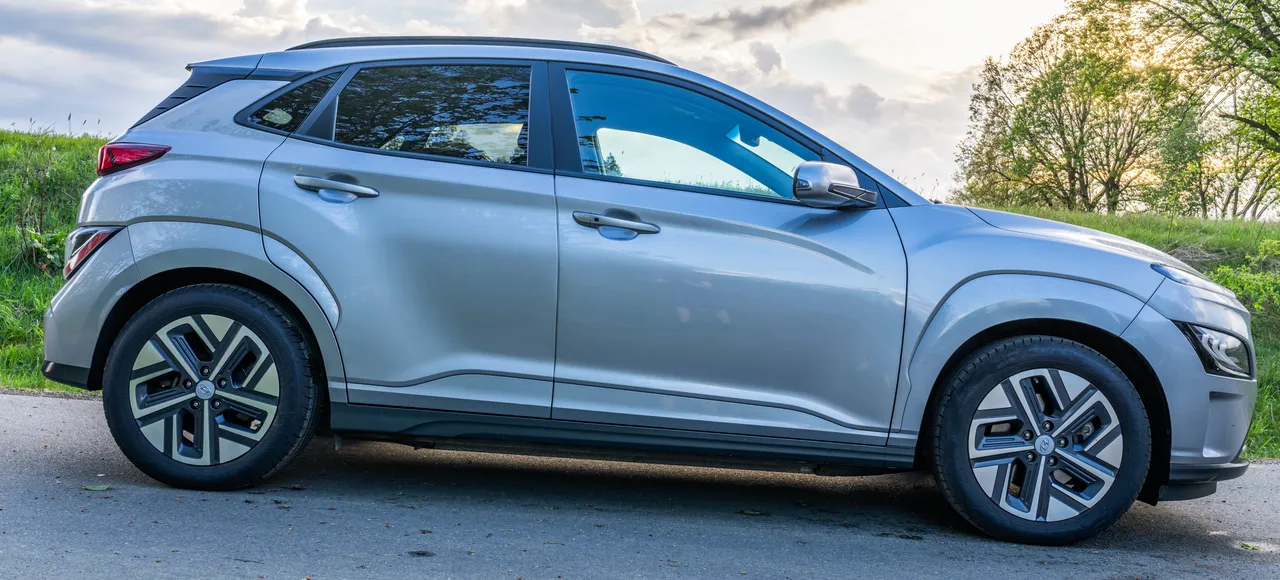
The short answer: The Kia EV3 has the higher EPA range rating when comparing the US front-wheel-drive versions shown here, while the Hyundai KONA Electric has shorter published Level 2 full-charge estimates in those comparisons. Neither figure establishes which SUV has the more useful cabin or cargo area.
The Kia EV3 is the stronger choice on published US range if the comparison is between front-wheel-drive versions: its EPA ratings exceed those of the KONA Electric versions shown below. The KONA Electric has shorter published Level 2 full-charge estimates in those comparisons. For everyday practicality, though, range is only part of the answer. Cabin layout and cargo access depend on how people and their belongings fit, and neither can be settled by an EPA rating.
What the US ratings establish
The following figures come from US EPA fueleconomy.gov. Every row identifies its US model year and uses the EPA standard for range. The charging figures are the EPA's published Level 2 full-charge estimates for those same versions. Versions from different model years are shown together to explain the published choices, rather than to imply that their equipment or interiors match.
| Vehicle and version | Market and model year | Drive | EPA rated range | EPA Level 2 full-charge estimate |
|---|---|---|---|---|
| Hyundai KONA Electric, 17-inch wheels | US, 2025 | FWD | 261 miles | 6.7 hours |
| Hyundai KONA Electric, 19-inch wheels | US, 2025 | FWD | 230 miles | 6.9 hours |
| Kia EV3 Standard Range | US, 2027 | FWD | 221 miles | 6.2 hours |
| Kia EV3 Long Range | US, 2027 | FWD | 321 miles | 8.8 hours |
| Kia EV3 Long Range | US, 2027 | AWD | 280 miles | 7.9 hours |
| Kia EV3 Long Range GT | US, 2027 | AWD | 280 miles | 8.8 hours |
Source for every figure in the table: US EPA fueleconomy.gov. Within the same EPA range standard, the EV3 Long Range FWD has the highest rating shown. The EV3 Standard Range FWD has a lower rating than the KONA Electric on 17-inch wheels, so a blanket claim that every EV3 goes farther would be misleading. The KONA's two wheel versions also have different EPA ratings. A shopper comparing a particular vehicle should use its wheel and drive configuration, not just its model name.
Cabin layout: fit matters more than the SUV label
Both vehicles are SUVs, but that shared body-style description says little about how either cabin works for a particular household. The useful questions are where occupants can put their feet, knees and bags; whether the driving position leaves enough room behind it; and whether commonly carried items have a convenient place during a trip. EPA range and charging estimates cannot answer those questions.
Start with the front seats set for the people who will actually drive. Then consider the rear seats with those front-seat positions unchanged. Rear-seat space can seem generous when a front seat is pushed forward and feel quite different once a driver settles in. Someone who regularly carries adults or installs a child seat should also consider the space needed to enter, reach the seat and fasten restraints. Those are questions about access and usable space, rather than a single published range figure.
The arrangement of small-item storage deserves the same attention. A place for a phone, keys or a drink is useful when it remains reachable with passengers aboard and does not obstruct a frequently used control. Charging cables and everyday bags also need somewhere to go when the passenger area is occupied. This is why a cabin that feels open on a brief look may still be awkward for a household's routine, while a cabin with less obvious visual space may suit it well.
For either SUV, assess the driving position and rear-seat access together. An adjustment that helps one passenger can reduce another passenger's room. The practical comparison is therefore the same seating arrangement on both vehicles, with the people who normally travel together. Without that check, a conclusion about which cabin is roomier or easier to use would go beyond what the published EPA figures establish.
Cargo access: look beyond how much fits
Cargo usefulness has two parts: whether an item fits inside and whether it can pass through the opening. A box may fit the available floor area yet be difficult to lift over a loading edge or turn through a narrower opening. A stroller, luggage or a bulky household purchase makes this distinction much clearer than a general impression of the rear compartment.
Compare the KONA Electric and EV3 with the rear seats in the positions the household normally uses. Folding a seat may make a long object easier to carry, but it also changes how many people can ride. Check the route an item must take from the opening to its resting place, including any need to tilt or rotate it. This is especially relevant to an SUV shopper who expects the vehicle to handle errands and passengers on the same trip.
Also consider where the charging cable will live. If it shares space with groceries or luggage, reaching it at a charger may require moving other items first. If an item must be kept close at hand, the shape and accessibility of storage can matter more than an overall impression of cargo space. No EPA range or full-charge estimate measures that kind of convenience, so neither vehicle earns a cargo advantage from the ratings in the table.
What the charging figures mean in daily use
The EPA Level 2 figures describe estimated time for a full charge, while the EPA range figures describe rated driving distance. They answer different questions. The EV3 Long Range FWD combines the highest EPA range rating in the table with an 8.8-hour Level 2 full-charge estimate. The KONA Electric on 17-inch wheels has a 261-mile EPA rating and a 6.7-hour estimate. A longer full-charge time does not, by itself, show that one vehicle is less convenient for a driver who plugs in regularly and seldom arrives with an empty battery.
Likewise, the shortest full-charge estimate does not identify the best road-trip choice. The EV3 Standard Range FWD has a 6.2-hour Level 2 estimate and a 221-mile EPA rating. Those figures may suit a routine with reliable charging, but they describe a different range choice from the EV3 Long Range FWD. The table's Level 2 estimates concern AC charging; they do not establish how long a highway DC fast-charging stop will take.
Drive configuration matters as well. US EPA fueleconomy.gov rates the EV3 Long Range FWD at 321 miles and the Long Range AWD at 280 miles. A shopper interested in AWD should use the AWD rating when planning, rather than treating the FWD figure as a general EV3 rating. The two EV3 AWD versions shown share a 280-mile EPA rating, yet their published Level 2 full-charge estimates differ. Matching the exact version prevents a convenient figure from one row being attached to a different vehicle.
These ratings also do not prescribe a daily charging schedule. The practical question is whether the charging available during a normal stop gives the driver enough usable range for the next trip. Someone with regular Level 2 access may care most about how comfortably the vehicle covers ordinary travel between charges. Someone who relies on public charging will need to consider the charging opportunities along their usual routes. The EPA figures provide a consistent starting point for range, but they do not describe every charging stop.
Which one should a compact-SUV shopper choose?
Choose by the version and the routine. If the priority is the highest published US EPA range among these versions, the EV3 Long Range FWD leads. If a shorter published Level 2 full-charge estimate is central, the KONA Electric versions shown charge fully in less time than that EV3 version; the EV3 Standard Range FWD has the shortest estimate in the table. Those are distinct choices, and neither resolves the cabin or cargo question.
For passengers and belongings, compare both SUVs in the seating arrangement used most often and with the items most difficult to carry. Pay attention to rear-seat access, the path through the cargo opening and whether a charging cable remains easy to reach with the vehicle packed. The published US figures can narrow the range and charging decision. The better everyday SUV is the one whose particular version also fits the people, objects and charging routine it will serve.
Frequently asked questions
Which has the higher US EPA range rating, the KONA Electric or EV3?
US EPA fueleconomy.gov rates the 2027 EV3 Long Range FWD at 321 miles and the 2025 KONA Electric on 17-inch wheels at 261 miles. Ratings depend on the version: the 2027 EV3 Standard Range FWD is rated at 221 miles.
Which has the shorter published Level 2 full-charge time?
Among the US versions shown, US EPA fueleconomy.gov gives the 2027 EV3 Standard Range FWD the shortest estimate, at 6.2 hours. The 2025 KONA Electric on 17-inch wheels is estimated at 6.7 hours.
Does the EV3's EPA range rating establish that it has more cargo space?
No. An EPA range rating describes rated driving distance, not cargo volume, opening shape or ease of loading.
Do the Level 2 full-charge estimates show highway fast-charging times?
No. The published Level 2 estimates concern AC charging and do not establish the length of a DC fast-charging stop.
Related stories

How to Choose an EV for Caregiving and Support Trips
Compare passenger access, rear-seat comfort, equipment storage and charging routines to find an EV that fits recurring appointments and support trips.

Choosing 120V or 240V Charging for an EV at Home
A standard outlet may work for an EV that sits parked for long stretches. A 240V setup adds charging power, which can matter when daily driving uses more energy.

How to Plan EV Charging When You Park on the Street
Street parking can work with EV ownership when you confirm local rules, identify dependable charging, and build a routine that fits where you park.