Hyundai IONIQ 9 and Volvo EX60: Range, Size and US Pricing
Compare the Hyundai IONIQ 9 and Volvo EX60 on EPA range, charging, battery capacity, performance, dimensions and US pricing, with market differences explained.
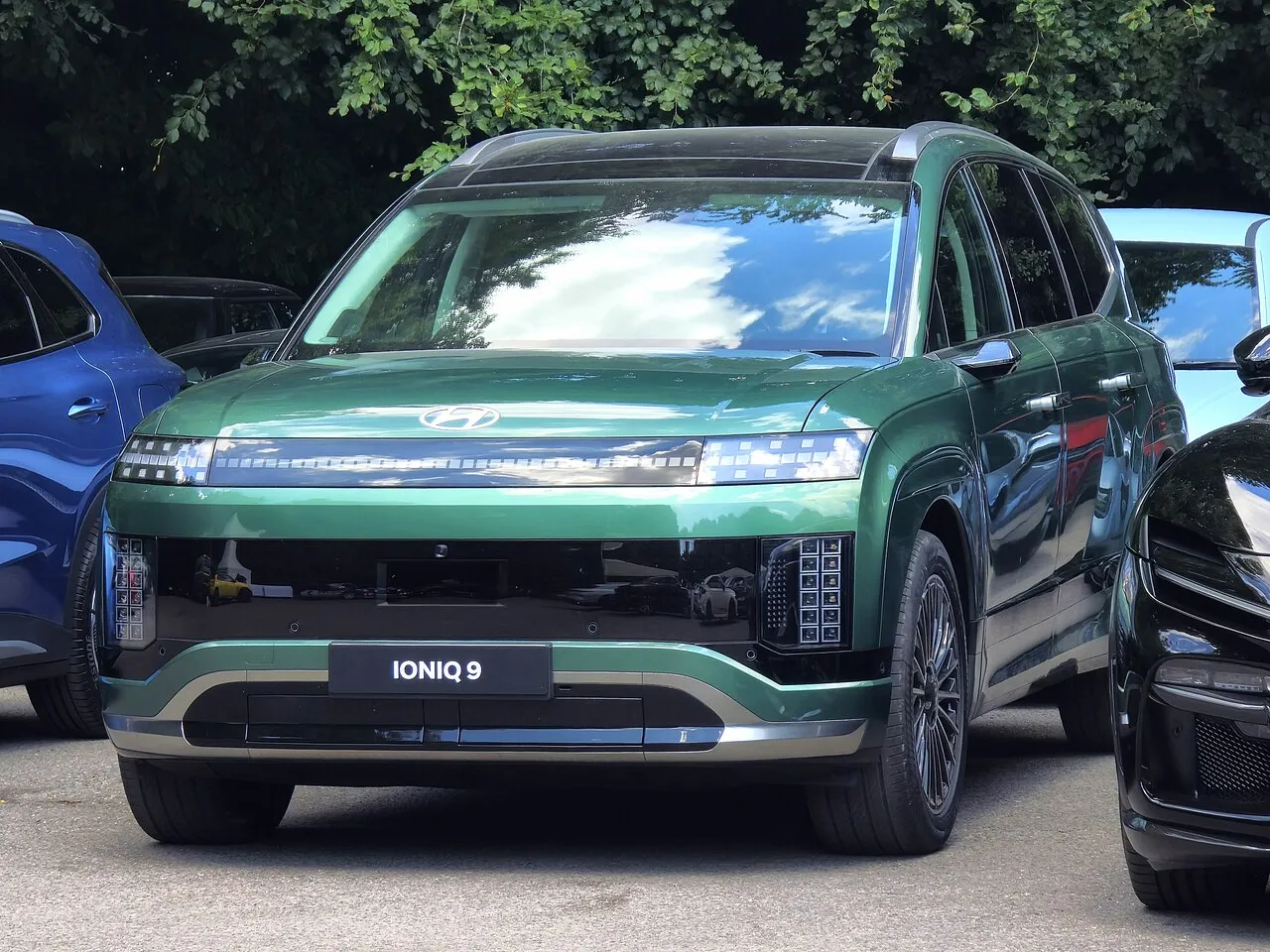
The short answer: The Hyundai IONIQ 9 offers the highest US EPA range here at 335 miles, while the Volvo EX60 reaches 330 miles with AWD and has shorter published Level 2 charging times. European figures show a larger Hyundai and quicker Volvo acceleration, but a complete US price comparison is not yet possible.
The Hyundai IONIQ 9 suits shoppers who prioritize maximum EPA range and a larger SUV, while the Volvo EX60 makes a stronger case for buyers seeking AWD range and shorter published home-charging times. For the US-market 2027 models, EPA ratings put the rear-wheel-drive Hyundai at 335 miles and the all-wheel-drive Volvo P10 at 330 miles. Those are close results, but they represent different drivetrain choices.
The comparison becomes less straightforward beyond range. US battery capacities, DC charging peaks, acceleration figures and dimensions have not been published. European figures help explain the vehicles’ differences, but they need their own market and model-year labels. US pricing is also incomplete: the EX60 P6 has a recorded price, while the IONIQ 9’s US starting price has not been published.
The key figures, with their markets identified
The table separates US EPA results from European technical figures. EPA and WLTP range ratings are different test standards and should not be treated as interchangeable. Battery capacities, charging power, acceleration, dimensions and prices are technical or commercial figures rather than EPA range measurements.
| Measure | Hyundai IONIQ 9 | Volvo EX60 | Standard and source |
|---|---|---|---|
| Rear-wheel-drive range | US, 2027 RWD: 335 miles | US, 2027 P6: 307 miles; P6 with 22-inch wheels: 295 miles | EPA; US EPA fueleconomy.gov |
| All-wheel-drive range | US, 2027 AWD: 320 miles; AWD Performance: 311 miles | US, 2027 P10 AWD: 330 miles; P10 AWD with 22-inch wheels: 312 miles | EPA; US EPA fueleconomy.gov |
| Level 2 full-charge time | US, 2027: RWD 11.7 hours; AWD 11.6 hours; AWD Performance 11.5 hours | US, 2027: P6 variants 8 hours; P10 variants 9 hours | EPA charging estimates; US EPA fueleconomy.gov |
| Battery capacity | Europe, 2025 Long Range RWD and AWD Performance: 116 kWh gross, 110.3 kWh usable | Europe, 2027 P10 AWD: 95 kWh gross, 91 kWh usable; P12 AWD: 117 kWh gross, 112 kWh usable | Technical figures, not range-test results; EVDB |
| AC / peak DC charging power | Europe, 2025 Long Range RWD and AWD Performance: 11 / 350 kW | Europe, 2027 P10 AWD and P12 AWD: 22 / 370 kW | Technical charging ratings; EVDB |
| Power and acceleration | Europe, 2025 Long Range RWD: 160 kW, 0–100 km/h in 9.4 seconds; AWD Performance: 314 kW, 5.2 seconds | Europe, 2027 P10 AWD: 375 kW, 0–100 km/h in 4.6 seconds; P12 AWD: 500 kW, 3.9 seconds | Published performance figures; acceleration test protocol unspecified; EVDB |
| Length × width × height; wheelbase | Europe, 2025 Long Range RWD and AWD Performance: 5,060 × 1,980 × 1,790 mm; 3,130 mm | Europe, 2027 P10 AWD and P12 AWD: 4,690 × 1,910 × 1,630 mm; 2,870 mm | Published dimensions; measurement protocol unspecified; EVDB |
| US starting price | Has not been published | US, 2027 P6 Electric: $58,400, recorded as of October 2026 | Commercial price, no test standard; US EPA fueleconomy.gov |
EPA range: Hyundai leads overall, Volvo leads with AWD
The longest-range US choice is the 2027 IONIQ 9 RWD. Its 335-mile EPA rating exceeds the 2027 EX60 P6’s 307-mile rating by 28 miles. For a shopper comparing the rear-wheel-drive versions specifically, that is a clearer Hyundai advantage than the narrow gap between each vehicle’s longest-range configuration.
The order reverses with all-wheel drive. US EPA fueleconomy.gov rates the 2027 EX60 P10 AWD at 330 miles against 320 miles for the 2027 IONIQ 9 AWD. Hyundai’s AWD Performance version falls to 311 miles. Choosing AWD therefore changes which model leads, and choosing the Hyundai Performance version brings another range trade-off.
Wheel configuration also matters for the Volvo. The US 2027 P10 AWD with 22-inch wheels receives a 312-mile EPA rating, compared with 330 miles for the version without that wheel designation. The corresponding P6 figures are 295 and 307 miles. Buyers should match a range claim to the exact configuration they intend to purchase.
Battery capacity needs a market-specific reading
EVDB records a 116-kWh gross battery and 110.3-kWh usable capacity for the European 2025 IONIQ 9 Long Range RWD and AWD Performance. Gross capacity describes the total battery capacity; usable capacity describes the portion available for driving. Keeping those measures separate prevents an apparently larger number from distorting the comparison.
For the European 2027 EX60, EVDB records 95 kWh gross and 91 kWh usable in the P10 AWD, rising to 117 kWh gross and 112 kWh usable in the P12 AWD. The European Volvo therefore does not have one battery size across these versions. The P10 has less usable capacity than those Hyundai variants, while the P12 has slightly more.
Those European capacities should not be paired with US EPA mileage to calculate efficiency. That would combine different markets and model years without establishing that their battery configurations match. They explain the European versions’ battery choices, but do not establish the capacity of the US models.
Charging: separate home charging from fast charging
The clearest US charging comparison is the EPA full-charge estimate for Level 2 charging. For model year 2027, the EX60 P6 takes eight hours and the P10 takes nine hours. The IONIQ 9 estimates run from 11.5 to 11.7 hours, depending on drivetrain. Volvo has the shorter published full-charge times across these versions.
That supports the EX60 for buyers who place particular value on completing a full home charge within a shorter window. It does not mean every daily charging session will take that long: these figures describe a full charge, rather than replacing only the energy used during a particular trip.
DC charging requires more caution. EVDB gives the European 2027 EX60 P10 and P12 a 370-kW peak, compared with 350 kW for the European 2025 IONIQ 9 variants in the table. Volvo also has a higher European AC rating, at 22 kW against Hyundai’s 11 kW. Neither comparison establishes US charging capability.
A peak power figure alone cannot establish which vehicle finishes a charging stop sooner. Comparable charging-session times have not been published here, so the European Volvo’s higher peak should not become a claim of a shorter US road-trip stop.
Performance and size point toward different priorities
European performance figures favor the Volvo. According to EVDB, the 2027 EX60 P10 AWD produces 375 kW and reaches 100 km/h from rest in 4.6 seconds. The European 2025 IONIQ 9 AWD Performance produces 314 kW and takes 5.2 seconds. These are 0–100 km/h figures, not US 0–60 mph results.
The European 2027 EX60 P12 extends that performance advantage with 500 kW and a 3.9-second 0–100 km/h figure. Its US EPA range and US starting price have not been published, so it cannot be treated as a fully comparable US purchase option alongside the P6 and P10.
Size moves the decision toward Hyundai. EVDB’s European dimensions show the 2025 IONIQ 9 variants in the table are longer, wider and taller than the European 2027 EX60 P10 and P12, with a longer wheelbase. That establishes a larger exterior footprint. It does not quantify passenger room, cargo capacity or seating arrangements, which have not been published here.
US price and which buyer each SUV suits
The recorded US price for the 2027 EX60 P6 Electric is $58,400 as of October 2026, associated with its US EPA fueleconomy.gov entry. A US starting price for the IONIQ 9 has not been published. That prevents a defensible claim that either vehicle is cheaper; European prices cannot settle an American purchase comparison.
Choose the IONIQ 9 if your priority is the highest US EPA range among these versions, particularly with rear-wheel drive, and its larger European exterior dimensions fit your intended use. Choose the EX60 if you favor stronger EPA range with AWD, shorter published Level 2 full-charge times, or the quicker acceleration documented for its European versions. The final value judgment still depends on a comparable US Hyundai price and US confirmation of the technical figures currently established only for Europe.
Frequently asked questions
Which has more EPA range, the Hyundai IONIQ 9 or Volvo EX60?
For US model year 2027, US EPA fueleconomy.gov rates the IONIQ 9 RWD at 335 miles and the EX60 P10 AWD at 330 miles. Comparing AWD versions, the Volvo P10 exceeds the Hyundai AWD’s 320-mile EPA rating.
Does the Volvo EX60 charge faster at home?
US EPA fueleconomy.gov gives the US 2027 EX60 P6 an eight-hour Level 2 full-charge estimate and the P10 a nine-hour estimate. The US 2027 IONIQ 9 estimates range from 11.5 to 11.7 hours.
How much do the Hyundai IONIQ 9 and Volvo EX60 cost in the US?
The US 2027 Volvo EX60 P6 Electric has a recorded price of $58,400 as of October 2026 in its US EPA fueleconomy.gov entry. A US starting price for the IONIQ 9 has not been published.
Is the Hyundai IONIQ 9 larger than the Volvo EX60?
EVDB’s European figures show the 2025 IONIQ 9 Long Range RWD and AWD Performance are longer, wider and taller than the 2027 EX60 P10 AWD and P12 AWD, with a longer wheelbase. US dimensions have not been published.
Related stories

How to Build a Flexible EV Charging Routine for Work
Build charging around the miles you need for your next drive, using home, work, or public charging as your schedule allows. Keep a practical buffer.

How to Check EV Charger Plug Compatibility Before a Trip
Match your EV’s connector and charging limits to each route stop. Learn what charger labels mean, when an adapter may work, and what to confirm before you leave.

How to Estimate Electric Car Range While Towing
Estimate towing range from your vehicle’s normal range, then adjust for trailer shape, speed, weather and hills. Use the result to plan charging stops.