Hyundai IONIQ 6 vs Volkswagen ID.7: Range and Cargo Choice
The IONIQ 6 and ID.7 pair long wheelbases with different range claims. Here is how their published body, battery, charging and cargo information affects a buying choice.
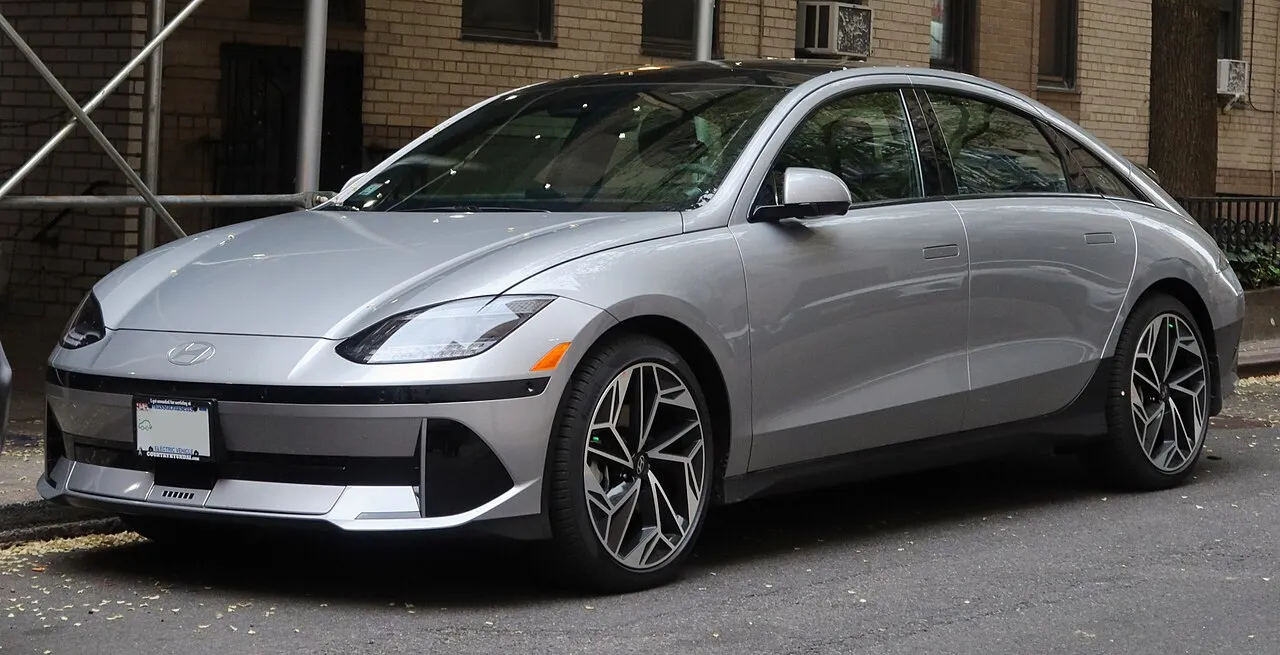
The short answer: Choose the Hyundai IONIQ 6 if US EPA range coverage and charging performance are the priority. Choose the Volkswagen ID.7 only after confirming its rear opening and cargo measurements, because passenger and cargo figures have not been published here.
The Hyundai IONIQ 6 is the clearer choice for shoppers who want a documented US range comparison, while the Volkswagen ID.7 needs a closer look at its rear opening before a cargo decision. The available vehicle information categorizes both as sedans, and passenger headroom, legroom, and cargo volume have not been published here.
That makes the choice less about one universal winner and more about what the car must carry. The IONIQ 6 has a broad set of US EPA range figures, including a 361-mile rating for the 2025 Long Range rear-wheel-drive version. The ID.7 figures available here are European WLTP ratings, with the 2026 Pro S reaching 709 km. Those standards describe different testing systems and should not be treated as equivalent.
What the published vehicle figures show
| Vehicle and version | Market, model year, and test standard | Published range | Battery and charging | Body and drive details |
|---|---|---|---|---|
| Hyundai IONIQ 6 Standard Range | US, 2025, EPA | 224 mi | 53 kWh gross; 50 kWh usable; 11 kW AC; 220 kW DC peak; 6.1 hours Level 2 | Sedan; RWD |
| Hyundai IONIQ 6 Long Range, RWD | US, 2025, EPA | 361 mi | 77.4 kWh gross; 72.6 kWh usable; 11 kW AC; 220 kW DC peak | Sedan; RWD |
| Hyundai IONIQ 6 AWD, 18-inch wheels | US, 2025, EPA | 316 mi | 7.5 hours Level 2 | Sedan; AWD |
| Hyundai IONIQ 6 AWD, 20-inch wheels | US, 2025, EPA | 270 mi | 7.5 hours Level 2 | Sedan; AWD |
| Hyundai IONIQ 6 84 kWh RWD | Europe, 2026, WLTP | 680 km | 84 kWh gross; 80 kWh usable; 11 kW AC; 263 kW DC peak | Sedan; RWD |
| Volkswagen ID.7 Pro | Europe, 2026, WLTP | 628 km | 82 kWh gross; 77 kWh usable; 11 kW AC; 175 kW DC peak | Sedan; RWD |
| Volkswagen ID.7 Pro S | Europe, 2026, WLTP | 709 km | 91 kWh gross; 86 kWh usable; 11 kW AC; 200 kW DC peak | Sedan; RWD |
| Volkswagen ID.7 Tourer Pro S | Europe, 2026, WLTP | 690 km | 91 kWh gross; 86 kWh usable; 11 kW AC; 200 kW DC peak | Sedan; RWD |
US EPA fueleconomy.gov is the source for the US IONIQ 6 range and Level 2 figures. OpenEV Data is the source for the US battery and charging figures. Natural Resources Canada is the source for the Canadian IONIQ 6 figures, and EVDB is the source for the European IONIQ 6 and ID.7 figures.
Passenger space: similar proportions, incomplete measurements
The two cars have broadly similar exterior proportions. The 2025 US IONIQ 6 measures 4,855 mm long, 1,880 mm wide, 1,495 mm high, and has a 2,950 mm wheelbase. The 2026 European ID.7 Pro measures 4,961 mm long, 1,862 mm wide, 1,538 mm high, and has a 2,966 mm wheelbase.
Those numbers establish the cars' footprints, but they do not establish how comfortable either cabin will be for a particular passenger. Wheelbase can help create room for a cabin, yet seat design, floor height, roof shape, door opening, and the position of the rear bench also affect usable space. None of those passenger measurements has been published here.
The IONIQ 6's available US figures also show a curb weight of 1,785 kg for the Standard Range, 1,950 kg for the Long Range RWD version, and 2,110 kg for the Long Range AWD version. The European 2026 ID.7 Pro is listed at 2,138 kg, while the Pro S is 2,218 kg. Weight can affect efficiency and driving feel, but it does not replace actual rear-seat measurements when the main concern is passenger comfort.
For shoppers carrying adults in the back, the practical check is therefore straightforward: sit in both cars, assess knee and head clearance, and inspect the entry angle. The published dimensions can show that both are substantial sedans, but they cannot identify which rear seat is more accommodating.
Cargo access is the body-style question
A sedan normally separates its passenger cabin from its trunk. A liftback uses a large rear door that opens with the rear glass, making the cargo aperture taller and often easier to use for bulky objects. That distinction affects access more than the exterior length alone.
The vehicle information here calls both the IONIQ 6 and ID.7 sedans. It does not publish cargo volume, trunk opening dimensions, rear-seat folding details, or a description of the rear door design. As a result, it cannot establish whether either car delivers the loading advantage shoppers associate with a liftback.
This matters because cargo volume and cargo access answer different questions. A vehicle may have a generous measured volume but a narrow opening that limits what can pass through. Another may have less measured space but a taller opening that works better for boxes, strollers, or other tall items. Without the volume and opening measurements, choosing between the two on cargo practicality would go beyond the published facts.
The ID.7 range includes versions named Tourer GTX and Tourer Pro S. Those names identify separate versions in EVDB's European figures, but the available information does not give their cargo measurements or describe their rear openings. The Tourer Pro S carries a 690 km WLTP rating, while the standard Pro S carries a 709 km WLTP rating. The range difference does not answer the cargo-access question.
Range: compare trims within each test system
The IONIQ 6 has the most useful US comparison in the figures available here. Its 2025 rear-wheel-drive versions are rated at 342 miles with 18-inch wheels and 291 miles with 20-inch wheels. The 2025 AWD versions are rated at 316 miles with 18-inch wheels and 270 miles with 20-inch wheels. The Long Range entry is rated at 361 miles, while the Standard Range is rated at 224 miles.
These figures show how drivetrain, wheel size, and battery choice can change the published result within one model. The 20-inch AWD rating is 46 miles below the 18-inch AWD rating, and the 20-inch RWD rating is 51 miles below the 18-inch RWD rating. The figures do not explain every cause of the difference, but they give shoppers a clear trim-level tradeoff.
Canada's 2025 IONIQ 6 figures use the NRCan standard and are expressed in kilometers. The Long Range rear-wheel-drive versions are rated at 550 km with 18-inch wheels and 468 km with 20-inch wheels. Long Range AWD versions are rated at 509 km with 18-inch wheels and 435 km with 20-inch wheels. These are useful for Canadian-market comparisons, but they should not be converted into a direct US EPA ranking.
For Europe, the 2026 IONIQ 6 84 kWh RWD version is rated at 680 km WLTP, while the AWD version is rated at 650 km WLTP. The 2026 ID.7 Pro is rated at 628 km WLTP, the Pro S at 709 km, and the Tourer Pro S at 690 km. Within this European set, the ID.7 Pro S has the highest published WLTP figure, although its larger battery and curb weight also differ from the Pro.
WLTP, EPA, and NRCan ratings are useful in their respective markets. They are test-standard results, rather than a promise of identical real-world travel. Weather, speed, temperature, payload, wheel choice, and driving style can affect actual energy use. A buyer should begin with the rating for the market and version being considered, then use the result as a consistent comparison inside that market.
Charging and ownership fit
The IONIQ 6 figures show 11 kW AC charging and a 220 kW DC peak for several 2025 versions, with Level 2 full-charge times of 7.5 hours for the listed 18-inch and 20-inch versions. The Standard Range version is listed at 6.1 hours. The 2027 IONIQ 6 N has a 245-mile EPA rating and a 9.1-hour Level 2 full-charge time.
The European IONIQ 6 84 kWh versions are listed with 263 kW DC peak charging. The ID.7 Pro is listed at 175 kW, while the Pro S and Tourer versions are listed at 200 kW. Peak charging is only the highest published input rate; it does not describe the complete charging curve or the time needed for a particular road trip.
The IONIQ 6 entries identify a CCS2 connector. Connector details for the ID.7 versions have not been published here. That is a practical item to confirm in the market where the car will be purchased, particularly when public charging compatibility matters.
Which one fits the better use case?
The Hyundai IONIQ 6 suits a shopper who wants a sedan with a strong published US EPA range spread and clearly identified RWD and AWD choices. Its 2025 Long Range RWD figure is the highest US EPA result in the available IONIQ 6 set, while the 18-inch versions show the higher ratings within their respective drivetrains.
The Volkswagen ID.7 suits a shopper evaluating European WLTP versions, especially the Pro S with its 709 km rating. The Tourer versions may be relevant to buyers considering a more cargo-oriented configuration, but cargo capacity and rear-opening details have not been published here.
For passenger space, neither vehicle can be chosen confidently from exterior dimensions alone. For cargo, neither can be ranked from the available figures. The sensible conclusion is to use the range table for market-specific comparisons, then inspect the rear opening, measure the items that matter, and sit in the back seat before making the final choice.
Frequently asked questions
Which has the highest published range?
The 2026 Volkswagen ID.7 Pro S has the highest figure in the available set at 709 km under WLTP. The 2025 Hyundai IONIQ 6 Long Range RWD has the highest US figure at 361 miles under EPA.
Are the IONIQ 6 and ID.7 sedans or liftbacks?
The vehicle information categorizes both the Hyundai IONIQ 6 and Volkswagen ID.7 as sedans. Cargo opening measurements and rear door descriptions have not been published here.
Which IONIQ 6 version has the highest US EPA range?
The 2025 Hyundai IONIQ 6 Long Range RWD is rated at 361 miles under EPA.
Do the range figures use the same test standard?
No. The US figures use EPA, Canadian figures use NRCan, and European figures use WLTP. They should be compared within the same standard and market.
Related stories

How to Choose an EV When It’s Your Household’s Only Car
Compare home charging, everyday range flexibility, and service access to find an EV that can handle your household’s needs without a backup car.

How to Check Whether an EV Can Carry a Roof Tent
Compare an EV’s roof-load limit, approved mounting points and tent hardware before buying. Then account for added wind resistance, noise and energy use.

Gross vs. Usable EV Battery Capacity, Explained
An EV’s gross battery capacity describes its full energy reserve; usable capacity is the portion the driver can draw on. Here’s how to compare the terms.