Hyundai IONIQ 6 vs. BYD HAN: Which Sedan Fits You?
The IONIQ 6 has US EPA range ratings and several configurations; the HAN’s figures here are European WLTP ratings. Compare size, charging and ownership fit.
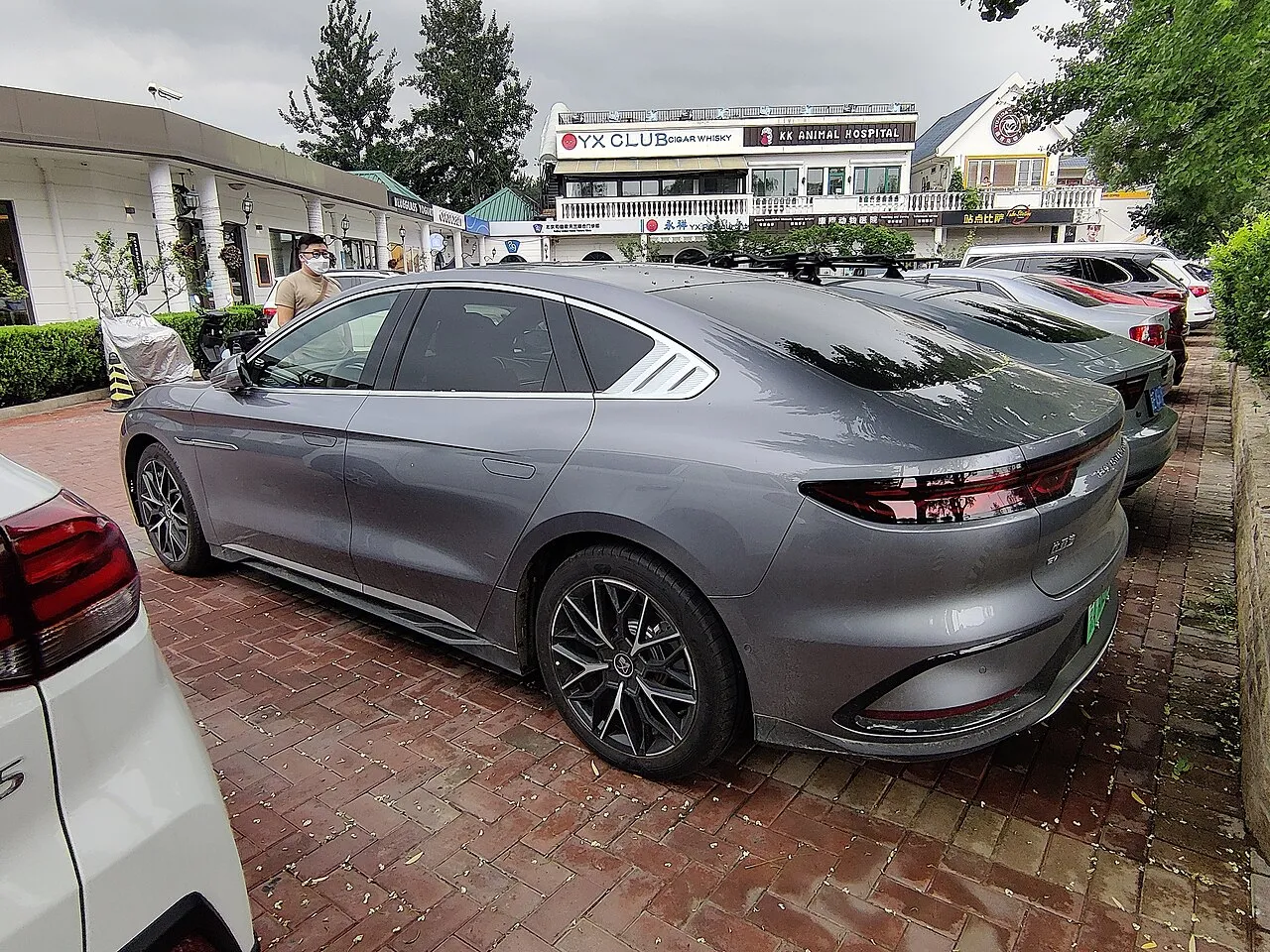
The short answer: For a US shopper, the Hyundai IONIQ 6 is the more straightforward choice to evaluate: its 2025 US range ratings are EPA figures, and it offers rear- and all-wheel drive configurations. The BYD HAN figures here describe European 2025 models and use the WLTP standard, so they do not establish a like-for-like US range comparison.
For most US sedan shoppers weighing these two cars, the Hyundai IONIQ 6 is the more practical place to start. Its 2025 US EPA ratings cover several configurations, including rear-wheel drive versions rated as high as 361 miles. The BYD HAN figures here are for 2025 European models and use the WLTP test standard; they do not show how the HAN would compare on US roads or under the EPA cycle.
The choice also turns on the kind of sedan you want. The IONIQ 6 is shorter and narrower in the US model figures below, while the HAN is a larger European-market sedan. The IONIQ 6’s range, drive layout and charging figures make it easier to assess for US use. The HAN’s published European figures describe a powerful, roomy alternative, but US market availability and local ownership details are not established here.
Figures at a glance
Range figures use different test standards, so compare each only within its own market and standard. EPA, WLTP and NRCan ratings are not interchangeable estimates of the same driving conditions. Dimensions and power figures below come from OpenEV Data; range ratings come from the named rating source or EVDB.
| Vehicle and version | Market, model year, test standard | Key figures | Source |
|---|---|---|---|
| Hyundai IONIQ 6 Standard Range, RWD | US, 2025, EPA | 224 mi range; 53 kWh gross, 50 kWh usable battery; 11 kW AC and 220 kW peak DC charging; 111 kW power; 350 Nm torque; 8.8 seconds 0–100 km/h; 4,855 mm long, 1,880 mm wide, 1,495 mm high; 2,950 mm wheelbase; 1,785 kg curb weight | US EPA fueleconomy.gov; OpenEV Data |
| Hyundai IONIQ 6 Long Range, RWD | US, 2025, EPA | 361 mi range; 77.4 kWh gross, 72.6 kWh usable battery; 11 kW AC and 220 kW peak DC charging; 168 kW power; 350 Nm torque; 7.4 seconds 0–100 km/h; 4,855 mm long, 1,880 mm wide, 1,495 mm high; 2,950 mm wheelbase; 1,950 kg curb weight | US EPA fueleconomy.gov; OpenEV Data |
| Hyundai IONIQ 6 Long Range, AWD | US, 2025, EPA | 309 mi range; 77.4 kWh gross, 72.6 kWh usable battery; 11 kW AC and 220 kW peak DC charging; 239 kW power; 605 Nm torque; 5.1 seconds 0–100 km/h; 4,855 mm long, 1,880 mm wide, 1,495 mm high; 2,950 mm wheelbase; 2,110 kg curb weight | US EPA fueleconomy.gov; OpenEV Data |
| Hyundai IONIQ 6 AWD, 18-inch wheels | US, 2025, EPA | 316 mi range | US EPA fueleconomy.gov |
| Hyundai IONIQ 6 AWD, 20-inch wheels | US, 2025, EPA | 270 mi range | US EPA fueleconomy.gov |
| Hyundai IONIQ 6 RWD, 18-inch wheels | US, 2025, EPA | 342 mi range | US EPA fueleconomy.gov |
| Hyundai IONIQ 6 RWD, 20-inch wheels | US, 2025, EPA | 291 mi range | US EPA fueleconomy.gov |
| BYD HAN EV | Europe, 2025, WLTP | 521 km range; 85.4 kWh gross, 83 kWh usable LFP battery; 11 kW AC, 120 kW peak DC; 163 kW power; 330 Nm torque; 7.9 seconds 0–100 km/h; 4,995 mm long, 1,910 mm wide, 1,495 mm high; 2,920 mm wheelbase; 2,100 kg curb weight | EVDB |
| BYD HAN Flagship | Europe, 2025, WLTP | 521 km range; 85.4 kWh gross and usable LFP battery; 7 kW AC, 120 kW peak DC; AWD; 380 kW power; 700 Nm torque; 3.9 seconds 0–100 km/h; 4,995 mm long, 1,910 mm wide, 1,495 mm high; 2,920 mm wheelbase; 2,250 kg curb weight | OpenEV Data |
Size and cabin layout
The US 2025 IONIQ 6 versions with published dimensions measure 4,855 mm long, 1,880 mm wide and 1,495 mm high, with a 2,950 mm wheelbase. The European 2025 HAN is 4,995 mm long and 1,910 mm wide, with the same listed height and a 2,920 mm wheelbase. Those measurements point to a longer, wider HAN, while the IONIQ 6 has the longer distance between its axles in these particular versions.
That gives shoppers a useful first screen, but dimensions alone cannot settle cabin comfort. They do not tell you how much headroom, legroom or usable storage each seat offers, or how easily passengers can get in and out. The models also differ by market and model year in the figures above, so the measurements should not be treated as a direct comparison of US-market examples.
For a real purchase decision, check the specific car available to you. Sit in both rows, try the seating position, and assess whether the rear seat and cargo area suit your passengers and routine. The source figures do not establish detailed interior layouts or cargo capacity, so those points require inspection of the actual vehicle and its local trim.
Range and efficiency
The IONIQ 6’s US EPA ratings show why the exact configuration matters. The 2025 RWD Long Range is rated at 361 miles, compared with 342 miles for the RWD version with 18-inch wheels and 291 miles with 20-inch wheels. The AWD Long Range is rated at 309 miles; its 18-inch- and 20-inch-wheel versions are rated at 316 and 270 miles, respectively. The Standard Range RWD is rated at 224 miles.
These are EPA figures for the US market. The European IONIQ 6 also has separate WLTP figures, including 680 km for a 2026 RWD version and 650 km for the AWD version, but those ratings do not substitute for US EPA results. Canada’s 2025 NRCan ratings are separate again: for example, the Long Range RWD is listed at 550 km with 18-inch wheels and 468 km with 20-inch wheels. NRCan, EPA and WLTP numbers should each be read in their own context.
The HAN’s two listed European versions both have a 521 km WLTP range rating. That number is not directly comparable to an IONIQ 6 EPA range in miles. Nor does a larger battery automatically mean greater efficiency: battery capacity and rated range alone do not show energy use under the same test conditions. For a US buyer, the IONIQ 6’s EPA ratings provide the more relevant comparison point in this set of figures.
Charging and performance
OpenEV Data lists 11 kW AC charging and a 220 kW peak DC rate for the specified US 2025 IONIQ 6 versions. The HAN EV is listed at 11 kW AC and 120 kW peak DC, while the HAN Flagship has 7 kW AC and the same 120 kW peak DC figure. Peak charging power is a maximum rating, not a promise that a car will hold that rate throughout a charging session.
Connector details also matter when evaluating a car for US ownership. The listed US IONIQ 6 charging connector is CCS2, and the European HAN Flagship is also listed with CCS2. These entries do not confirm what connector, equipment or network access would apply to a particular US-market vehicle. Verify the actual car’s charging hardware and compatibility before relying on it for home or public charging.
Performance separates the HAN trims sharply. The European HAN EV is listed at 163 kW and 330 Nm, with a 7.9-second 0–100 km/h time; the AWD Flagship is rated at 380 kW and 700 Nm, with a 3.9-second time. The US IONIQ 6 Long Range RWD is listed at 168 kW and 350 Nm, while the AWD version is listed at 239 kW and 605 Nm. The HAN Flagship is the more powerful entry on paper, but its figures describe a European version and should not be taken as a US purchase specification.
Which sedan fits your ownership needs?
The IONIQ 6 makes the clearest case for a US shopper who wants a sedan with published EPA range ratings across different wheel and drive configurations. The RWD Long Range rating is the highest among the listed US 2025 versions, while AWD offers a different balance of traction and power. The Standard Range version has a lower EPA range rating, so choosing among trims means matching the car’s range to your routes and charging access.
The HAN may attract shoppers who want a larger body and a high-output AWD flagship. But the figures here describe European 2025 versions. They do not establish US availability, local warranty or service arrangements, charging compatibility, or what equipment a buyer could obtain in the United States. Those are practical ownership questions to resolve with a local seller before treating the HAN as an alternative.
For either sedan, consider where charging will happen and how often longer journeys are part of your routine. A rated range is a standardized comparison figure, not a guarantee for every trip; driving conditions and use affect real-world range. Check that the vehicle’s charging connector and available charging options match your home and travel plans, then assess the cabin and cargo space in person.
Verdict: The IONIQ 6 is the better-supported choice for a US comparison because its US-market EPA ratings cover multiple configurations. The HAN’s European WLTP figures make it possible to understand its listed size and performance, but they cannot establish an equivalent US range or a local ownership case. Compare the actual trims available to you and keep each market’s test ratings separate.
Frequently asked questions
Which has the longer rated range?
The listed 2025 US IONIQ 6 RWD Long Range has a 361-mile EPA rating. The 2025 European BYD HAN versions have a 521 km WLTP rating. Those results use different test standards and should not be compared as equivalent.
Is the BYD HAN available in the United States?
The figures here describe European 2025 HAN versions and do not establish US availability.
How much longer is the BYD HAN than the US 2025 IONIQ 6?
The European 2025 HAN is listed at 4,995 mm long, while the US 2025 IONIQ 6 versions with dimensions are listed at 4,855 mm.
Which listed version has the most power?
The European 2025 BYD HAN Flagship is listed at 380 kW and 700 Nm. The US 2025 IONIQ 6 AWD is listed at 239 kW and 605 Nm.
Related stories

How to Build a Flexible EV Charging Routine for Work
Build charging around the miles you need for your next drive, using home, work, or public charging as your schedule allows. Keep a practical buffer.

How to Choose an EV When It’s Your Household’s Only Car
Compare home charging, everyday range flexibility, and service access to find an EV that can handle your household’s needs without a backup car.

How to Check Whether an EV Can Carry a Roof Tent
Compare an EV’s roof-load limit, approved mounting points and tent hardware before buying. Then account for added wind resistance, noise and energy use.