Hyundai IONIQ 5 vs Volvo EX30: A US Buyer's Guide
Compare the Hyundai IONIQ 5 and Volvo EX30 on US EPA range, charging, battery size, performance and price, with European figures clearly separated for context.
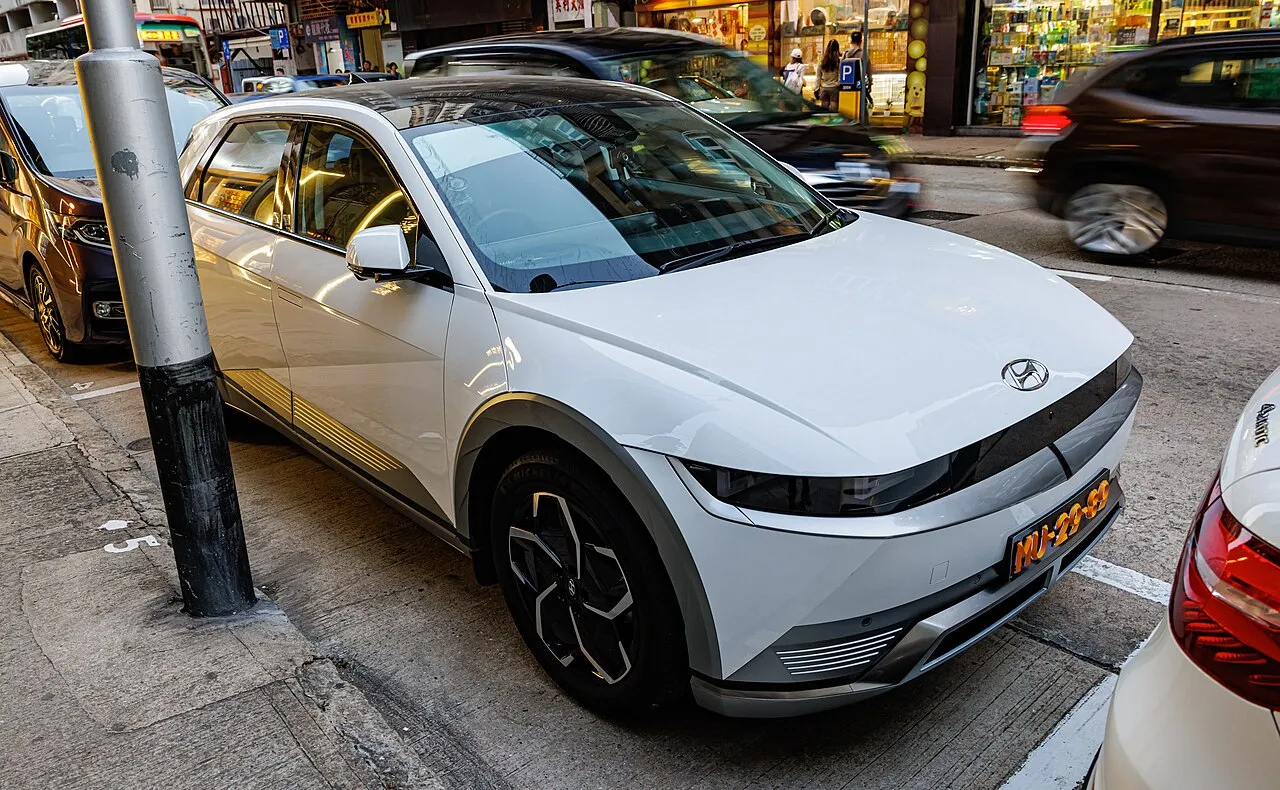
The short answer: The Hyundai IONIQ 5 is the stronger choice for maximum EPA-rated range, while the Volvo EX30 suits buyers seeking a smaller SUV or prioritizing acceleration. The US 2027 IONIQ 5 RWD has a 318-mile EPA rating, versus 261 miles for the US 2026 EX30 Single Motor Extended Range; battery, fast-charging and acceleration comparisons below use explicitly identified European versions.
The Hyundai IONIQ 5 is the stronger choice for a US shopper prioritizing maximum rated range. The Volvo EX30 makes more sense for someone seeking a smaller SUV or placing greater emphasis on acceleration, although the dimensions and acceleration figures discussed here describe European versions. On US EPA ratings, the 2027 IONIQ 5 RWD reaches 318 miles, while the 2026 EX30 Single Motor Extended Range reaches 261 miles.
Price does not yield an equally complete comparison. The US 2026 EX30 Single Motor Extended Range has a starting price of $38,950 as of October 2026. A US starting price for the 2027 IONIQ 5 has not been published. European prices cannot establish which vehicle costs less in the United States.
The key figures, with markets kept separate
US range and Level 2 charging figures below come from US EPA fueleconomy.gov. European IONIQ 5 figures come from EVDB, while the European EX30 Twin Motor figures in this table come from OpenEV Data. EPA and WLTP range ratings use different standards and should not be treated as equivalent. For battery capacity, charging power, acceleration and dimensions, these sources do not identify a separate test standard.
| Vehicle, market and model year | Range and standard | Battery | Charging | Performance and size | US starting price |
|---|---|---|---|---|---|
| Hyundai IONIQ 5 RWD; US, 2027; US EPA fueleconomy.gov | 318 miles; EPA | US capacity has not been published | 9.1 hours for a full Level 2 charge; EPA figure | RWD; US acceleration and dimensions have not been published | Has not been published |
| Volvo EX30 Single Motor Extended Range; US, 2026; US EPA fueleconomy.gov | 261 miles; EPA | US capacity has not been published | 8 hours for a full Level 2 charge; EPA figure | RWD; US acceleration and dimensions have not been published | $38,950; October 2026; no test standard applicable |
| Hyundai IONIQ 5 Long Range AWD; Europe, 2026; EVDB | 498 km; WLTP | 82 kWh gross; 77 kWh usable; NMC | 11 kW AC; 240 kW peak DC | 239 kW; 0–100 km/h in 5 seconds; 4,655 × 1,890 × 1,605 mm; 3,000 mm wheelbase | Not applicable to this European version |
| Volvo EX30 Base Twin Motor; Europe, 2025; OpenEV Data | 460 km; WLTP | 69 kWh gross; 66 kWh usable; NMC | 11 kW AC; 153 kW peak DC | 315 kW; 0–100 km/h in 3.6 seconds; 4,233 × 1,837 × 1,555 mm; 2,650 mm wheelbase | Not applicable to this European version |
EPA range: Hyundai leads, but trim matters
The longest-range US versions establish a clear advantage for Hyundai: the 2027 IONIQ 5 RWD has a 318-mile EPA rating against the 2026 EX30 Single Motor Extended Range's 261 miles. Both are rear-wheel drive. For buyers choosing primarily by the rated distance between charges, those are the relevant versions to compare.
The US 2027 IONIQ 5 AWD with 19-inch wheels earns a 290-mile EPA rating. The AWD version with 20-inch wheels earns 269 miles, and the AWD XRT earns 259 miles, according to US EPA fueleconomy.gov. Each falls below the Hyundai RWD's rating, so the model name alone does not establish range.
Volvo's US 2026 EX30 Twin Performance has a 253-mile EPA rating. Its Cross Country versions earn 203 miles with 18-inch wheels and 227 miles with 19-inch wheels. Those ratings also show why wheel size should be read alongside the exact version: the EX30 Cross Country with larger wheels has the higher rating, while the Hyundai AWD comparison runs the other way.
The US 2027 IONIQ 5 Standard Range earns 245 miles under EPA testing. That places it below the US 2026 EX30 Single Motor Extended Range and Twin Performance. Hyundai therefore wins the maximum-range comparison, but an individual IONIQ 5 does not automatically outrange an individual EX30.
Battery capacity: European figures require care
EVDB gives the European 2026 IONIQ 5 Long Range AWD an 82-kWh gross battery with 77 kWh usable and NMC chemistry. Its European Standard Range RWD counterpart has 63 kWh gross and 58 kWh usable, also with NMC chemistry. These describe distinct battery options, rather than a single capacity shared across the Hyundai range.
For the European 2025 EX30, OpenEV Data gives the Base version a 51-kWh gross, 49-kWh usable LFP battery. Its Base 69 kWh and Base Twin Motor versions use NMC batteries with 69 kWh gross and 66 kWh usable. These European battery figures should not be assigned to the US versions simply because their names sound similar.
There is also a source distinction within the European EX30 range. EVDB reports 69 kWh gross and 64 kWh usable for the 2025 Extended Range Single Motor and Twin Motor Performance. OpenEV Data reports 66 kWh usable for its corresponding larger-battery entries. Keeping those figures attached to their exact source and version avoids turning them into one supposedly universal EX30 capacity.
Charging: separate a full charge from peak power
US EPA fueleconomy.gov gives every US 2026 EX30 version an eight-hour full Level 2 charging time. For the US 2027 IONIQ 5, the corresponding figures are 9.1 hours for RWD, 8.2 hours for the AWD versions and 6.3 hours for Standard Range. On this measure, the EX30 takes less time than the longest-range Hyundai, while the Standard Range Hyundai takes less time than either.
Those full-charge times do not establish which SUV completes a DC charging stop sooner. EVDB reports peak DC charging power of 240 kW for the European 2026 IONIQ 5 Long Range AWD and 220 kW for Standard Range RWD. Both have an 11-kW AC charging rating.
OpenEV Data reports 153-kW peak DC charging and 11-kW AC charging for the European 2025 EX30 Base Twin Motor. Hyundai consequently has the higher peak DC power in that European comparison. A peak-power figure alone does not establish a charging duration, and a US fast-charging time comparison has not been published.
Performance and size favor different priorities
The European figures point toward the EX30 for acceleration. OpenEV Data gives the European 2025 EX30 Base Twin Motor 315 kW and a 3.6-second 0–100 km/h time. EVDB gives the European 2026 IONIQ 5 Long Range AWD 239 kW and a five-second 0–100 km/h time. These are European acceleration figures using the same speed interval; neither should be presented as a US 0–60 mph result.
The dimensions show a different distinction. EVDB puts the European 2026 IONIQ 5 Long Range AWD at 4,655 mm long, 1,890 mm wide and 1,605 mm tall, with a 3,000-mm wheelbase. OpenEV Data puts the European 2025 EX30 Base Twin Motor at 4,233 mm long, 1,837 mm wide and 1,555 mm tall, with a 2,650-mm wheelbase.
That makes the European Hyundai longer, wider and taller, with a longer wheelbase. The Volvo has the smaller exterior footprint in this comparison. Those measurements support a size distinction, but do not establish a difference in passenger room or cargo capacity.
Which buyer suits each SUV?
Choose the IONIQ 5 if maximum EPA-rated range is the deciding factor. The US 2027 RWD version leads this comparison, and the AWD versions with 19- or 20-inch wheels also exceed the US 2026 EX30 Twin Performance's EPA rating. The European Hyundai figures additionally support shoppers interested in a larger vehicle and higher peak DC charging power, subject to the market distinction.
Choose the EX30 if a smaller exterior footprint or strong acceleration matters more, using the European versions as context for those priorities. For US shoppers, the 2026 Single Motor Extended Range combines Volvo's highest EPA range here with a $38,950 starting price as of October 2026. It is the clearer price reference, although the absence of a published US 2027 IONIQ 5 starting price prevents a complete purchase-price verdict.
Frequently asked questions
Which has more EPA range, the Hyundai IONIQ 5 or Volvo EX30?
The US 2027 IONIQ 5 RWD has a 318-mile EPA rating, compared with 261 miles for the US 2026 EX30 Single Motor Extended Range. The result depends on trim: the US 2027 IONIQ 5 Standard Range is rated at 245 miles.
What is the Volvo EX30's US starting price?
The US 2026 Volvo EX30 Single Motor Extended Range has a starting price of $38,950 as of October 2026. A US starting price for the 2027 IONIQ 5 has not been published.
Which SUV has the higher peak fast-charging power?
For European versions, EVDB reports 240 kW peak DC charging for the 2026 IONIQ 5 Long Range AWD, while OpenEV Data reports 153 kW for the 2025 EX30 Base Twin Motor. These figures do not establish US charging performance or charging-stop duration.
Is the Volvo EX30 smaller than the Hyundai IONIQ 5?
The European versions compared here show a smaller EX30. EVDB gives the European 2026 IONIQ 5 Long Range AWD a length of 4,655 mm, while OpenEV Data gives the European 2025 EX30 Base Twin Motor a length of 4,233 mm; the EX30 is also narrower and shorter.
Related stories

How to Choose an EV for Caregiving and Support Trips
Compare passenger access, rear-seat comfort, equipment storage and charging routines to find an EV that fits recurring appointments and support trips.

Choosing 120V or 240V Charging for an EV at Home
A standard outlet may work for an EV that sits parked for long stretches. A 240V setup adds charging power, which can matter when daily driving uses more energy.

How to Plan EV Charging When You Park on the Street
Street parking can work with EV ownership when you confirm local rules, identify dependable charging, and build a routine that fits where you park.