How the Hyundai KONA Electric and Kia EV6 Compare
Compare Hyundai KONA Electric and Kia EV6 range, charging, batteries, performance and size, with US prices and clear distinctions between markets and years.
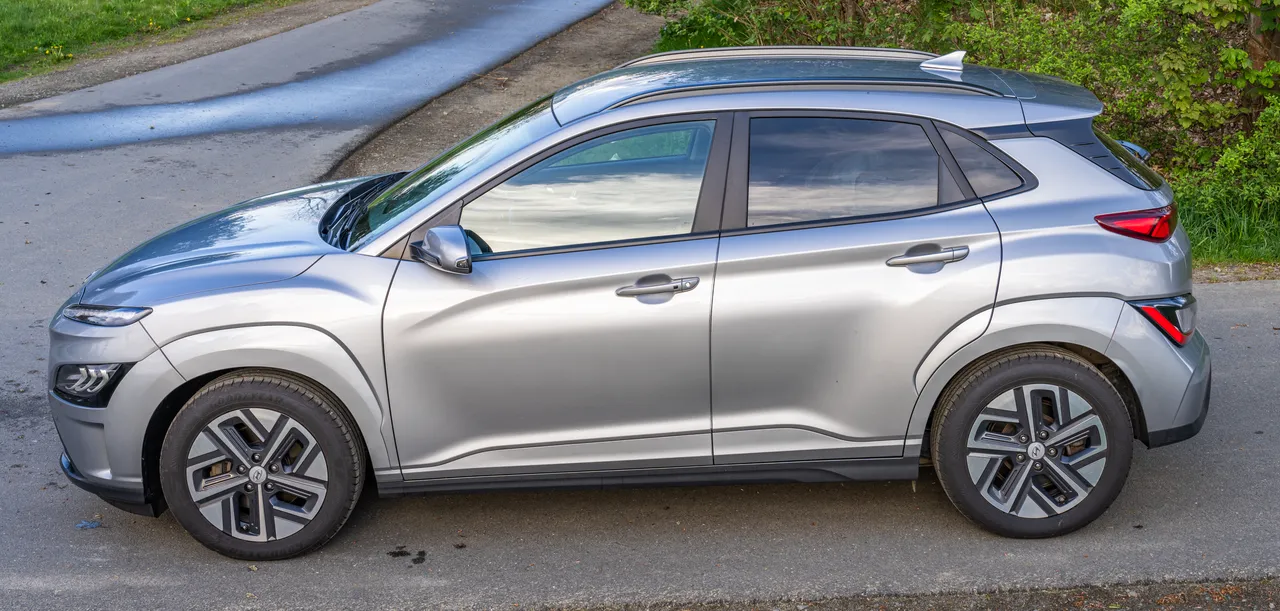
The short answer: The Hyundai KONA Electric suits buyers prioritizing a smaller vehicle and a documented US entry price, while the Kia EV6 offers higher maximum EPA range and an AWD choice. The comparison spans different model years, and the EV6’s battery, peak charging, acceleration and size figures below apply to European versions.
The Hyundai KONA Electric is the stronger fit for a buyer seeking a smaller vehicle with a documented US entry price. The Kia EV6 suits buyers seeking more EPA-rated range or an AWD option. For US models, EPA ratings reach 261 miles for the 2025 KONA Electric and 319 miles for the 2027 EV6. European EV6 figures also show a larger battery and higher peak DC charging power, but those figures require a separate, clearly labeled comparison.
The distinction matters because these are not matching model-year profiles. US EPA ratings establish range and Level 2 full-charge times, while OpenEV Data and EVDB describe additional versions. A European battery, acceleration or charging figure should not automatically become a claim about a US vehicle with a similar trim name.
Hyundai KONA Electric and Kia EV6 figures at a glance
The table separates market, model year and measurement basis. EPA applies to the range figures marked EPA; it should not be read as the test standard for battery capacity, peak charging power, dimensions or acceleration. Acceleration figures use 0–100 km/h, rather than 0–60 mph.
| Measure | Hyundai KONA Electric | Kia EV6 | Source and measurement basis |
|---|---|---|---|
| US EPA range | US, 2025: 261 miles, 17-inch wheels; 230 miles, 19-inch wheels | US, 2027: 319 miles, Long Range RWD; 295 miles, Long Range AWD with 19-inch wheels; 270 miles, Long Range AWD with 20-inch wheels; 237 miles, Standard Range RWD | US EPA fueleconomy.gov; EPA range ratings |
| US Level 2 full-charge time | US, 2025: 6.7 hours, 17-inch wheels; 6.9 hours, 19-inch wheels | US, 2027: 9 hours, Long Range RWD; 8.8 hours, Long Range AWD with 19-inch wheels; 8.9 hours, Long Range AWD with 20-inch wheels; 6.2 hours, Standard Range RWD | US EPA fueleconomy.gov; Level 2 full-charge figures |
| Additional US range profiles | US, 2025: Long Range, 258 miles EPA; Standard Range, 160 miles EPA | US, 2027: range versions above | KONA: OpenEV Data; Standard Range also credits US EPA fueleconomy.gov. EPA range basis |
| Battery capacity | US, 2025: Long Range, 64 kWh gross/58 kWh usable; Standard Range, 39.2/36 kWh | Europe, 2025: Long Range RWD and AWD, 84 kWh gross/77.4 kWh usable | KONA: OpenEV Data; EV6: EVDB. Capacity figures, not range-test results |
| AC and peak DC charging | US, 2025 Long Range and Standard Range: 7.2 kW AC; 100 kW peak DC | Europe, 2025 Long Range RWD and AWD: 11 kW AC; 240 kW peak DC | KONA: OpenEV Data; EV6: EVDB. Charging power, not charging-duration tests |
| Output and acceleration | US, 2025: Long Range, 150 kW, 395 Nm, 7.9 seconds; Standard Range, 100 kW, 395 Nm, 9.9 seconds | Europe, 2025: Long Range RWD, 168 kW, 350 Nm, 7.3 seconds; Long Range AWD, 239 kW, 605 Nm, 5.2 seconds | KONA: OpenEV Data; EV6: EVDB. Acceleration: 0–100 km/h |
| Length, width and height | US, 2025 Long Range and Standard Range: 4,180 × 1,800 × 1,570 mm | Europe, 2025 Long Range RWD and AWD: 4,695 × 1,890 × 1,550 mm | KONA: OpenEV Data; EV6: EVDB. Exterior dimensions |
| Wheelbase | US, 2025 Long Range and Standard Range: 2,600 mm | Europe, 2025 Long Range RWD and AWD: 2,900 mm | KONA: OpenEV Data; EV6: EVDB. Dimensional measurement |
| US entry price | US, 2025 Standard Range: $32,975, as of November 2026 | A US starting price has not been published. | KONA Standard Range profile: OpenEV Data and US EPA fueleconomy.gov; price is dated, not a test result |
EPA range favors the long-range EV6
The clearest US range comparison is between the EPA-rated wheel and drivetrain configurations. The 2027 EV6 Long Range RWD reaches 319 miles, compared with 261 miles for the 2025 KONA Electric on 17-inch wheels. That gives the Kia a 58-mile advantage on the same named range standard, although the model years differ.
Wheel choice changes the picture within each vehicle. The KONA’s EPA rating falls from 261 miles with 17-inch wheels to 230 miles with 19-inch wheels. The EV6 Long Range AWD is rated at 295 miles with 19-inch wheels and 270 miles with 20-inch wheels. Buyers comparing a particular version should use its corresponding wheel configuration.
The EV6 badge alone does not guarantee more range. Its US 2027 Standard Range RWD has a 237-mile EPA rating, below the 2025 KONA’s 261-mile rating on 17-inch wheels. Choosing the Kia’s long-range battery and drivetrain configuration is therefore central to its range advantage.
OpenEV Data separately gives the US 2025 KONA Long Range a 258-mile EPA figure. That should remain distinct from the EPA’s wheel-specific 261-mile entry. The Standard Range profile carries a 160-mile EPA figure and credits both OpenEV Data and US EPA fueleconomy.gov. These profiles should not be blended into one universal KONA range claim.
Battery capacity and charging answer different questions
OpenEV Data gives the US 2025 KONA Long Range a 64-kWh gross battery and 58-kWh usable capacity. Its Standard Range counterpart has 39.2 kWh gross and 36 kWh usable. EVDB gives the European 2025 EV6 Long Range RWD and AWD an 84-kWh gross battery with 77.4 kWh usable. On those figures, the European Kia has the larger battery.
Keep gross and usable capacity aligned when comparing them. Comparing the EV6’s gross capacity with the KONA’s usable capacity would exaggerate the difference. More importantly for an American shopper, the European EV6 capacities should remain attached to their European model-year profiles rather than being transferred to the US 2027 EPA entries.
Charging power also favors the European EV6 profile: EVDB gives it 11 kW AC and 240 kW peak DC, against OpenEV Data’s 7.2 kW AC and 100 kW peak DC for the US KONA profiles. This establishes a higher peak power figure for that Kia version. It does not establish a complete charging-stop duration or mean every charging session sustains peak power.
The US EPA full-charge figures illustrate why charging power and elapsed time need separate treatment. The KONA takes 6.7 or 6.9 hours, depending on wheel configuration. The EV6 Long Range versions take 8.8 to 9 hours, while Standard Range RWD takes 6.2 hours. These are Level 2 full-charge figures, not DC fast-charging times, so they cannot substantiate a fast-charging-stop comparison.
Performance depends on version and market
Both US 2025 KONA profiles use front-wheel drive. OpenEV Data gives the Long Range 150 kW and a 7.9-second 0–100 km/h time, versus 100 kW and 9.9 seconds for Standard Range. Both carry a 395-Nm torque figure. Within those profiles, the Long Range combines greater battery capacity with stronger acceleration.
The US 2027 EV6 EPA entries establish a choice between rear-wheel drive and all-wheel drive. For numerical performance comparisons, EVDB’s European 2025 Long Range RWD produces 168 kW and reaches 100 km/h in 7.3 seconds. Long Range AWD increases output to 239 kW and cuts that time to 5.2 seconds. Those European figures demonstrate the distinction between the two versions without establishing US acceleration results.
The KONA has the smaller exterior footprint
OpenEV Data’s US 2025 KONA dimensions describe a shorter, narrower vehicle than EVDB’s European 2025 EV6 Long Range dimensions. The KONA measures 4,180 mm long and 1,800 mm wide; the EV6 measures 4,695 mm long and 1,890 mm wide. The Kia also has the longer wheelbase, at 2,900 mm versus 2,600 mm.
That supports choosing the KONA when exterior size matters. It does not establish a cargo-capacity or rear-seat-space advantage for either vehicle. The EV6’s greater length and wheelbase describe its footprint, but those measurements alone do not quantify usable interior room.
US price and which buyer each vehicle suits
The US 2025 KONA Standard Range has a $32,975 price dated November 2026. Its profile credits OpenEV Data and US EPA fueleconomy.gov. Treat that amount as a dated entry-price reference tied to Standard Range; it should not be attached to the longer-range KONA versions. A US EV6 starting price has not been published, so a dollar-for-dollar starting-price gap cannot be established.
Choose the KONA Electric if a smaller exterior and a documented US entry price are the main priorities. Its 17-inch-wheel EPA configuration also offers more rated range than the Standard Range EV6. Choose the EV6 Long Range if maximum EPA range leads the decision, or an AWD option matters. Buyers drawn to its higher charging power or quicker acceleration should keep those European figures separate from the US version they intend to purchase.
Frequently asked questions
Which has more EPA range, the KONA Electric or EV6?
The US 2027 Kia EV6 Long Range RWD is EPA-rated at 319 miles, compared with 261 miles for the US 2025 Hyundai KONA Electric with 17-inch wheels. The EV6 Standard Range RWD is rated at 237 miles, so the answer depends on version.
Does the Kia EV6 charge faster than the KONA Electric?
EVDB gives the European 2025 EV6 Long Range a 240-kW peak DC charging figure, while OpenEV Data gives the US 2025 KONA Long Range and Standard Range 100 kW. These different-market peak figures do not establish a US charging-stop time comparison.
What is the US starting price of the KONA Electric?
The US 2025 KONA Electric Standard Range has a $32,975 price dated November 2026. The figure belongs to the Standard Range profile credited to OpenEV Data and US EPA fueleconomy.gov.
Which vehicle offers all-wheel drive?
The US 2027 Kia EV6 EPA entries include Long Range AWD versions with 19-inch or 20-inch wheels. The US 2025 KONA Electric versions covered here use front-wheel drive.
Which vehicle is smaller?
OpenEV Data gives the US 2025 KONA Electric a length of 4,180 mm and width of 1,800 mm. EVDB gives the European 2025 EV6 Long Range a length of 4,695 mm and width of 1,890 mm, making the KONA shorter and narrower in this market-labeled comparison.
Related stories

How to Choose an EV for Caregiving and Support Trips
Compare passenger access, rear-seat comfort, equipment storage and charging routines to find an EV that fits recurring appointments and support trips.

Choosing 120V or 240V Charging for an EV at Home
A standard outlet may work for an EV that sits parked for long stretches. A 240V setup adds charging power, which can matter when daily driving uses more energy.

How to Plan EV Charging When You Park on the Street
Street parking can work with EV ownership when you confirm local rules, identify dependable charging, and build a routine that fits where you park.