How the BYD ATTO 2 and Hyundai KONA Electric Compare
The ATTO 2 has the larger exterior footprint, but cabin room is unconfirmed. Compare European charging figures and range ratings before choosing a small SUV.
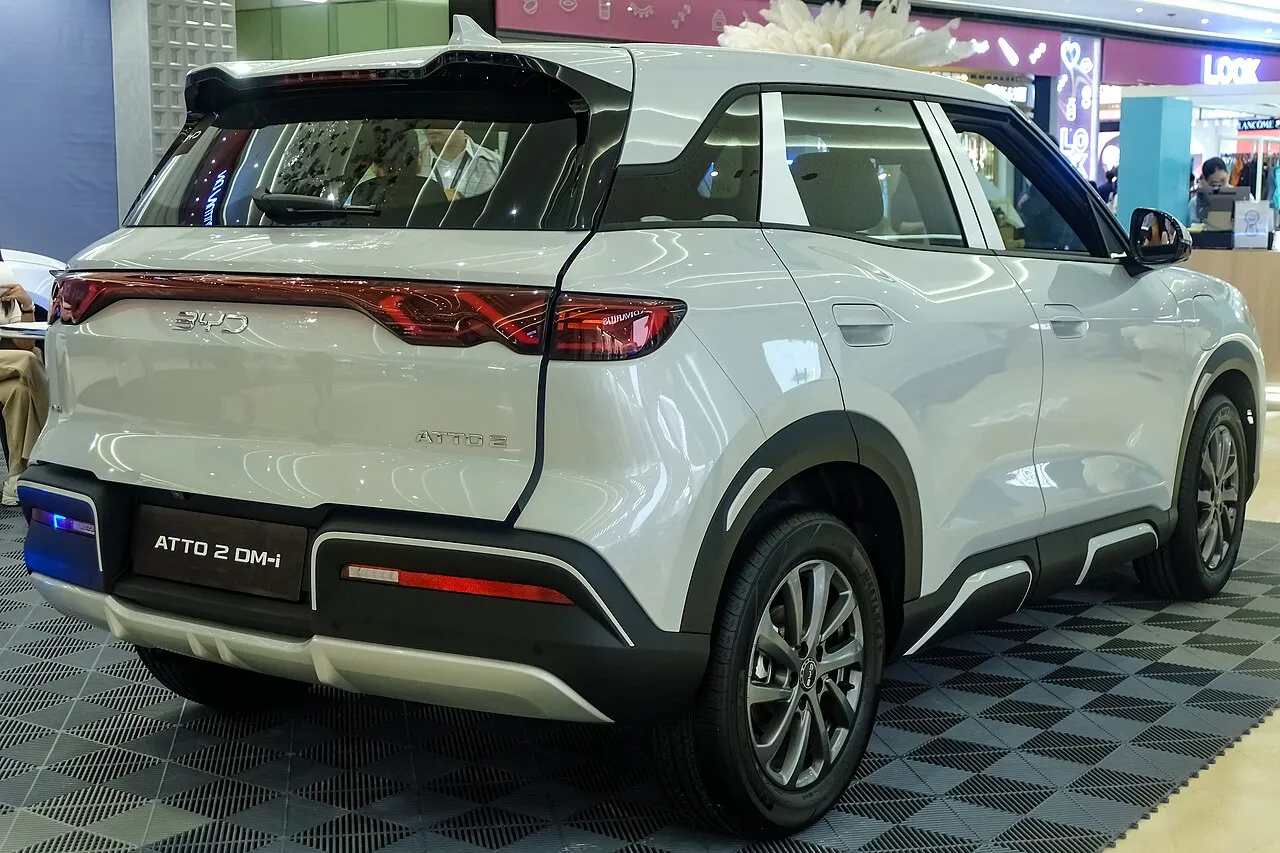
The short answer: The European BYD ATTO 2 is longer, wider and taller than the European Hyundai KONA Electric, but exterior size alone cannot establish which has more cabin room. The ATTO 2 has the higher published AC charging rating; the KONA Electric has the higher published DC peak.
The BYD ATTO 2 is the larger vehicle on the outside, while the Hyundai KONA Electric has the higher published peak DC charging rate in the European versions shown below. That makes the choice less straightforward than a simple size comparison. The ATTO 2’s dimensions may appeal to a shopper seeking a taller, broader small SUV, but they do not prove that it has more passenger or cargo space. For charging, the ATTO 2 leads on the published AC power rating, while the KONA Electric leads on the published DC peak. Range depends heavily on which KONA Electric version is under consideration.
Exterior size and published charging figures
The European figures below come from EVDB and OpenEV Data. Range figures for those versions use WLTP. The US KONA Electric figures come from US EPA fueleconomy.gov and use EPA range ratings. Dimensions and charging power are physical measurements or equipment ratings, so no driving test standard applies to those columns. A WLTP range figure should not be read as equivalent to an EPA figure.
| Vehicle and version | Market and model year | Exterior dimensions and wheelbase; test standard | Range and test standard | Charging rating; test standard | Source |
|---|---|---|---|---|---|
| BYD ATTO 2 Standard | Europe, 2025 | 4,310 mm long, 1,830 mm wide, 1,675 mm tall; 2,620 mm wheelbase. No driving test standard applies. | 312 km WLTP | 11 kW AC; 65 kW peak DC. No driving test standard applies. | EVDB |
| Hyundai KONA Electric Standard Range | Europe, 2025 | 4,180 mm long, 1,800 mm wide, 1,570 mm tall; 2,600 mm wheelbase. No driving test standard applies. | 305 km WLTP | 7.2 kW AC; 100 kW peak DC. No driving test standard applies. | OpenEV Data and EVDB |
| Hyundai KONA Electric Long Range | Europe, 2025 | 4,180 mm long, 1,800 mm wide, 1,570 mm tall; 2,600 mm wheelbase. No driving test standard applies. | 484 km WLTP | 7.2 kW AC; 100 kW peak DC. No driving test standard applies. | OpenEV Data and EVDB |
| Hyundai KONA Electric, 17-inch wheels | US, 2025 | Not shown for this version | 261 miles EPA | 6.7 hours for a full Level 2 charge; no driving test standard applies to charging time. | US EPA fueleconomy.gov |
| Hyundai KONA Electric, 19-inch wheels | US, 2025 | Not shown for this version | 230 miles EPA | 6.9 hours for a full Level 2 charge; no driving test standard applies to charging time. | US EPA fueleconomy.gov |
What the footprints say about cabin room
EVDB puts the European ATTO 2 at 4,310 mm long, 1,830 mm wide and 1,675 mm tall. OpenEV Data and EVDB put both European KONA Electric versions in the table at 4,180 mm long, 1,800 mm wide and 1,570 mm tall. On those figures, the ATTO 2 occupies more length and width and stands higher. Its wheelbase is also longer: 2,620 mm according to EVDB, against 2,600 mm for the KONA Electric according to OpenEV Data and EVDB.
Length and width matter when judging how a vehicle fits a garage, a parking space or a narrow driveway. Height can matter for clearance and for the feel of getting into a vehicle. Those are useful reasons to consider exterior dimensions, especially when a shopper needs a small SUV to work in a particular space. A larger exterior, however, does not tell a buyer how the space inside has been divided among seats, cargo area and vehicle structure.
Wheelbase deserves similar care. It describes the distance between the axles and helps distinguish two vehicles with different body lengths, but it is not a rear legroom measurement. Nor does the ATTO 2’s greater exterior height establish that its occupants have more headroom. Seat position, floor height and roof shape all affect how much usable space a cabin offers. The published exterior measurements support a clear footprint comparison; they do not settle a passenger comfort comparison.
That distinction matters for a family choosing between these SUVs. If the concern is whether a child seat fits behind a front passenger, whether adults can sit comfortably in back, or whether a particular piece of luggage fits, the exterior figures cannot give a dependable answer. The ATTO 2 is the larger shape in this European comparison. Which vehicle makes better use of that shape for a particular passenger or load remains a separate question.
How the range figures change the comparison
For the European versions, the closest range comparison is between the ATTO 2 Standard and KONA Electric Standard Range. EVDB gives the ATTO 2 a 312 km WLTP rating; OpenEV Data and EVDB give the Standard Range KONA Electric a 305 km WLTP rating. Both figures use WLTP, so they can be read within the same rating framework. Their closeness does not mean the vehicles will cover identical distances on every trip. Driving conditions and charging choices still matter to an individual journey.
The European KONA Electric Long Range changes the range question substantially. OpenEV Data and EVDB give it a 484 km WLTP rating. A shopper who expects to travel beyond local routes regularly should therefore distinguish the Standard Range and Long Range KONA Electric before deciding what the nameplate offers. Treating the two KONA versions as one choice would hide a major difference in their published WLTP ratings.
US readers will also encounter EPA figures for the KONA Electric. US EPA fueleconomy.gov rates the 2025 version with 17-inch wheels at 261 miles EPA and the version with 19-inch wheels at 230 miles EPA. Those are ratings for the particular US versions identified by the EPA. The wheel distinction is consequential when reading an advertisement or checking a vehicle’s details: a KONA Electric range figure without its version and wheel information may point to a different rating than the one a buyer expects.
The European ATTO 2’s 312 km WLTP rating cannot be placed beside the US KONA Electric’s EPA mileage to declare a range winner. WLTP and EPA are different test standards, and the vehicles in those entries are identified for different markets. For an American shopper, the EPA KONA Electric ratings answer a US rating question. The European WLTP entries help compare the European versions with each other.
AC charging at home and DC charging on a trip
EVDB gives the European ATTO 2 Standard an 11 kW AC charging rating and a 65 kW peak DC rating. OpenEV Data and EVDB give both European KONA Electric versions in the table 7.2 kW AC and 100 kW peak DC. These figures point in different directions: the ATTO 2 has the higher AC rating, while the KONA Electric has the higher DC peak. Neither rating is a promise that a vehicle will charge at that power for an entire session.
AC charging is the relevant category when considering routine charging from an AC source. The vehicle’s published AC rating is one limit, but the charging equipment and electrical supply also affect the power a session can deliver. A higher vehicle rating is useful only where the rest of the charging setup can support it. The figures above therefore identify a capability difference, rather than establishing how long either vehicle would take to charge in a particular home.
DC peak power describes the highest published charging power, not an average across a stop. A DC session changes as the battery’s state of charge and conditions change. Consequently, the KONA Electric’s higher published peak does not by itself establish a specific time advantage for every road trip stop. The figures support a narrower conclusion: the European KONA Electric versions have a higher published DC peak than the European ATTO 2 Standard.
The US EPA entries answer a different charging question. US EPA fueleconomy.gov gives a full Level 2 charging time of 6.7 hours for the 2025 KONA Electric with 17-inch wheels and 6.9 hours for the version with 19-inch wheels. A full-charge time describes a different quantity from an AC power rating, so it should not be treated as a direct timing comparison with the European ATTO 2’s 11 kW figure.
Which small SUV fits the decision?
Start with the version and market that match the vehicle being considered. For the European versions here, the ATTO 2 has the larger exterior footprint and the higher AC rating. The KONA Electric has the higher DC peak, while its Long Range version has a much higher WLTP range rating than either the ATTO 2 Standard or KONA Electric Standard Range. Those are distinct advantages for distinct needs, rather than a single overall result.
If cabin space is the deciding factor, use the exterior figures as a starting point only. They establish that the ATTO 2 is longer, wider and taller, but cannot establish which rear seat or cargo area works better. If charging and range are the deciding factors, compare the exact version, its range test standard and the type of charging used most often. That keeps the decision tied to what the published figures actually measure.
Frequently asked questions
Which is bigger, the BYD ATTO 2 or Hyundai KONA Electric?
For the 2025 European versions compared here, EVDB gives the ATTO 2 greater length, width and height than the KONA Electric dimensions from OpenEV Data and EVDB. Exterior size alone does not establish which has more cabin or cargo room.
Which has the higher published DC charging peak?
For the 2025 European versions, OpenEV Data and EVDB give the KONA Electric a 100 kW peak DC rating, while EVDB gives the ATTO 2 Standard a 65 kW peak DC rating. Peak power does not describe the full charging session.
Can the European ATTO 2 range rating be compared directly with the US KONA Electric rating?
No. EVDB gives the European 2025 ATTO 2 Standard a WLTP rating, while US EPA fueleconomy.gov gives the US 2025 KONA Electric versions EPA ratings. The test standards differ.
Does the ATTO 2’s larger footprint mean it has more passenger room?
The exterior dimensions do not establish that. Cabin room depends on how space is arranged inside the vehicle.
Related stories

How to Build a Flexible EV Charging Routine for Work
Build charging around the miles you need for your next drive, using home, work, or public charging as your schedule allows. Keep a practical buffer.

How to Choose an EV When It’s Your Household’s Only Car
Compare home charging, everyday range flexibility, and service access to find an EV that can handle your household’s needs without a backup car.

How to Check Whether an EV Can Carry a Roof Tent
Compare an EV’s roof-load limit, approved mounting points and tent hardware before buying. Then account for added wind resistance, noise and energy use.