How Kia EV6 and BYD SEALION 7 Compare on Space and Charging
Compare Kia EV6 and BYD SEALION 7 dimensions, battery capacity and charging ratings, with clear distinctions between European and US versions and tests.
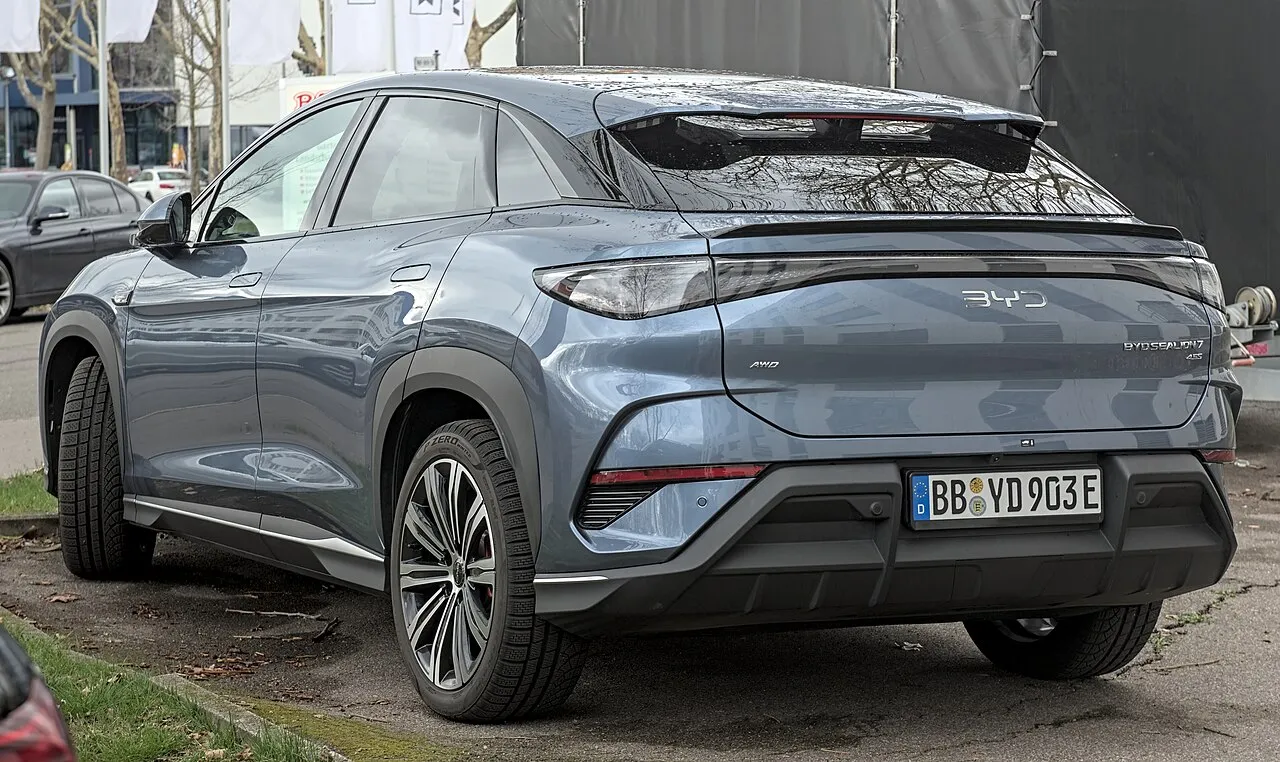
The short answer: The European 2025 BYD SEALION 7 has larger exterior dimensions than the European 2025 Kia EV6, but those measurements do not establish a passenger-space or luggage-layout winner. The European EV6 versions have higher published peak DC charging power, while actual charging-stop times cannot be ranked from peak power alone.
The BYD SEALION 7 has the larger exterior footprint in this European comparison, while the Kia EV6 has the higher published peak DC charging power. Neither establishes an outright winner: exterior size does not reveal usable passenger or luggage space, and peak charging power does not tell you how long a charging stop will take.
For American shoppers, market and model year are essential distinctions. The European 2025 versions support a comparison of dimensions, battery capacity and charging power. US EPA ratings for the 2027 EV6 describe range and Level 2 full-charge times. Those figures answer different questions and should stay attached to their respective versions.
Dimensions and charging figures by version
EVDB is the source for the European BYD and Kia figures below, with Open EV Data (Kilowatt) also credited for the EV6 GT. US figures come from US EPA fueleconomy.gov. The test-standard column applies to rated range; it does not turn dimensions or charging-power ratings into WLTP measurements.
| Vehicle and trim | Market; model year | Rated range and test standard | Exterior dimensions; wheelbase | Battery: gross / usable | Charging | Source |
|---|---|---|---|---|---|---|
| BYD SEALION 7 Comfort RWD | Europe; 2025 | 502 km; WLTP | 4,830 × 1,925 × 1,620 mm, length × width × height; 2,930 mm wheelbase | 71.8 / 69 kWh; LFP | 11 kW AC; 150 kW peak DC | EVDB |
| BYD SEALION 7 Excellence AWD | Europe; 2025 | 542 km; WLTP | 4,830 × 1,925 × 1,620 mm, length × width × height; 2,930 mm wheelbase | 91.3 / 87 kWh; LFP | 11 kW AC; 230 kW peak DC | EVDB |
| Kia EV6 Long Range RWD | Europe; 2025 | 546 km; WLTP | 4,695 × 1,890 × 1,550 mm, length × width × height; 2,900 mm wheelbase | 84 / 77.4 kWh; NMC | 11 kW AC; 240 kW peak DC | EVDB |
| Kia EV6 Long Range AWD | Europe; 2025 | 494 km; WLTP | 4,695 × 1,890 × 1,550 mm, length × width × height; 2,900 mm wheelbase | 84 / 77.4 kWh; NMC | 11 kW AC; 240 kW peak DC | EVDB |
| Kia EV6 GT | Europe; 2025 | 440 km; WLTP | 4,695 × 1,890 × 1,545 mm, length × width × height; 2,900 mm wheelbase | 84 / 77.4 kWh; NMC | 11 kW AC; 240 kW peak DC | EVDB; Open EV Data (Kilowatt) |
| Kia EV6 Long Range AWD, 19-inch wheels | US; 2027 | 295 mi; EPA | — | — | 8.8-hour Level 2 full charge | US EPA fueleconomy.gov |
| Kia EV6 Long Range AWD, 20-inch wheels | US; 2027 | 270 mi; EPA | — | — | 8.9-hour Level 2 full charge | US EPA fueleconomy.gov |
| Kia EV6 Long Range RWD | US; 2027 | 319 mi; EPA | — | — | 9-hour Level 2 full charge | US EPA fueleconomy.gov |
| Kia EV6 Standard Range RWD | US; 2027 | 237 mi; EPA | — | — | 6.2-hour Level 2 full charge | US EPA fueleconomy.gov |
What exterior size says about passenger space
EVDB gives both European 2025 SEALION 7 versions greater length, width, height and wheelbase than the European 2025 EV6 versions. That makes the BYD the larger vehicle externally. It also makes its footprint relevant when considering a garage or parking space, even before assessing how comfortably people fit inside.
Passenger accommodation depends on how that exterior envelope is used. Wheelbase helps describe the distance between the axles, but seat placement, seat thickness and cabin packaging determine how much of that distance benefits occupants. Overall height likewise does not establish headroom: the floor, seat cushion and roof lining all affect the space above a passenger.
The useful comparison is therefore seating position and usable clearance. A rear passenger needs enough knee and foot space behind the front seat in its normal driving position. Head clearance, thigh support and the ease of entering or leaving the cabin also matter. The larger BYD dimensions justify a closer look at its cabin, but do not prove that every passenger will fit better.
Luggage layout needs a separate assessment
A larger exterior also does not automatically mean a more useful cargo area. Luggage must pass through the opening and fit between the interior boundaries. The shape of that space can determine whether a bulky suitcase, stroller or other awkward item fits without changing the seating arrangement.
For a useful comparison, examine the cargo floor with the passenger seats positioned for everyday use. Opening width, floor length, wheel-arch intrusion and loading height affect different kinds of luggage. If carrying taller objects matters, clearance beneath the roof or cargo cover deserves attention alongside floor area.
These are layout questions, so the exterior dimensions cannot settle them. A family carrying passengers and bags together should assess both spaces in the same configuration. Judging the rear seat with the front seat moved forward, then judging luggage room under different conditions, would not establish whether the vehicle suits that family's normal trip.
Peak DC charging favors the European EV6 on paper
According to EVDB, the European 2025 EV6 Long Range RWD, Long Range AWD and GT share the same peak DC charging rating. Both European 2025 SEALION 7 versions have lower peaks, although the Excellence AWD is much closer to the Kia than the Comfort RWD. Choosing the BYD trim therefore changes the charging comparison substantially.
Peak power describes the highest charging rate, not the rate maintained throughout a session. Charging power can change as the battery fills, and battery temperature and charger capability can limit it. A useful stop-time comparison needs elapsed time across the same battery-percentage interval under comparable conditions.
Battery capacity adds another distinction. EVDB credits the European 2025 SEALION 7 Excellence AWD with more usable energy than the European 2025 EV6 versions, while the Comfort RWD has less. Replenishing the same percentage of different-size batteries involves different amounts of energy. Comparing peak power alone overlooks that difference.
The defensible conclusion is narrow: the European EV6 versions have the higher peak DC rating. That supports an advantage in maximum charging power, but does not establish the quickest charging stop or the most driving distance recovered during a stop.
AC charging and US full-charge times answer different questions
EVDB gives all five European 2025 versions the same AC charging-power rating. Equal AC power does not guarantee equal full-charge time, because battery capacity and charging losses also matter. The vehicle must also be connected to an AC installation capable of delivering the required power.
The US EPA entries instead give Level 2 full-charge durations for specific 2027 EV6 configurations. These are time measurements, so they cannot be directly ranked against the European vehicles' AC power ratings. Nor should the European EV6 battery capacities or charging-power figures be attached to a US version merely because the trim names look similar.
A full-charge duration is also different from an everyday charging requirement. Replacing the energy used during a short day's driving requires less energy than filling a depleted battery. For home charging, the relevant question is whether the available connection can replace normal use during the time the car is parked.
Keep range standards attached to the comparison
The European 2025 range figures share the WLTP standard. EVDB gives the EV6 Long Range RWD a slightly higher WLTP rating than the SEALION 7 Excellence AWD. The SEALION 7 Comfort RWD is rated above the EV6 Long Range AWD and GT. These relationships depend on the exact versions; neither vehicle name alone identifies the longest-range choice.
The US 2027 EV6 figures use EPA ratings. Converting a European WLTP distance into miles would change its unit, but would not make it an EPA result. For shoppers weighing space and charging together, keep the decision tied to a specific market and trim: compare passenger and luggage fit directly, then use charging figures that describe the same kind of measurement.
Frequently asked questions
Is the BYD SEALION 7 bigger than the Kia EV6?
Yes, externally in the European 2025 comparison. EVDB gives the SEALION 7 greater length, width, height and wheelbase than the European 2025 EV6 versions. Those dimensions do not establish a passenger-space or luggage-layout winner.
Which has the higher peak DC charging power?
EVDB rates the European 2025 EV6 Long Range RWD, Long Range AWD and GT at 240 kW peak DC. The European 2025 SEALION 7 Comfort RWD is rated at 150 kW and Excellence AWD at 230 kW. Peak power alone does not establish charging-stop duration.
Do the European versions have the same AC charging rating?
Yes. EVDB gives both European 2025 SEALION 7 versions and all three European 2025 EV6 versions an 11 kW AC charging rating. Equal charging power does not guarantee equal full-charge time.
Which US 2027 Kia EV6 has the highest EPA range rating?
US EPA fueleconomy.gov rates the 2027 EV6 Long Range RWD at 319 miles, the highest among these US configurations. Its EPA Level 2 full-charge time is 9 hours.
Can European WLTP range be compared directly with US EPA range?
No. The European 2025 figures use WLTP, while the US 2027 EV6 figures use EPA ratings. Converting kilometers to miles does not make the test standards equivalent.
Related stories

How to Choose an EV for Caregiving and Support Trips
Compare passenger access, rear-seat comfort, equipment storage and charging routines to find an EV that fits recurring appointments and support trips.

Choosing 120V or 240V Charging for an EV at Home
A standard outlet may work for an EV that sits parked for long stretches. A 240V setup adds charging power, which can matter when daily driving uses more energy.

How to Plan EV Charging When You Park on the Street
Street parking can work with EV ownership when you confirm local rules, identify dependable charging, and build a routine that fits where you park.