How Hyundai KONA Electric and IONIQ 5 Compare for US Buyers
Compare Hyundai KONA Electric and IONIQ 5 range, batteries, charging, performance and size, with US EPA ratings and clear caveats on prices and model years.
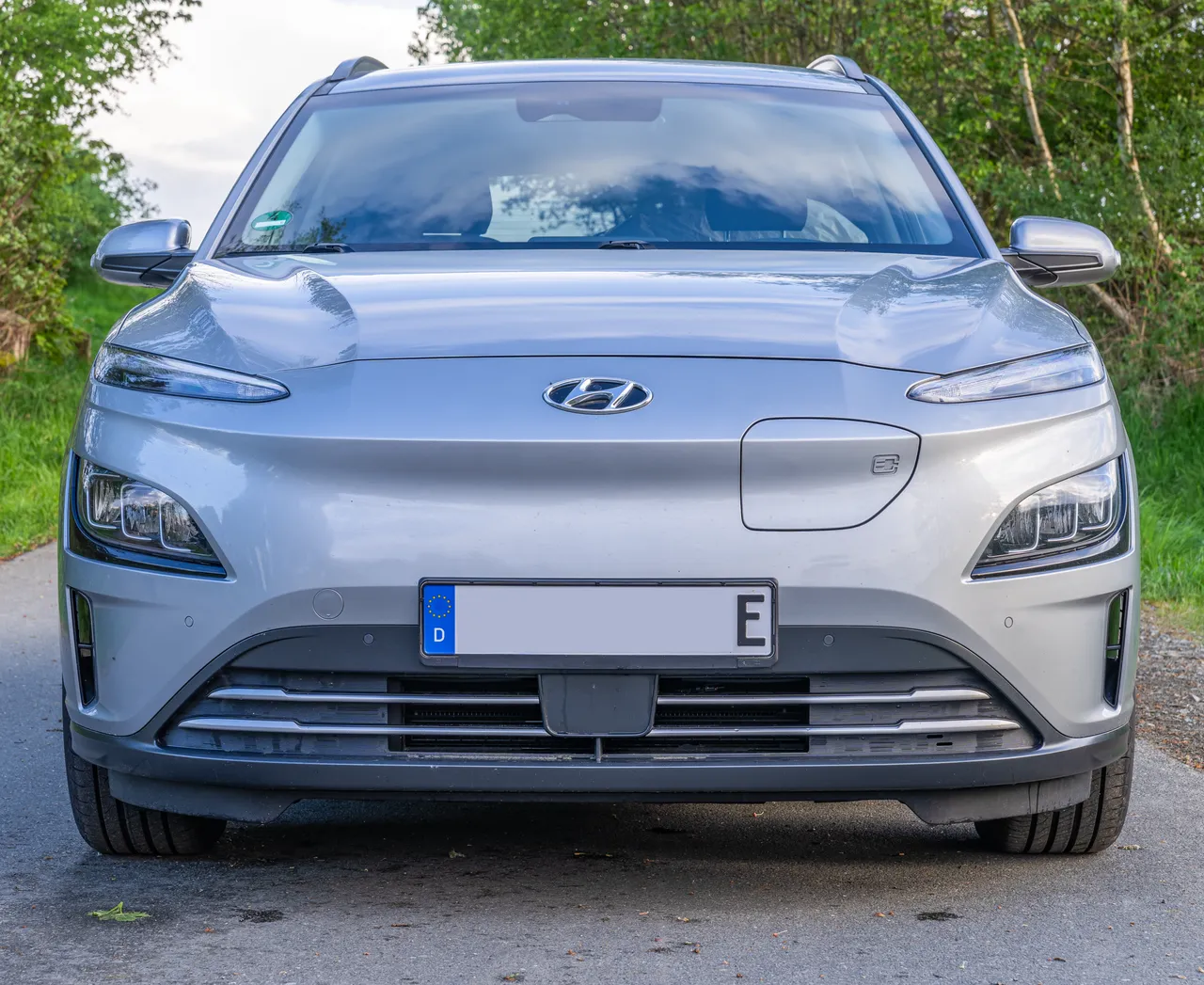
The short answer: The Hyundai KONA Electric suits shoppers seeking a smaller SUV, with a $32,975 US Standard Range price recorded for November 2026. The IONIQ 5 suits buyers prioritizing longer EPA range and an AWD option, although its battery, fast-charging, performance and size figures below describe European versions.
The Hyundai KONA Electric is the better fit for shoppers prioritizing a smaller SUV and a documented US entry price. The Hyundai IONIQ 5 is the stronger choice for buyers seeking longer EPA range or an AWD option. Its European versions also show higher peak charging power and a larger footprint, but those figures need to stay attached to their European configurations.
The comparison spans different model years: US EPA ratings cover the 2025 KONA Electric and 2027 IONIQ 5. Battery, fast-charging, acceleration and dimension figures come from OpenEV Data for the US-market 2025 KONA and EVDB for the European-market 2026 IONIQ 5. Those distinctions matter when choosing a specific vehicle.
Key figures, with market and model year attached
The table separates EPA-rated range and Level 2 charging times from database figures. EPA is the range test standard for the US entries; the European IONIQ 5 range figures use WLTP. No test standard is identified for the other database measurements, and prices are dated observations.
| Measure and basis | Hyundai KONA Electric | Hyundai IONIQ 5 |
|---|---|---|
| US range: EPA ratings | 2025, US: 261 miles with 17-inch wheels; 230 miles with 19-inch wheels. Source: US EPA fueleconomy.gov. | 2027, US: RWD 318 miles; Standard Range 245 miles; AWD with 19-inch wheels 290 miles; AWD with 20-inch wheels 269 miles; AWD XRT 259 miles. Source: US EPA fueleconomy.gov. |
| Additional range figures: standards kept separate | 2025, US: Standard Range 160 miles; Long Range 258 miles, identified as EPA range by OpenEV Data; Standard Range also credits US EPA fueleconomy.gov. | 2026, Europe: Standard Range RWD 394 km; Long Range AWD 498 km, both WLTP. Source: EVDB. |
| Battery capacity: gross / usable; no test standard stated | 2025, US: Standard Range 39.2 / 36 kWh; Long Range 64 / 58 kWh. Source: OpenEV Data. | 2026, Europe: Standard Range RWD 63 / 58 kWh; Long Range AWD 82 / 77 kWh. Source: EVDB. |
| AC charging / peak DC charging; no test standard stated | 2025, US: Standard Range and Long Range, 7.2 kW AC / 100 kW peak DC. Source: OpenEV Data. | 2026, Europe: Standard Range RWD, 11 kW AC / 220 kW peak DC; Long Range AWD, 11 kW AC / 240 kW peak DC. Source: EVDB. |
| Full Level 2 charge: EPA reporting | 2025, US: 17-inch wheels 6.7 hours; 19-inch wheels 6.9 hours. Source: US EPA fueleconomy.gov. | 2027, US: Standard Range 6.3 hours; RWD 9.1 hours; the three AWD configurations above 8.2 hours. Source: US EPA fueleconomy.gov. |
| Drive, power and acceleration; no acceleration test standard stated | 2025, US: Standard Range FWD, 100 kW, 395 Nm, 0–100 km/h in 9.9 seconds; Long Range FWD, 150 kW, 395 Nm, 7.9 seconds. Source: OpenEV Data. | 2026, Europe: Standard Range RWD, 125 kW, 350 Nm, 0–100 km/h in 8.5 seconds; Long Range AWD, 239 kW, 605 Nm, 5 seconds. Source: EVDB. |
| Length × width × height; wheelbase; no measurement standard stated | 2025, US: both OpenEV Data versions, 4,180 × 1,800 × 1,570 mm; wheelbase 2,600 mm. Source: OpenEV Data. | 2026, Europe: Standard Range RWD, 4,635 × 1,890 × 1,605 mm; Long Range AWD, 4,655 × 1,890 × 1,605 mm; both have a 3,000 mm wheelbase. Source: EVDB. |
| US price: dated price, no test standard applicable | 2025 Standard Range, US: $32,975 as of November 2026. Sources credited for this version: OpenEV Data and US EPA fueleconomy.gov. | A comparable US starting price has not been published. |
EPA range favors the IONIQ 5, depending on configuration
For maximum rated distance, the US 2027 IONIQ 5 RWD leads this comparison at 318 miles under EPA ratings. The US 2025 KONA Electric with 17-inch wheels reaches 261 miles. That gives the IONIQ 5 RWD the stronger range case, while preserving an important qualification: these are different model years.
The model name alone does not settle the result. The IONIQ 5 Standard Range carries a 245-mile EPA rating, below the KONA's 261-mile figure with 17-inch wheels. Likewise, the IONIQ 5 AWD XRT's 259-mile rating sits close to that KONA configuration. Buyers should compare the actual trim and wheel combination.
Wheel choice also changes the published ratings. EPA figures put the KONA at 230 miles with 19-inch wheels, compared with 261 miles with 17-inch wheels. The IONIQ 5 AWD reaches 290 miles with 19-inch wheels and 269 miles with 20-inch wheels.
OpenEV Data separately identifies 258 miles of EPA range for the US 2025 KONA Long Range. That entry should remain distinct from the EPA's 261-mile, 17-inch-wheel version; its battery and performance figures should not automatically be attached to that wheel-specific EPA entry.
Battery capacity and charging answer different questions
OpenEV Data gives the US 2025 KONA Standard Range a 39.2-kWh gross battery with 36 kWh usable, and the Long Range a 64-kWh gross battery with 58 kWh usable. Keeping gross and usable capacity separate prevents an uneven comparison between differently labeled battery figures.
EVDB gives the European 2026 IONIQ 5 Standard Range RWD 63 kWh gross and 58 kWh usable. Its Long Range AWD has 82 kWh gross and 77 kWh usable. These describe European versions; they should not serve as battery-capacity claims for the US 2027 vehicles carrying the EPA ratings above.
The same boundary applies to charging. OpenEV Data reports 100 kW peak DC charging for both US KONA battery versions. EVDB reports 220 kW for the European IONIQ 5 Standard Range RWD and 240 kW for the European Long Range AWD. The European IONIQ 5 therefore has substantially higher published peak power.
Peak power alone does not establish the length of a charging stop. Comparable charging-window times have not been published for these versions, so the figures do not support a claim that one completes a particular charging session twice as quickly.
For Level 2 charging, EPA reporting offers a direct US reference. The 2027 IONIQ 5 Standard Range takes 6.3 hours for a full charge, while the RWD takes 9.1 hours and the AWD configurations take 8.2 hours. The 2025 KONA takes 6.7 hours with 17-inch wheels or 6.9 hours with 19-inch wheels. A higher DC peak therefore does not imply a shorter full Level 2 charge.
Performance and size distinguish the two SUVs
Both US KONA versions described by OpenEV Data use front-wheel drive. The Long Range has higher power and a quicker published acceleration time than the Standard Range, despite both sharing the same torque figure. Their acceleration measurements are 0–100 km/h figures, rather than US-style 0–60 mph results.
EVDB's European IONIQ 5 Long Range AWD is the strongest performer here on published power, torque and acceleration. Its Standard Range RWD is less powerful and slower. US EPA entries confirm that the 2027 IONIQ 5 offers both rear-wheel-drive and all-wheel-drive configurations, but the European acceleration results should remain attached to their original versions.
On dimensions, the European IONIQ 5 versions are longer, wider and taller than the US KONA versions described by OpenEV Data, with a longer wheelbase. That supports the KONA's appeal to shoppers seeking a smaller exterior footprint. These measurements do not establish rear-seat room or cargo capacity; comparable interior figures have not been published.
Price and which buyer each one suits
The US 2025 KONA Electric Standard Range has a recorded price of $32,975 as of November 2026. Treat that as a dated reference for that version. A comparable US IONIQ 5 starting price has not been published, so an exact purchase-price gap cannot be established.
Choose the KONA Electric if a smaller footprint and its documented entry price match your priorities. Its 17-inch-wheel EPA configuration also deserves attention from buyers seeking range within the KONA lineup. Choose the IONIQ 5 if maximum EPA range or an AWD option matters more. Its European charging and performance figures strengthen its appeal, provided the exact US version's capabilities are confirmed before purchase.
Frequently asked questions
Which has more EPA range, the KONA Electric or IONIQ 5?
The US 2027 IONIQ 5 RWD has a 318-mile EPA rating, compared with 261 miles for the US 2025 KONA Electric with 17-inch wheels. Configuration matters: the IONIQ 5 Standard Range is rated at 245 miles.
Does the IONIQ 5 charge faster than the KONA Electric?
EVDB reports peak DC charging of 220–240 kW for European 2026 IONIQ 5 versions, while OpenEV Data reports 100 kW for US 2025 KONA versions. Those peaks describe different markets and do not establish comparable charging-session times.
What are their US starting prices?
The US 2025 KONA Electric Standard Range has a recorded price of $32,975 as of November 2026. A comparable US IONIQ 5 starting price has not been published.
Which model offers all-wheel drive?
US EPA ratings include AWD versions of the 2027 IONIQ 5 with 19-inch wheels, 20-inch wheels and the XRT configuration. The US 2025 KONA Electric versions discussed here use front-wheel drive.
Related stories

How to Choose an EV for Caregiving and Support Trips
Compare passenger access, rear-seat comfort, equipment storage and charging routines to find an EV that fits recurring appointments and support trips.

Choosing 120V or 240V Charging for an EV at Home
A standard outlet may work for an EV that sits parked for long stretches. A 240V setup adds charging power, which can matter when daily driving uses more energy.

How to Plan EV Charging When You Park on the Street
Street parking can work with EV ownership when you confirm local rules, identify dependable charging, and build a routine that fits where you park.