CATL Plans 2,000 Truck Battery Swap Stations in China
CATL targets 2,000 Chinese truck battery swap stations by late 2027, while a European rollout will test the appeal of faster stops and battery rentals.

The short answer: CATL aims to operate 2,000 truck battery swap stations in China by the end of 2027, according to Guardian Electric Cars. Swapping can shorten stops and reduce the initial purchase price through battery rentals, although compatibility and service costs can limit its usefulness.
CATL plans to expand its Chinese truck battery swapping network to 2,000 stations by the end of 2027 and bring the technology to Europe, according to Guardian Electric Cars. The expansion could give more freight operators access to shorter replenishment stops and a purchasing model that separates the truck from its expensive battery.
The battery manufacturer is targeting 900 operating stations across China by the end of 2026. It has also partnered with London-based renewable energy supplier Octopus, with the first British battery swapping mega hubs intended to open in 2027 and a European network of more than 30 hubs planned by 2035, the outlet reports.
The appeal for truck operators extends beyond the speed of an individual swap. Renting a battery can reduce the amount needed to buy an electric truck, while stations can charge depleted packs on a more flexible schedule. However, incompatible battery designs and operators' sensitivity to electricity costs complicate the case for broader adoption.
A five-minute stop on a regular freight route
Guardian Electric Cars describes the experience of Wang Bing, a truck driver transporting about five metric tons of goods between Haikou and Dongfang on Hainan, an island in southern China. His round trip covers about 500 kilometers, or 310 miles, and he shares the work with a colleague in eight-hour shifts.
Wang spent roughly the first two decades of his nearly 30-year trucking career driving diesel vehicles. He moved to an electric truck about five years ago when his employer upgraded its fleet. In July 2026, that plug-in truck was replaced with one using a swappable battery, according to the outlet.
His former truck needed about an hour and a half to charge each time. A battery replacement now takes about five minutes, he told Guardian Electric Cars, and he can remain inside the cab throughout the process. That experience illustrates the potential benefit for an operator repeatedly traveling a route with suitable stations.
The process is automated. Wei Jiuchun, a test driver at a Qiji Energy swapping station in Suzhou, told the outlet that cameras identify an approaching truck's battery type through its license plate. The driver then moves into a designated area, where the station carries out the replacement. Wei helps test the system with different heavy truck models and weather conditions.
Battery rental changes the purchase calculation
Swapping also changes how an operator can pay for an electric truck. In China, customers choosing this approach typically buy the vehicle without its battery and rent the pack from a service provider, according to Mao Shiyue, a Beijing-based researcher at the International Council on Clean Transportation, speaking to Guardian Electric Cars.
Mao said a battery accounts for about 40% of an electric truck's purchase price. Removing that component from the initial transaction can therefore make the truck more affordable at the point of purchase. He identified the higher upfront price of electric trucks compared with similar diesel vehicles as a major obstacle to adoption in many markets.
The arrangement shifts part of the financial decision toward an ongoing service relationship. Buyers must consider access to compatible batteries and stations alongside the lower initial payment. The benefit described by Mao concerns the purchase barrier; battery rental remains part of operating the vehicle.
Wang also reported lower energy expenses on his Hainan route. He put his electric truck's fueling cost at about 1.1 yuan per kilometer, compared with more than 2 yuan per kilometer for a diesel truck. He told Guardian Electric Cars that his electric truck could save more than 20,000 yuan a month. Those figures describe his operating experience in Hainan.
China offers a large market for expansion
China sold more than 400,000 electric trucks in 2025, accounting for over 90% of the global total, according to Guardian Electric Cars. That concentration gives battery swapping companies a substantial domestic market in which to expand. Even there, however, swapping serves only part of the electric truck fleet.
About one-third of China's zero-emission trucks used battery swapping in 2024, while most of the remainder relied on conventional plug-in charging, the outlet reports. That share and the 2025 sales total cover different years and measures: one describes the prevalence of swapping among zero-emission trucks, while the other describes annual electric truck sales.
The technology already has a history in China's passenger vehicle market. Nio commercialized battery swapping for smaller electric vehicles nearly a decade ago, according to Guardian Electric Cars. CATL entered the electric truck swapping business in 2023 through its Qiji Energy subsidiary brand.
Phate Zhang, founder of the Shanghai-based EV news outlet CnEVPost, told Guardian Electric Cars that CATL's support is critical to a large-scale rollout. The planned expansion to 900 Chinese stations by the end of 2026, followed by 2,000 by the end of 2027, puts the battery manufacturer's network ambitions at the center of that effort.
Compatibility can restrict where trucks travel
A fast swap depends on reaching a station that can handle the truck's battery. Xue Lulu, a senior associate at World Resources Institute China, told Guardian Electric Cars that some systems remove batteries from the chassis, while others replace them from above the truck.
Differences also exist between batteries from different manufacturers using the same general swapping approach, Xue said. As a result, drivers often have to remain within a particular service provider's network. A station's presence along a route does not by itself establish that a truck can use it.
That constraint matters when evaluating the reach of CATL's planned network. Operators need compatible stations along the journeys they actually make. Xue said the inability to use any available swapping station can restrict the trips a driver can undertake.
Price can also undermine the apparent time advantage. During field research in China, Xue found drivers waiting outside stations for one to two hours to avoid using the service during peak periods and save money. A replacement process lasting minutes therefore does not necessarily translate into an equally short overall stop.
Fixed routes offer the clearest fit
Mao told Guardian Electric Cars that swapping has been most successful among heavy trucks operating in defined settings, including ports and factories, within a city, or between two nearby cities. Those uses align regular vehicle movements with access to established stations.
Wang's repeated journey between Haikou and Dongfang fits that pattern. His experience demonstrates how a compatible station can support an established freight route, while Mao cautioned that unpredictable and long-haul routes still present challenges for a large-scale rollout.
There is also a potential electricity-system benefit. Mao said swapping stations have flexibility over when to charge depleted batteries, allowing charging to be spread out. During peaks in electricity demand, stations could also return stored energy to the grid to ease pressure, he told the outlet.
CATL's next milestones are its Chinese station targets and the intended British hub openings in 2027, followed by the longer European expansion. For fleet buyers, the practical value will depend on how those locations match their routes, whether their trucks can use the equipment, and how service pricing affects the time and money saved.
Frequently asked questions
How many truck battery swap stations does CATL plan to open?
According to Guardian Electric Cars, CATL targets 900 operating stations in China by the end of 2026 and 2,000 by the end of 2027.
How long does an electric truck battery swap take?
Hainan truck driver Wang Bing told Guardian Electric Cars that his battery replacement takes about five minutes, compared with about 90 minutes to charge his previous electric truck. Waiting for cheaper service periods can add time.
Why can battery swapping reduce an electric truck's upfront price?
Customers in China typically buy a swapping-compatible truck without its battery and rent the pack separately. ICCT researcher Mao Shiyue told Guardian Electric Cars that the battery represents about 40% of an electric truck's purchase price.
Can a truck use any battery swap station?
No. Different battery designs and replacement methods can require drivers to use a particular service provider's compatible stations, according to Guardian Electric Cars.
When is CATL planning to bring truck battery swapping to Europe?
Guardian Electric Cars reports that CATL and Octopus intend to open the first British mega hubs in 2027, with a European network of more than 30 hubs planned by 2035.
Related stories
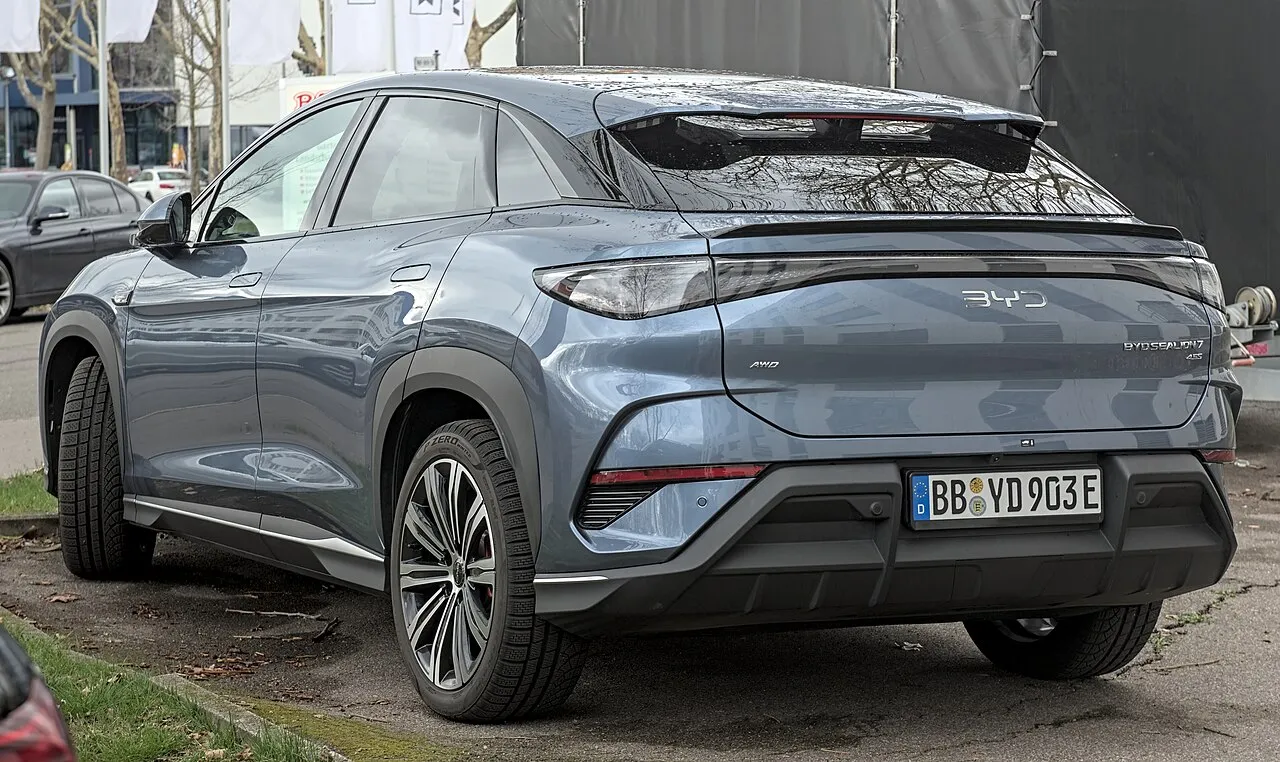
BYD Adds Storage at Busy Flash-Charging Stations in China
BYD is adding storage cabinets at busy flash-charging sites, but the fix may only delay slower charging where demand stays above the grid’s supply.
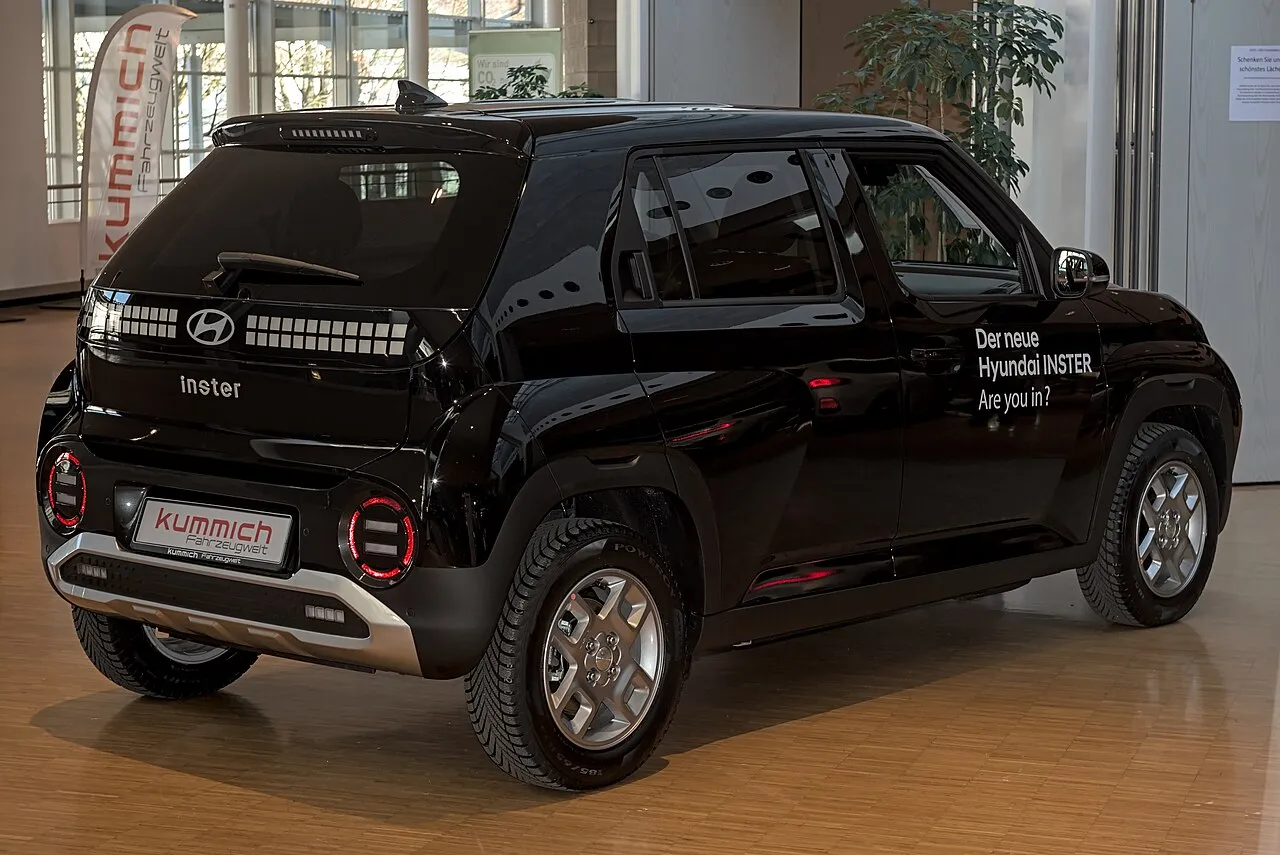
Hyundai Reveals Mercury EV Concept for China, Plans Battery Swap
Hyundai’s Mercury concept previews a small electric SUV for China, with a battery-swapping version planned with CATL as the company expands its local lineup.

Why EV Fast Chargers Reduce Power During a Session
Public fast chargers can lower output when equipment heats up, the site reaches an electrical limit, or protection controls respond. Here is how those limits work.