BYD TANG vs Kia EV9: Which Fits a Large Family Better?
Compare the BYD TANG and Kia EV9 for a large family, with a clear look at what published dimensions, range and carrying figures can—and cannot—tell you.
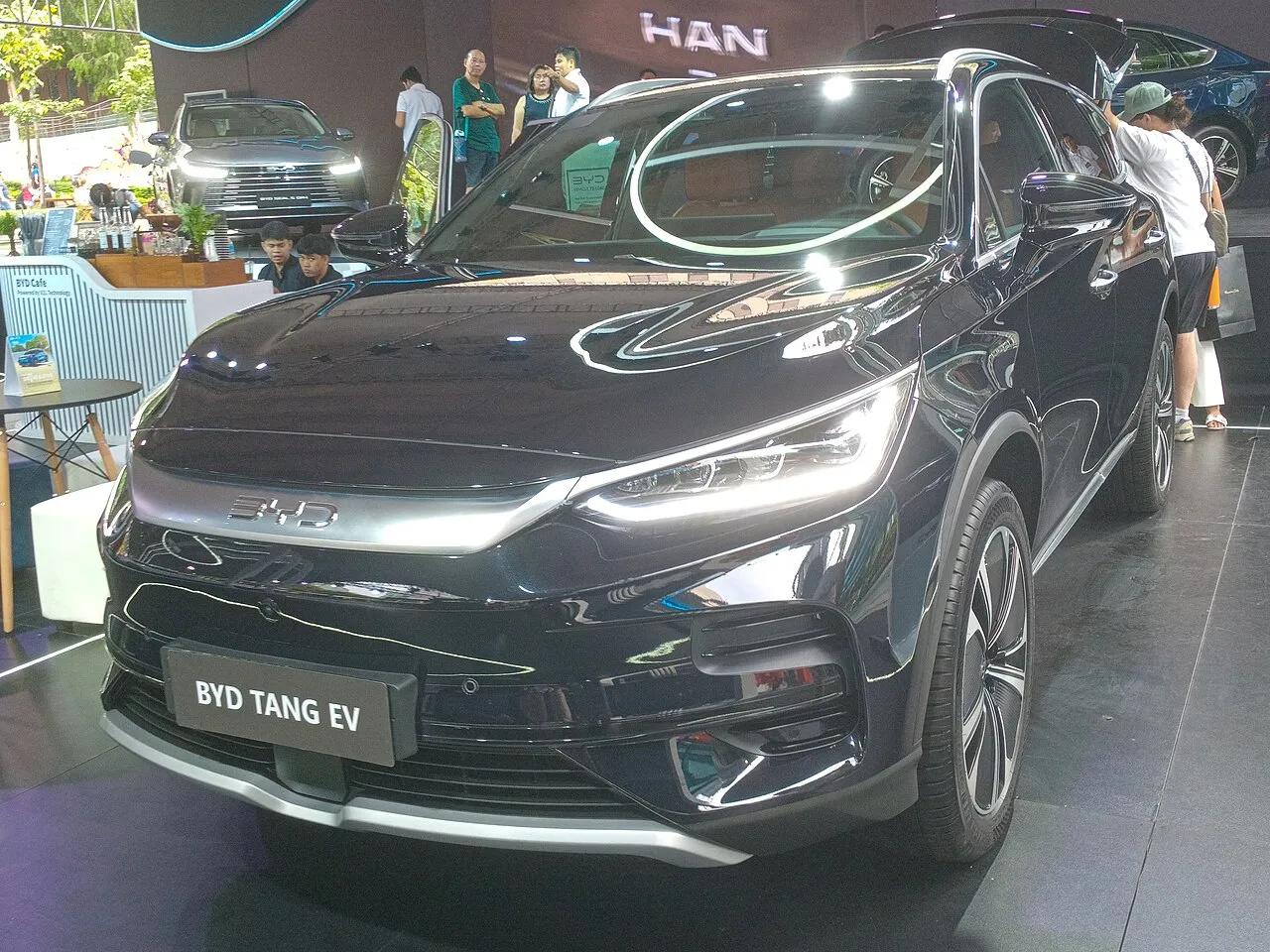
The short answer: Neither the BYD TANG nor the Kia EV9 can be declared the better choice for a family needing more than five seats without confirmed seating layouts, third-row access details, luggage capacity with every seat occupied, and payload limits. The European EV9 has a longer published wheelbase, but that alone does not establish better passenger accommodation or carrying ability.
The BYD TANG and Kia EV9 cannot be ranked confidently for a large family on the published figures alone. The EV9 has a longer wheelbase in the European versions compared here, making it worth considering for passenger accommodation. However, the decisive details—access to every row, luggage space with all seats occupied, and permitted payload—have not been published for these exact versions. Those gaps prevent a defensible winner for a household that regularly needs more than five seats.
Range and charging figures help narrow the choice, but they answer a different question. An SUV can have sufficient driving range and still fall short when passengers, child restraints, a stroller, and vacation bags must travel together. For this comparison, passenger access, usable cargo space, and legal carrying capacity need to remain separate considerations.
What the published figures establish
The table separates European vehicles from American vehicles and identifies the range test procedure for each. Dimensions and curb weights are source-reported vehicle measurements, not results from the range test named beside them. European WLTP range and American EPA range must not be treated as equivalent measures.
| Vehicle and version | Market and model year | Range and test standard | Dimensions and curb weight | Charging | Source |
|---|---|---|---|---|---|
| BYD TANG Ev AWD | Europe, 2025 | 530 km, WLTP | Length 4,970 mm; width 1,955 mm; height 1,745 mm; wheelbase 2,820 mm; curb weight 2,640 kg | 11 kW AC; 170 kW peak DC | EVDB |
| BYD TANG Flagship | Europe, 2025 | 530 km, WLTP | Length 4,870 mm; width 1,950 mm; height 1,725 mm; wheelbase 2,820 mm; curb weight 2,589 kg | 11 kW AC; 170 kW peak DC | OpenEV Data |
| Kia EV9 Air RWD | Europe, 2025 | 563 km, WLTP | Length 5,010 mm; width 1,980 mm; height 1,755 mm; wheelbase 3,100 mm; curb weight 2,614 kg | 11 kW AC; 233 kW peak DC | EVDB |
| Kia EV9 GT AWD | Europe, 2025 | 490 km, WLTP | Length 5,015 mm; width 1,980 mm; height 1,755 mm; wheelbase 3,100 mm; curb weight 2,782 kg | 11 kW AC; 233 kW peak DC | EVDB |
| Kia EV9 Long Range AWD | US, 2027 | 283 miles, EPA | Not published | Level 2 full charge: 10.7 hours; charging test conditions not published | US EPA fueleconomy.gov |
| Kia EV9 Long Range AWD GT-Line | US, 2027 | 280 miles, EPA | Not published | Level 2 full charge: 10.5 hours; charging test conditions not published | US EPA fueleconomy.gov |
| Kia EV9 Long Range RWD | US, 2027 | 305 miles, EPA | Not published | Level 2 full charge: 10.7 hours; charging test conditions not published | US EPA fueleconomy.gov |
| Kia EV9 Standard Range RWD | US, 2027 | 230 miles, EPA | Not published | Level 2 full charge: 8.1 hours; charging test conditions not published | US EPA fueleconomy.gov |
EVDB and OpenEV Data report different exterior dimensions and curb weights for their respective European TANG versions. Those entries should remain distinct. Selecting one length from one source and a weight from the other would create a vehicle description that neither source supports.
Access to all three rows remains the key uncertainty
For a family needing more than five seats, the first question is whether the exact version has the required seating configuration. The next is whether everyone can reach and use those seats conveniently. Confirmed seating counts, second-row layouts, seat movement, and third-row entry details have not been published for the versions compared here.
That prevents a meaningful claim about which vehicle is easier to enter. A longer body does not reveal the size of a door opening, the passage beside a folded seat, or the effort needed to reach the rear row. Nor does it establish whether access remains practical with child restraints installed.
Wheelbase is useful context because it describes the distance between the axles. The European EV9 entries have a longer wheelbase than either European TANG entry, according to EVDB and OpenEV Data. That gives the Kia a potentially useful packaging advantage, but its effect depends on how the cabin, seats, and cargo area use that space.
It would therefore be premature to describe the EV9 as more comfortable in the third row or the TANG as suitable only for occasional rear passengers. Published legroom, headroom, seat dimensions, and access measurements have not established either conclusion. Exterior size supports an initial comparison, not a verdict on passenger fit.
Luggage capacity must match the occupied seating layout
Luggage capacity with every required seat occupied has not been published for these versions. This is a substantial gap for a large-family comparison: space created by folding a rear seat cannot simultaneously accommodate the passenger who needs that seat.
A maximum cargo figure would not resolve that problem by itself. Families using the rear row need the remaining compartment behind it, including its usable shape. A stroller may be difficult to accommodate even when smaller bags fit, while a tall compartment may have limited floor depth.
The EV9's larger European exterior dimensions do not establish how much more luggage, if any, it holds with all seats occupied. Body length is shared among passenger space, crash structures, and storage areas. Without a comparable cargo measurement and its measurement method, assigning a luggage winner would turn an exterior-size observation into an unsupported interior claim.
Curb weight does not reveal carrying capacity
Published payload limits, gross vehicle weight ratings, and axle limits have not been published for these exact versions. The curb weights in the table cannot substitute for those carrying limits. A heavier vehicle does not automatically carry more, and a lighter vehicle does not automatically have more capacity available for passengers.
Payload is the permitted load added to the vehicle under the applicable definition. Passengers and luggage both consume that allowance, as can accessories. Cargo volume answers whether belongings fit physically; payload answers whether the combined load stays within the vehicle's permitted weight.
Consequently, neither SUV can be credited with accommodating a full family and its bags merely because it appears spacious. Even a confirmed seating count would establish passenger positions rather than guarantee sufficient weight allowance for every combination of occupants and luggage. The relevant carrying limit must belong to the exact vehicle being considered.
Range and charging help once the family fits
Within EVDB's European 2025 WLTP entries, the EV9 Air RWD has a higher rated range than the TANG Ev AWD, while the EV9 GT AWD has a lower rated range. That makes trim selection consequential: choosing the EV9 name alone does not guarantee the higher WLTP result.
For American readers, the US 2027 EV9 EPA ratings offer a separate comparison among domestic versions. The Long Range RWD has the highest EPA range of the American entries shown. Those EPA figures should not be ranked directly against the European TANG's WLTP figure, even after converting kilometers to miles. Unit conversion does not reconcile different test procedures.
EVDB reports a higher peak DC charging power for the European EV9 versions than for the European TANG Ev AWD. Peak power alone does not establish a shorter family travel stop: charging duration also depends on how power changes through the session and how much energy is added. Comparable DC charging times have not been published here.
The American EV9 Level 2 full-charge estimates from US EPA fueleconomy.gov describe another aspect of charging. They are not comparable to the European vehicles' AC power ratings as though hours and kilowatts measured the same thing.
Which belongs on the family shortlist?
The EV9's longer European wheelbase makes it a reasonable candidate to investigate for passenger space, and its American EPA ratings help US shoppers distinguish versions. The TANG's European WLTP rating also supports a range comparison within that test procedure. Neither advantage settles access, luggage capacity, or carrying limits.
A firm recommendation requires all of those family requirements to work together in the same version. Until seating and access details, cargo capacity with the required seats occupied, and permitted payload are established, the responsible verdict is that neither SUV has demonstrated the stronger complete case for a large family.
Frequently asked questions
Does the Kia EV9 have a longer wheelbase than the BYD TANG?
For the European 2025 versions, EVDB reports a 3,100 mm wheelbase for the EV9 Air RWD and GT AWD. EVDB and OpenEV Data report 2,820 mm for their respective TANG versions. That does not establish third-row legroom or ease of access.
Which has more luggage space with every seat occupied?
Comparable luggage capacities with every seat occupied have not been published for these versions, so a winner cannot be established.
Can curb weight show which SUV carries more passengers and luggage?
No. Curb weight alone does not establish payload. Published payload limits or the relevant gross vehicle weight rating and weight definition are needed to assess carrying capacity.
Can the TANG's WLTP range be compared directly with the American EV9's EPA range?
No. WLTP and EPA use different test procedures. Converting kilometers to miles does not make their ratings equivalent.
Related stories

How to Choose an EV for Your Dog and Travel Gear
Compare an EV’s entry points, secure travel area, climate controls and cleanability with your dog and gear on hand before choosing a vehicle.
Kia EV3 vs. BYD ATTO 3: Which SUV Fits Daily Life?
The Kia EV3 and BYD ATTO 3 suit different daily needs. Compare market-specific range figures, dimensions and charging, then check cargo access and fit in person.

How to Choose an EV for Frequent Rural Errands
Compare cargo space, ground clearance, charging access and a realistic range buffer to find an EV that can handle your regular rural trips.