BYD SEALION 7 or Kia EV5: Cabin and Cargo Explained
The BYD SEALION 7 favors a longer, lower body, while the Kia EV5 offers more height. Here is how those shapes affect cabin and cargo use.
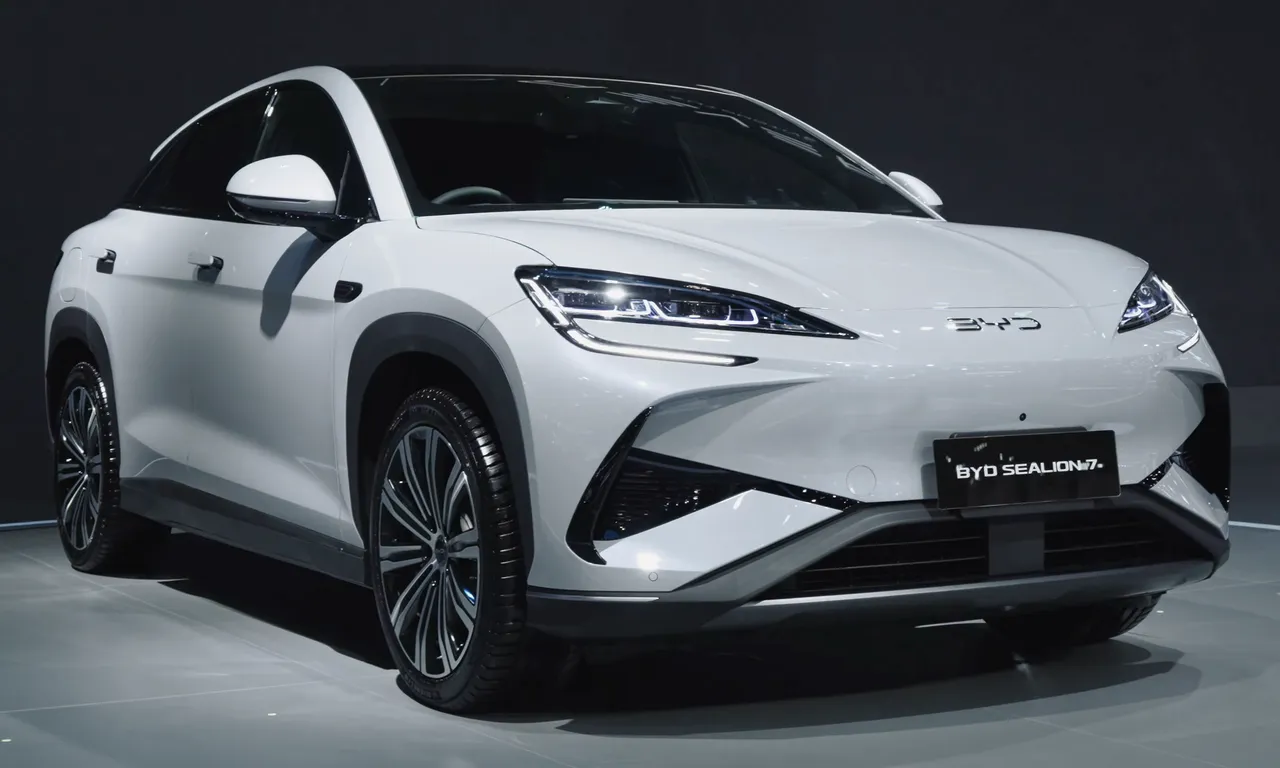
The short answer: The BYD SEALION 7 is the better choice for a longer, lower SUV footprint and potentially easier long-item loading, while the Kia EV5’s taller body should make upright cargo and entry more convenient. Published cargo volume figures are not available here, so the comparison rests on exterior dimensions, wheelbase, curb weight and roof shape.
The BYD SEALION 7 and Kia EV5 take different approaches to SUV practicality. The SEALION 7 is longer and lower, with a 2,930 mm wheelbase and 1,620 mm height in its European versions. The European Kia EV5 is shorter and taller, with a 2,750 mm wheelbase and 1,715 mm height. That gives the BYD a stronger starting point for stretched passenger space, while the Kia’s taller roof should make upright seating and bulky cargo easier to manage.
Neither vehicle has a published cargo volume figure in the versions considered here. That means shoppers cannot make a precise trunk capacity comparison from the available published specifications. The useful conclusion comes from the vehicles’ proportions: the SEALION 7 has more overall length and wheelbase to distribute between the cabin and cargo area, while the EV5 has more roof height and a more upright shape.
What the dimensions suggest inside
Exterior dimensions do not guarantee a particular amount of legroom, headroom or trunk space. Battery packaging, seat design, dashboard depth, suspension layout and the shape of the rear hatch all affect the usable interior. Still, dimensions explain the basic tradeoff between these two SUVs.
The European BYD SEALION 7 measures 4,830 mm long and 1,925 mm wide. Its 2,930 mm wheelbase is 180 mm longer than the European Kia EV5’s 2,750 mm wheelbase. A longer wheelbase can create more room between the axles for the passenger compartment, especially for rear legroom, although the final result depends on how each automaker uses that space.
The European Kia EV5 measures 4,615 mm long and 1,875 mm wide. It is therefore 215 mm shorter and 50 mm narrower than the European SEALION 7. The EV5 stands 1,715 mm tall, 95 mm higher than the BYD. That extra height can help with entry, headroom and the vertical space available when cargo is stacked below the rear window.
The Canadian 2026 Kia EV5 AWD is slightly different from the European vehicle. NHTSA vPIC records it at 4,620 mm long, 1,880 mm wide and 1,720 mm tall, with the same 2,750 mm wheelbase. Those dimensions should be treated as a separate market version rather than interchangeable with the European EV5.
Roof shape and rear-seat comfort
The SEALION 7’s lower roofline gives it a more streamlined profile. That shape can reduce the amount of vertical space above rear passengers and may make loading tall objects less convenient. The long wheelbase helps balance that limitation by creating more room along the floor between the front and rear axles.
For adults who spend a lot of time in the second row, the BYD’s wheelbase is the more relevant measurement than its roof height alone. The extra 180 mm between the axles gives the SEALION 7 more room to work with for rear-seat legroom. It does not establish an exact legroom advantage, because no interior measurements are published here, but it points toward a cabin designed around length rather than maximum vertical clearance.
The EV5’s taller body favors a different type of comfort. A higher roof can make it easier to climb into the rear seats, position a child seat or sit with a more upright posture. It can also make the rear cargo opening feel more accommodating for tall boxes. The tradeoff is a shorter wheelbase and shorter overall body, which leaves less length to divide between rear passengers and luggage.
Width matters when three people share the rear bench or when passengers need shoulder room. The SEALION 7 is 50 mm wider than the European EV5, based on EVDB’s dimensions for the 2025 versions. That difference does not translate directly into usable seating width because door trim and seat design take up part of the body width. It does, however, give the BYD a larger exterior envelope for the cabin.
Loading practicality: length versus height
The most useful way to think about cargo access is to separate floor length from vertical capacity. The SEALION 7’s greater length and wheelbase should help with long luggage behind the rear seats, provided the rear seatbacks and cargo floor make use of that space. The lower roof may be less helpful for tall items, especially when the hatch opening narrows toward its upper edge.
The EV5’s taller profile should favor upright loads. Groceries, luggage, strollers and stacked bags can benefit from extra clearance above the cargo floor, while the taller body can make it easier to reach into the rear compartment without bending as far. Those benefits remain practical expectations based on the body dimensions; they are not measured cargo results.
Rear-hatch geometry is just as important as height. A vehicle can have a tall roof but a low or sharply sloping opening. A lower vehicle can still carry long objects effectively if its rear seatbacks fold flat and its cargo floor is long. Since the available published information does not include hatch opening dimensions, cargo floor length, seatback angles or cargo volume, shoppers should inspect those details directly before choosing between the two.
The SEALION 7’s body is also wider, which may help when placing broad items across the cargo area. The actual usable width can be reduced by wheel arches, side trim and the shape of the rear seatbacks. The EV5 gives up some exterior width but gains height, making the choice dependent on whether the usual load is wide and flat or tall and compact.
Weight and what it means for everyday use
Curb weight adds context to the packaging comparison. EVDB records the 2025 European SEALION 7 Comfort RWD at 2,210 kg and the Excellence AWD at 2,430 kg. The 2025 European Kia EV5 Air is recorded at 1,835 kg, while the GT-Line is 1,910 kg. NHTSA vPIC records the 2026 Canadian EV5 AWD at 2,102 kg.
These curb weights vary by market, trim, drivetrain and battery configuration, so they should not be treated as a simple measure of cabin or cargo efficiency. The SEALION 7’s larger battery and higher output versions add weight, while the EV5’s European trims use a smaller battery and lower power output. A heavier SUV may feel more substantial, but curb weight does not establish payload capacity or the maximum amount of luggage passengers can carry.
Payload ratings, rear axle limits and maximum cargo dimensions are not published for the versions covered here. Those are the figures to check before transporting unusually heavy equipment. For normal family use, the more immediate questions are whether the rear opening accepts the largest item, whether the seats fold in a useful way and whether passengers retain enough legroom when the cargo area is full.
Battery and range context for road trips
Battery versions also shape the packaging story. The European SEALION 7 Comfort RWD uses a 71.8 kWh gross, 69 kWh usable LFP battery, while the Excellence AWD uses a 91.3 kWh gross, 87 kWh usable LFP battery. EVDB gives them WLTP rated ranges of 502 km and 542 km, respectively.
The European EV5 Air and GT-Line each use an 84 kWh gross, 77.4 kWh usable NMC battery. EVDB gives the Air a 590 km WLTP rated range and the GT-Line a 580 km WLTP rated range. These are WLTP results for European versions, so they should be compared only within that test standard and market context.
The range difference does not decide the cabin question. It does show that the EV5 can pair its shorter body with a battery and WLTP rating that differ from the SEALION 7’s. Battery chemistry, usable capacity, vehicle weight, wheels and trim all affect the result. The Canadian EV5 dimensions from NHTSA vPIC do not include a range rating in the information considered here.
Charging and performance differences
Charging hardware may influence the best trim for long trips, even though it does not change the basic roof-shape tradeoff. EVDB records 11 kW AC charging for all the European versions in this comparison. DC peak charging is 150 kW for the SEALION 7 Comfort RWD and 230 kW for the Excellence AWD. The EV5 Air and GT-Line are each recorded at 200 kW DC peak charging.
The SEALION 7 also spans a wider performance range. EVDB records 230 kW and 380 Nm for the Comfort RWD, with a 0-to-100 km/h time of 6.7 seconds. The Excellence AWD is recorded at 390 kW and 690 Nm, with a 4.5-second time. The EV5 Air and GT-Line are each recorded at 160 kW and 310 Nm, with a 0-to-100 km/h time of 8.3 seconds.
Those figures matter when choosing a trim, but they do not reveal which vehicle has the more useful cargo compartment. A shopper who prioritizes a calm family cabin may gain more from checking rear-seat access and hatch geometry than from selecting the quickest version.
Which SUV suits which kind of owner?
Choose the BYD SEALION 7 if the priority is a longer and wider body, a longer wheelbase and the possibility of more legroom for rear passengers. Its lower roof and streamlined proportions may suit drivers who favor a carlike seating position and longer floor space. The European versions also offer different battery, drivetrain and charging combinations, so the trim choice has a significant effect on curb weight and performance.
Choose the Kia EV5 if the priority is a taller, more upright SUV shape. Its greater height should help with entry, headroom and tall cargo, while its shorter body may be easier to place in a tight parking space. The European Air and GT-Line versions have the same listed battery and power figures but different curb weights and WLTP range ratings, while the Canadian AWD dimensions represent a separate market version.
For a final decision, measure the items that matter most: the length of the cargo floor with the rear seats in use, the height and width of the hatch opening, the floor height, and the space left in front of a rear-facing child seat. Those measurements will resolve the practical question that exterior dimensions can only frame.
| Vehicle version | Market, model year and standard | Published dimensions and weight | Battery, range and charging | Power and torque | Source |
|---|---|---|---|---|---|
| BYD SEALION 7 Comfort RWD | Europe, 2025; WLTP for range | 4,830 mm long; 1,925 mm wide; 1,620 mm tall; 2,930 mm wheelbase; 2,210 kg curb weight | 71.8 kWh gross; 69 kWh usable; LFP; 502 km WLTP; 11 kW AC; 150 kW DC peak | 230 kW; 380 Nm; 6.7 seconds 0–100 km/h | EVDB |
| BYD SEALION 7 Excellence AWD | Europe, 2025; WLTP for range | 4,830 mm long; 1,925 mm wide; 1,620 mm tall; 2,930 mm wheelbase; 2,430 kg curb weight | 91.3 kWh gross; 87 kWh usable; LFP; 542 km WLTP; 11 kW AC; 230 kW DC peak | 390 kW; 690 Nm; 4.5 seconds 0–100 km/h | EVDB |
| Kia EV5 Air | Europe, 2025; WLTP for range | 4,615 mm long; 1,875 mm wide; 1,715 mm tall; 2,750 mm wheelbase; 1,835 kg curb weight | 84 kWh gross; 77.4 kWh usable; NMC; 590 km WLTP; 11 kW AC; 200 kW DC peak | 160 kW; 310 Nm; 8.3 seconds 0–100 km/h | EVDB |
| Kia EV5 GT-Line | Europe, 2025; WLTP for range | 4,615 mm long; 1,875 mm wide; 1,715 mm tall; 2,750 mm wheelbase; 1,910 kg curb weight | 84 kWh gross; 77.4 kWh usable; NMC; 580 km WLTP; 11 kW AC; 200 kW DC peak | 160 kW; 310 Nm; 8.3 seconds 0–100 km/h | EVDB |
| Kia EV5 4Dr Suv AWD | Canada, 2026; dimensional figures, no range test stated | 4,620 mm long; 1,880 mm wide; 1,720 mm tall; 2,750 mm wheelbase; 2,102 kg curb weight | Has not been published | Has not been published | NHTSA vPIC |
Frequently asked questions
Which vehicle has the longer wheelbase?
The European 2025 BYD SEALION 7 has a 2,930 mm wheelbase, compared with 2,750 mm for the European 2025 Kia EV5.
Which SUV is taller?
The European 2025 Kia EV5 is 1,715 mm tall, while the European 2025 BYD SEALION 7 is 1,620 mm tall. The Canadian 2026 EV5 is 1,720 mm tall.
Which has more cargo space?
A direct cargo volume comparison cannot be made because published cargo volume figures have not been published for the versions covered here.
Are the range ratings directly comparable?
The European range ratings are all WLTP results, so they can be compared within that test standard. The Canadian EV5 dimensions do not include a range rating here.
Related stories

How to Choose an EV for Your Dog and Travel Gear
Compare an EV’s entry points, secure travel area, climate controls and cleanability with your dog and gear on hand before choosing a vehicle.
Kia EV3 vs. BYD ATTO 3: Which SUV Fits Daily Life?
The Kia EV3 and BYD ATTO 3 suit different daily needs. Compare market-specific range figures, dimensions and charging, then check cargo access and fit in person.

How to Choose an EV for Frequent Rural Errands
Compare cargo space, ground clearance, charging access and a realistic range buffer to find an EV that can handle your regular rural trips.