BYD SEAL vs Hyundai IONIQ 6: Comfort, Cargo and Charging
Compare the BYD SEAL and Hyundai IONIQ 6 on passenger fit, trunk access, drivetrain choices and charging, with market-specific range figures explained.
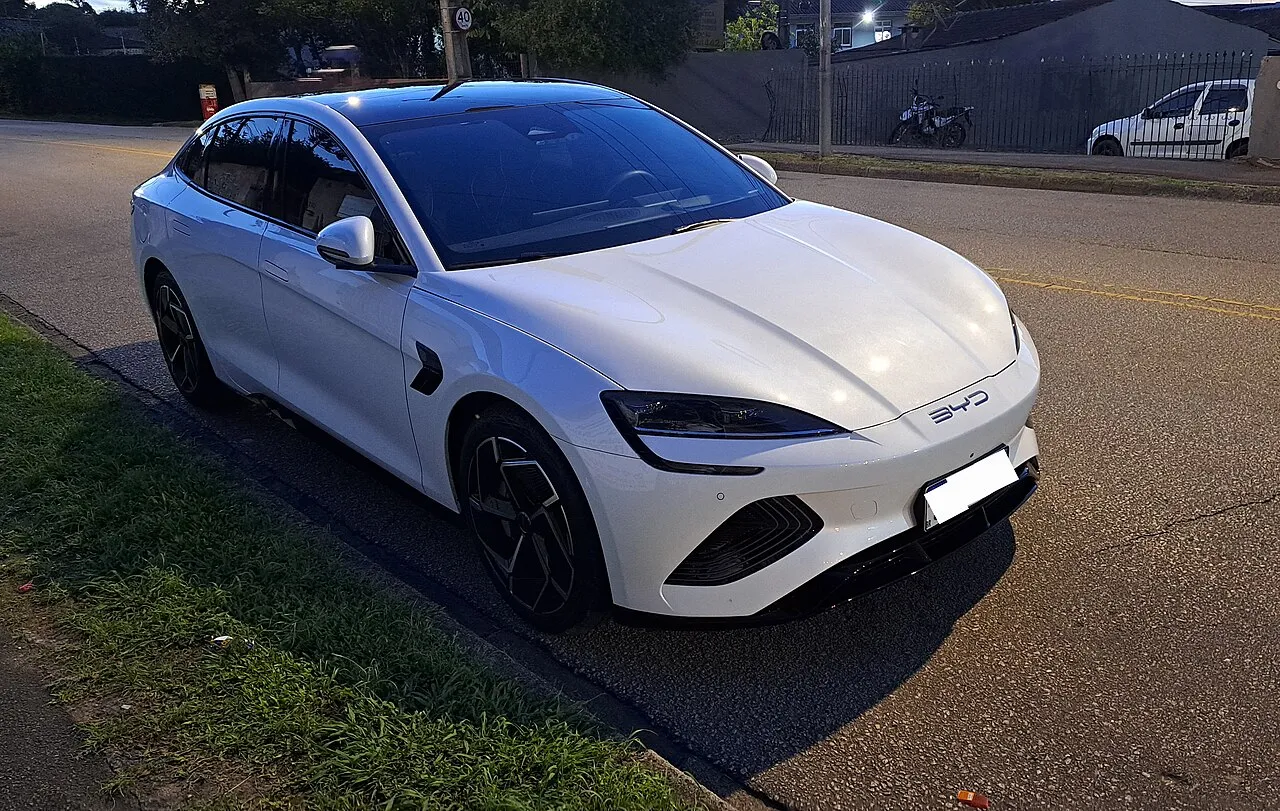
The short answer: The Hyundai IONIQ 6 has the stronger charging case in the European versions compared here, while the BYD SEAL offers quicker acceleration in comparable rear-wheel-drive form. Seating comfort and luggage access need an in-person check: exterior dimensions cannot establish which sedan fits your passengers and cargo better.
The Hyundai IONIQ 6 is the stronger choice if fast-charging capability leads your priorities; the BYD SEAL deserves attention if you prefer quicker acceleration in a rear-wheel-drive sedan. For passenger comfort and luggage access, neither earns an automatic recommendation from exterior measurements. The better fit depends on how you sit, who travels behind you and what needs to pass through the trunk opening.
Keep the comparison tied to a particular market and model year. European WLTP range ratings and American EPA ratings use different procedures, so they cannot establish a direct range winner across regions. The European versions below offer a comparison within the same range standard, while the US Hyundai ratings show why drivetrain and wheel choice matter.
Range, charging and drivetrain figures at a glance
EVDB credits the European Design and large-battery Hyundai figures below; OpenEV Data credits the European Dynamic and Performance figures. US wheel-specific range ratings come from US EPA fueleconomy.gov. WLTP and EPA identify the range test only: battery capacity, power, acceleration, charging limits and dimensions are separate technical figures, not results from those range tests.
| Vehicle, market and model year | Version and drive | Rated range and standard | Usable battery | Power; acceleration | AC maximum; DC peak | Exterior dimensions | Source |
|---|---|---|---|---|---|---|---|
| BYD SEAL, Europe, 2026 | Design RWD | 590 km, WLTP | 82.5 kWh | 230 kW; 0–100 km/h in 5.9 seconds | 11 kW; 150 kW | 4,800 mm long, 1,875 mm wide, 1,460 mm high; 2,920 mm wheelbase | EVDB |
| Hyundai IONIQ 6, Europe, 2026 | 84 kWh RWD | 680 km, WLTP | 80 kWh | 168 kW; 0–100 km/h in 7.4 seconds | 11 kW; 263 kW | 4,925 mm long, 1,880 mm wide, 1,495 mm high; 2,950 mm wheelbase | EVDB |
| Hyundai IONIQ 6, Europe, 2026 | 84 kWh AWD | 650 km, WLTP | 80 kWh | 239 kW; 0–100 km/h in 5.1 seconds | 11 kW; 263 kW | 4,925 mm long, 1,880 mm wide, 1,495 mm high; 2,950 mm wheelbase | EVDB |
| BYD SEAL, Europe, 2025 | Dynamic RWD | 460 km, WLTP | 61.4 kWh | 150 kW; 0–100 km/h in 7.5 seconds | 11 kW; 110 kW | 4,800 mm long, 1,875 mm wide, 1,460 mm high; 2,920 mm wheelbase | OpenEV Data |
| BYD SEAL, Europe, 2025 | Performance AWD | 520 km, WLTP | 82.6 kWh | 390 kW; 0–100 km/h in 3.8 seconds | 11 kW; 150 kW | 4,800 mm long, 1,875 mm wide, 1,460 mm high; 2,920 mm wheelbase | OpenEV Data |
| Hyundai IONIQ 6, US, 2025 | RWD, 18-inch wheels | 342 miles, EPA | — | — | — | — | US EPA fueleconomy.gov |
| Hyundai IONIQ 6, US, 2025 | RWD, 20-inch wheels | 291 miles, EPA | — | — | — | — | US EPA fueleconomy.gov |
| Hyundai IONIQ 6, US, 2025 | AWD, 18-inch wheels | 316 miles, EPA | — | — | — | — | US EPA fueleconomy.gov |
| Hyundai IONIQ 6, US, 2025 | AWD, 20-inch wheels | 270 miles, EPA | — | — | — | — | US EPA fueleconomy.gov |
Seating: check posture before judging space
The European Hyundai is longer and taller than the SEAL in the versions shown, and its wheelbase is longer. Those measurements describe the body and the distance between the axles. They do not establish usable headroom, knee clearance, seat-cushion support or ease of entry. A larger exterior can create packaging opportunities without proving that a particular passenger will be more comfortable.
Start with the driver's position. Set the seat for comfortable pedal reach, then check whether the steering wheel allows relaxed shoulders and whether the cushion supports your thighs. Next, sit behind that position. Moving the front seat forward to make the rear seat feel spacious produces an unhelpful comparison if the regular driver cannot use that setting.
Rear passengers should assess foot space, knee position and head clearance together. Clearance above the head is only part of comfort; a seating position that leaves the knees high or the thighs unsupported may become tiring. If child seats are part of the routine, check their fit and the movement needed to secure a child through the rear doorway.
Luggage access: judge the opening as well as the space
Both vehicles are sedans, making trunk access an important part of the decision. A cargo compartment's usefulness depends on the opening, its shape and the path an object must follow during loading. A suitcase that fits once inside can still be awkward to maneuver through an opening, especially when it must be tilted while being lifted.
Bring the items that define your normal trips: a stroller, a large suitcase or an equipment bag. Check whether they pass through cleanly and whether lifting them over the loading edge feels manageable. Also consider retrieval. An item pushed deep into a trunk may be harder to reach than one positioned close to the opening.
These checks are more useful than declaring a cargo winner from body length. Neither exterior size nor wheelbase establishes trunk-opening dimensions. For shoppers who regularly carry bulky objects, the decisive difference may be loading convenience rather than how much smaller luggage can be arranged inside.
Drivetrain choices: acceleration or range priority?
For rear-wheel-drive shoppers, EVDB's European figures give the SEAL Design the quicker acceleration result, while the large-battery IONIQ 6 has the longer WLTP rating. That creates a clear choice between priorities: the BYD favors stronger straight-line performance in this pairing, while the Hyundai favors rated distance between charges.
The smaller-battery SEAL Dynamic offers another balance. OpenEV Data attributes less power, a shorter WLTP rating and a lower DC charging peak to it than to the larger-battery SEAL versions shown. Choosing it therefore changes more than acceleration. The charging capability deserves attention if the car will frequently depend on public fast chargers.
For all-wheel-drive shoppers, the SEAL Performance emphasizes acceleration, while the European Hyundai AWD combines a longer WLTP rating with a higher charging peak. These figures do not establish steering feel, ride comfort or braking performance. AWD can help distribute driving force when traction is limited, but tire grip remains central to how a car accelerates, turns and stops.
American shoppers should also treat wheel choice as part of the drivetrain decision. EPA ratings for the US Hyundai show lower range with the larger wheels in both drive configurations. Compare the exact configuration you intend to buy; a rating for another wheel package does not describe the same version.
Charging: Hyundai's higher peak needs context
The European large-battery IONIQ 6 has a substantially higher DC peak than either SEAL charging tier shown. That gives it the stronger stated fast-charging capability. It does not establish a complete charging-stop duration, because peak power describes the highest rate rather than the rate maintained throughout a session.
Actual charging power changes with battery temperature, charge level and the power available from the charger. A car may reach its peak briefly and then taper as the battery fills. Without comparable charging curves or timed sessions over the same charging window, the peak figures cannot support a precise claim about minutes saved.
For home charging, the European versions shown share the same AC maximum. Their different DC peaks therefore do not imply the same difference at home. The charging equipment and electrical supply can limit AC power below the vehicle's maximum, while the energy being replaced determines how long the session takes. Match the car's charging capability to where it will actually charge.
Choose the version that matches your routine
Favor the IONIQ 6 if the European comparison's combination of longer WLTP range and higher DC charging capability addresses your travel needs. Favor the SEAL if its acceleration choices are more compelling and its charging capability suits your routes. For predominantly home-charged driving, seating comfort and luggage access may carry more weight than the highest DC figure.
Make the final decision with the exact version, passengers and cargo in mind. Confirm the local car's equipment and charging connection, then repeat the seating and loading checks under comparable conditions. The figures narrow the choice; the way your household fits inside determines whether that choice works every day.
Frequently asked questions
Which has the higher fast-charging peak, the BYD SEAL or Hyundai IONIQ 6?
EVDB credits the European 2026 Hyundai IONIQ 6 84 kWh RWD and AWD with a 263 kW DC peak, compared with 150 kW for the European 2026 BYD SEAL Design RWD. Peak power alone does not establish charging-stop duration.
Which European rear-wheel-drive version accelerates faster?
According to EVDB, the European 2026 BYD SEAL Design RWD reaches 100 km/h in 5.9 seconds, compared with 7.4 seconds for the European 2026 Hyundai IONIQ 6 84 kWh RWD.
Can the SEAL's WLTP range be compared directly with the Hyundai's EPA range?
WLTP and EPA use different test procedures, so their figures should not be treated as equivalent. Compare versions rated under the same standard, while also checking market, model year and configuration.
Does wheel size affect the US Hyundai IONIQ 6's rated range?
Yes. US EPA fueleconomy.gov rates the 2025 RWD version at 342 miles with 18-inch wheels and 291 miles with 20-inch wheels. The corresponding AWD ratings are 316 and 270 miles, respectively, all under the EPA standard.
Does the Hyundai's larger exterior prove it has more comfortable seating?
Exterior dimensions cannot establish passenger comfort. Compare driving position, rear knee and foot space, head clearance, cushion support and entry with the people who will regularly use the car.
Related stories

How to Build a Flexible EV Charging Routine for Work
Build charging around the miles you need for your next drive, using home, work, or public charging as your schedule allows. Keep a practical buffer.

How to Choose an EV When It’s Your Household’s Only Car
Compare home charging, everyday range flexibility, and service access to find an EV that can handle your household’s needs without a backup car.

How to Check Whether an EV Can Carry a Roof Tent
Compare an EV’s roof-load limit, approved mounting points and tent hardware before buying. Then account for added wind resistance, noise and energy use.