BYD Narrows CATL's Lead as China Battery Use Hits Record
CATL led China's record October battery market, but BYD narrowed the gap for a fifth month as lithium iron phosphate reached 86.9% of battery installations.
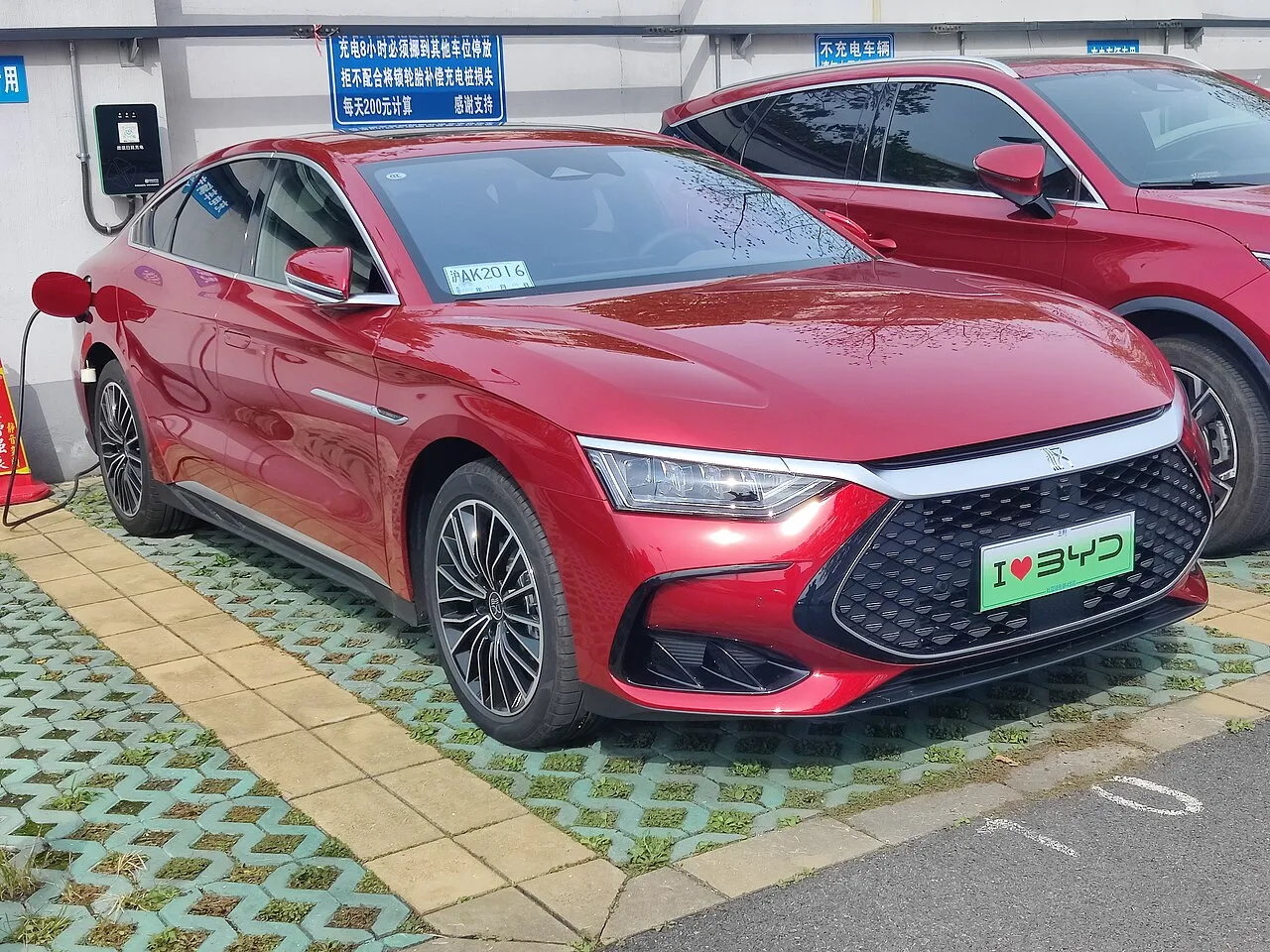
The short answer: CATL remained China's largest power battery maker in October 2026 with a 40.00% market share, while BYD reached 21.36%, according to CnEVPost. China's battery installations hit a record 99.4 GWh, with lithium iron phosphate batteries accounting for 86.9% of the total.
BYD narrowed the gap with CATL in China's power battery market for a fifth consecutive month in October 2026, as nationwide battery installations reached a record 99.4 GWh, according to CnEVPost. CATL retained a substantial lead, but its installation growth lagged the overall market. The results show a shifting balance among battery manufacturers as lithium iron phosphate, or LFP, extended its dominance in China's vehicle battery mix.
Reporting figures from the China Automotive Battery Innovation Alliance, CnEVPost said October installations rose 18.2% from a year earlier and 14.0% from September. It was the third consecutive month in which installations reached a new high for the year. Within that expanding market, BYD gained overall share, CALB strengthened its third-place position, and several smaller manufacturers changed places.
CATL grows, but BYD closes the gap
CATL's domestic installations reached 39.60 GWh in October, up about 11.6% from 35.49 GWh in September, according to CnEVPost. That increase was below the broader market's 14.0% monthly growth, leaving CATL with a 40.00% share. Its share declined by 0.93 percentage points despite the rise in its installation volume.
BYD remained second with 21.14 GWh, an increase of about 15.6% from September's 18.29 GWh. Its share rose 0.26 percentage points to 21.36%. The difference between the two companies narrowed from 19.83 percentage points in September to 18.64 percentage points in October, extending a five-month run of contractions, CnEVPost reported.
The two leaders together accounted for 61.36% of October installations, down from 62.01% in September. Their combined share fell even though both installed more battery capacity than in the preceding month. That distinction matters when assessing the results: CATL's lower share accompanied higher volume, while BYD's faster growth allowed it to gain ground within a market that was itself expanding rapidly.
CALB gains as the rankings shift
CALB held third place with 8.55 GWh and an 8.64% market share, according to CnEVPost. Its share increased by 1.67 percentage points from September. Gotion High-tech moved ahead of Eve Energy into fourth place, recording 5.99 GWh and a 6.05% share, up 0.44 percentage points. Eve Energy fell to fifth with 5.48 GWh and a 5.54% share, down 0.26 percentage points.
The top five manufacturers collectively accounted for 81.59% of the market, compared with 80.39% in September. The top two therefore lost some combined share while the top five gained. October's growth did not spread evenly across the leading manufacturers, and the movement behind CATL and BYD was significant to the overall distribution of installations.
Further down the rankings, Rept Battero Energy overtook Sunwoda to take sixth place with 3.64 GWh and a 3.67% share. Sunwoda recorded 3.53 GWh and a 3.57% share in seventh, according to CnEVPost. Energee remained eighth with 2.37 GWh and 2.39%. Svolt Energy passed Zenergy to reach ninth; their shares were 2.09% and 1.90%, respectively. LG Energy Solution, eleventh in September, fell outside the top 15 in October.
LFP accounts for most installations
LFP battery installations reached a record 86.3 GWh in October, up 27.8% year over year and 15.8% from September, according to CnEVPost. The chemistry accounted for 86.9% of China's domestic power battery installations. Both its annual and monthly growth rates exceeded those of the overall market, underscoring how heavily October's installation activity was concentrated in LFP.
Ternary battery installations, by comparison, totaled 12.8 GWh and represented 12.9% of domestic installations. Their volume rose 3.8% from September but fell 22.8% from a year earlier. The two segments thus followed different annual paths: LFP installations expanded while ternary installations contracted. The monthly increase in ternary batteries was also slower than the growth recorded by LFP.
CATL led the LFP segment with 31.54 GWh and a 36.57% share, an increase of 0.09 percentage points from September. BYD followed with 21.14 GWh and a 24.52% share, down 0.06 percentage points, CnEVPost reported. All of BYD's domestic installations continued to come from LFP batteries, making that segment central to its position in the overall ranking.
Although BYD narrowed CATL's lead across the whole battery market, the gap moved in the opposite direction within LFP. CATL's advantage in that segment widened slightly from 11.90 percentage points in September to 12.05 percentage points in October. The overall figures therefore should not be read as showing BYD gaining share against CATL in every battery category.
CALB rose from fifth to third in LFP installations, reaching 6.06 GWh and a 7.03% share. Its share increased by 0.77 percentage points, according to CnEVPost. Gotion High-tech retained fourth place with 5.97 GWh and 6.93%, while Eve Energy moved from third to fifth with 5.44 GWh and 6.31%. Those results put CALB third in both the overall market and the dominant battery segment.
CATL retains a larger lead in ternary batteries
CATL's position was stronger in the smaller ternary battery market, where it recorded 8.06 GWh and a 63.12% share, according to CnEVPost. Even so, its share declined by 4.66 percentage points from September. CALB remained second with 2.49 GWh, while its share increased by 8.26 percentage points to 19.50%.
Svolt Energy and Sunwoda ranked third and fourth in ternary batteries, with shares rising to 7.61% and 6.50%, respectively. LG Energy Solution fell from third in September to fifth in October. Its installations totaled 0.21 GWh, and its share dropped by 7.48 percentage points to 1.68%, CnEVPost reported. Its October position was therefore considerably weaker than its standing across the first ten months.
The ten-month picture remains different
China's cumulative power battery installations reached 675.6 GWh from January through October, up 16.9% from the same period a year earlier, according to CnEVPost. CATL led with 293.28 GWh and a 43.55% share, an increase of 0.76 percentage points year over year. BYD ranked second with 127.58 GWh and an 18.94% share, down 3.44 percentage points.
Those cumulative results put October's narrowing gap in context. BYD's latest monthly share was above its January–October share, while CATL's was below its cumulative share. Yet CATL had gained share year over year across the ten-month period, and BYD had lost share. The recent monthly movement and the longer-period comparison describe different aspects of the competition.
CALB, Gotion High-tech and Eve Energy held third through fifth places over the first ten months, with shares of 6.77%, 6.07% and 5.42%, respectively. CATL also led both chemistry segments during that period, taking 72.23% of ternary installations and 37.86% of LFP installations. LG Energy Solution was second in ternary batteries at 9.62%, while BYD was second in LFP at 22.64%, according to CnEVPost.
The next monthly results will show whether BYD extends its run of narrowing CATL's overall lead and whether CALB sustains its October gains. For now, the industry picture combines record installation volume, a dominant LFP segment and continued leadership by CATL. BYD's advance in the overall monthly ranking is clear, but CATL's slightly wider LFP lead and stronger cumulative share keep that advance in perspective.
Frequently asked questions
Who led China's power battery market in October 2026?
CATL ranked first with 39.60 GWh of installations and a 40.00% share, according to CnEVPost. BYD was second with 21.14 GWh and a 21.36% share.
How much did China's battery installations grow?
October installations reached a record 99.4 GWh, up 18.2% year over year and 14.0% from September, according to CnEVPost.
What share of China's battery installations used LFP?
LFP batteries accounted for 86.9% of October domestic power battery installations, totaling a record 86.3 GWh, according to CnEVPost.
Did BYD gain on CATL in the LFP segment?
The LFP share gap widened slightly in CATL's favor, from 11.90 to 12.05 percentage points, according to CnEVPost. BYD nevertheless narrowed CATL's lead in the overall battery market for a fifth consecutive month.
Which battery manufacturers ranked third through fifth?
CALB ranked third, Gotion High-tech fourth and Eve Energy fifth in October's overall market, according to CnEVPost.
Related stories

Gross vs. Usable EV Battery Capacity, Explained
An EV’s gross battery capacity describes its full energy reserve; usable capacity is the portion the driver can draw on. Here’s how to compare the terms.

How EV Battery Chemistry Affects Charging, Range, and Aging
LFP, NMC, and other lithium-ion chemistries shape an EV’s energy storage, charging behavior, durability, and material tradeoffs in different ways.

Nio Launches ES8 Mirror Black Edition 2.0 in China
Nio’s ES8 Mirror Black Edition 2.0 adds black-and-gold trim and starts at 434,800 yuan in China, while retaining the standard ES8’s core hardware.