BYD HAN and SEAL Compared: Size, Space and Drivetrains
The BYD HAN has a larger body than the SEAL, but their wheelbases match. Compare passenger-space implications, luggage needs and drivetrain choices.
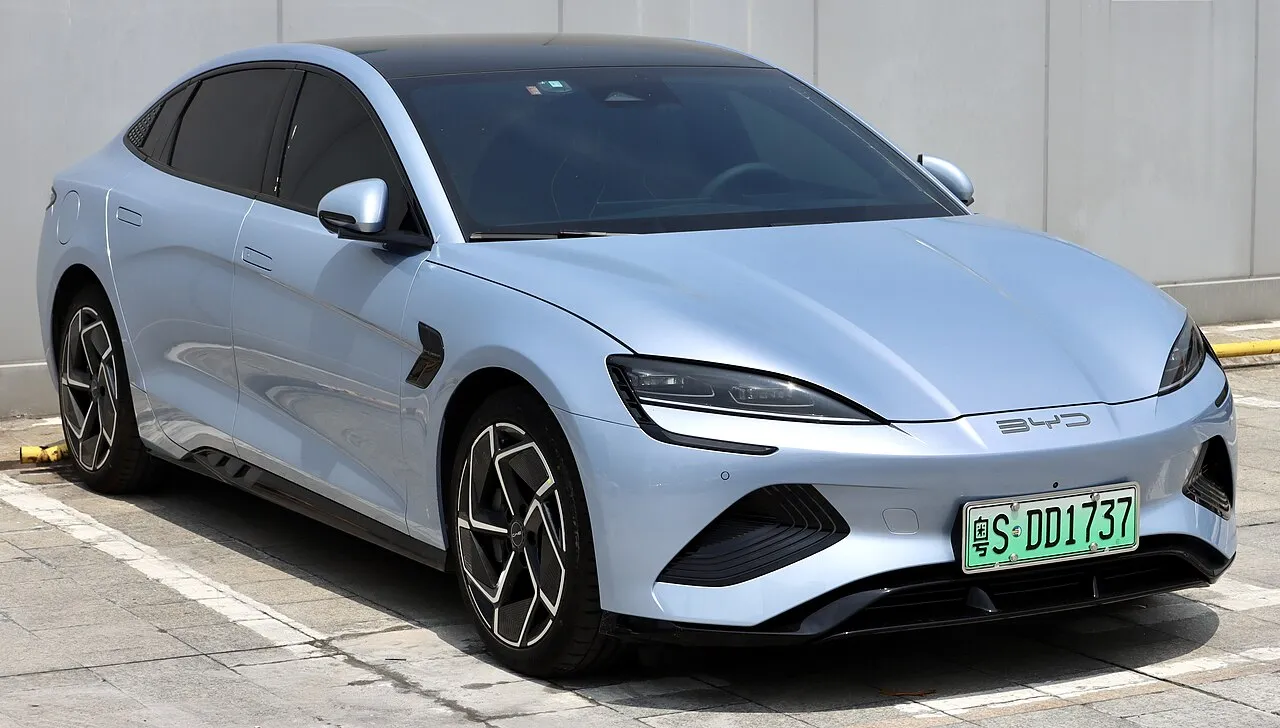
The short answer: The BYD HAN is worth considering if its wider, taller body translates into a better fit for your passengers and luggage, but its extra length alone does not establish that advantage. The SEAL shares its wheelbase and offers rear-wheel-drive and all-wheel-drive choices, so choosing the larger sedan is not necessary for strong performance.
The BYD HAN makes sense if its larger body delivers a useful improvement for the passengers and luggage you regularly carry. Its extra exterior length, however, does not establish extra rear legroom or a bigger trunk. The SEAL shares the HAN’s wheelbase, occupies less space outside and offers both rear-wheel-drive and all-wheel-drive configurations. For buyers deciding how much sedan they need, the HAN needs to justify its larger footprint through a better practical fit.
The comparison here concerns European versions, with figures credited to EVDB and OpenEV Data. Trim names, model years and sources matter: similarly positioned versions have different battery, charging and range figures. These European ratings should not be read as American-market equipment or range claims.
How much bigger is the HAN?
According to both EVDB and OpenEV Data, the European 2025 HAN measures 4,995 mm long, 1,910 mm wide and 1,495 mm tall. The European SEAL versions shown below measure 4,800 mm long, 1,875 mm wide and 1,460 mm tall. That makes the HAN 195 mm longer, 35 mm wider and 35 mm taller. Both have a 2,920 mm wheelbase.
The following table keeps each version attached to its source, market and model year. All range figures use WLTP. Dimensions, battery capacities, power and charging limits are source-reported technical figures, not WLTP test results. Battery entries distinguish gross capacity from usable capacity; charging entries show AC capability followed by peak DC power.
| Vehicle and trim | Market; model year; source | Length × width × height; wheelbase | Battery gross / usable | Power | WLTP range | AC / peak DC charging |
|---|---|---|---|---|---|---|
| SEAL Design RWD | Europe; 2026; EVDB | 4,800 × 1,875 × 1,460 mm; 2,920 mm | 82.5 / 82.5 kWh | 230 kW | 590 km | 11 / 150 kW |
| SEAL Design RWD | Europe; 2025; EVDB | 4,800 × 1,875 × 1,460 mm; 2,920 mm | 82.5 / 82.5 kWh | 230 kW | 580 km | 11 / 150 kW |
| SEAL Dynamic | Europe; 2025; OpenEV Data | 4,800 × 1,875 × 1,460 mm; 2,920 mm | 61.4 / 61.4 kWh | 150 kW | 460 km | 11 / 110 kW |
| SEAL Excellence | Europe; 2025; EVDB | 4,800 × 1,875 × 1,460 mm; 2,920 mm | 85 / 82.5 kWh | 390 kW | 530 km | 11 / 150 kW |
| SEAL Performance | Europe; 2025; OpenEV Data | 4,800 × 1,875 × 1,460 mm; 2,920 mm | 82.6 / 82.6 kWh | 390 kW | 520 km | 11 / 150 kW |
| SEAL Premium | Europe; 2025; OpenEV Data | 4,800 × 1,875 × 1,460 mm; 2,920 mm | 82.6 / 82.6 kWh | 230 kW | 570 km | 11 / 150 kW |
| HAN Ev | Europe; 2025; EVDB | 4,995 × 1,910 × 1,495 mm; 2,920 mm | 85.4 / 83 kWh | 163 kW | 521 km | 11 / 120 kW |
| HAN Flagship | Europe; 2025; OpenEV Data | 4,995 × 1,910 × 1,495 mm; 2,920 mm | 85.4 / 85.4 kWh | 380 kW | 521 km | 7 / 120 kW |
For parking, the HAN’s additional length means more body to accommodate in a garage or parking space. Its additional width also matters where clearance is tight. Neither measurement establishes maneuverability: turning behavior and visibility require separate assessment. A buyer whose SEAL already fits a garage closely should check the HAN’s fit before assuming the size difference is inconsequential.
Does the HAN offer more rear-passenger space?
The shared wheelbase is the most useful caution against equating a longer car with more legroom. Wheelbase measures the distance between the axles; it does not measure the space between a rear passenger’s knees and the front seat. The HAN’s extra overall length therefore cannot be treated as an equivalent increase in passenger space.
Interior packaging also depends on seat position, seatback thickness and how the cabin uses the available length. The HAN’s wider and taller exterior creates potential for a roomier cabin, but exterior width is not shoulder room, and overall height is not headroom. Floor height, seat cushions and roof shape all affect how comfortably someone can sit.
For regular adult passengers, compare both cars with the front seat adjusted for the person who will actually drive. Check knee clearance, foot space beneath the front seat, thigh support and head clearance together. A passenger can have space ahead of their knees yet still find the seating posture uncomfortable.
The same principle applies to child seats and occasional center-seat use. Door access, the shape of the rear bench and the fit of the actual child restraint can matter more than a modest difference in exterior width. The HAN earns its larger footprint only if those checks reveal a useful advantage for your household.
Luggage provision needs a separate comparison
A larger sedan body does not establish a larger or more useful trunk. Passenger space, body structure and storage packaging all compete for room. The exterior measurements alone cannot settle which BYD will accommodate a stroller, bulky suitcase or awkwardly shaped work bag more easily.
Trunk volume also cannot explain every loading problem. The opening must admit the object, and the space inside must accommodate its shape. Usable depth, clearance beneath the trunk lid, intrusions and the height of the loading edge all affect everyday convenience. Those details matter especially when the same bulky item travels regularly.
Bring that item to a viewing and check how it loads with the passenger seats arranged as you normally use them. Confirm any folding-seat arrangement or additional storage on the exact version under consideration. Neither should be assumed from the model name. Without a demonstrated luggage advantage, extra exterior length is a parking consideration rather than a reason to choose the HAN.
Drivetrain choice is separate from body size
OpenEV Data identifies the European 2025 SEAL Dynamic and Premium as rear-wheel drive, and the Performance as all-wheel drive. It identifies the European 2025 HAN Flagship as all-wheel drive. EVDB’s Design RWD designation identifies the rear-wheel-drive SEAL versions. Keep those version names attached to comparisons rather than treating either model as a single drivetrain.
The performance spread shows why a larger body is not a shortcut to stronger acceleration. OpenEV Data gives the European 2025 SEAL Performance 390 kW and a 3.8-second 0–100 km/h time, versus 380 kW and 3.9 seconds for the European 2025 HAN Flagship. These are source-reported acceleration figures, separate from WLTP range ratings.
At the other end, OpenEV Data reports 150 kW and 7.5 seconds to 100 km/h for the European 2025 SEAL Dynamic. EVDB reports 163 kW and 7.9 seconds for the European 2025 HAN Ev. Power alone does not determine acceleration, and the HAN name does not guarantee the performance of the Flagship.
All-wheel drive can help distribute propulsion across more driven wheels when traction is limited. It does not establish better passenger accommodation or luggage capacity, and it does not replace suitable tires. Choose it for the traction or performance characteristics you need, separately from the decision about sedan size.
Range and charging can change the decision
EVDB rates the European 2025 SEAL Design RWD at 580 km WLTP and the 2026 version at 590 km WLTP. Both European 2025 HAN versions carry a 521 km WLTP rating in their respective sources. These ratings use the same named standard, but remain standardized comparisons rather than promises for a particular highway trip.
The charging distinction also depends on trim. OpenEV Data reports 7 kW AC capability for the European 2025 HAN Flagship, while EVDB reports 11 kW for the HAN Ev. Peak DC power is not an average charging rate, so the table cannot establish a charging-stop duration. Choose the HAN when its actual cabin or luggage fit warrants the extra footprint; otherwise, the SEAL offers substantial drivetrain choice within a smaller body.
Frequently asked questions
How much larger is the BYD HAN than the SEAL?
For the European versions compared, the HAN is 195 mm longer, 35 mm wider and 35 mm taller. EVDB and OpenEV Data give both models a 2,920 mm wheelbase.
Does the BYD HAN's extra length prove it has more rear legroom?
No. Both models share the same wheelbase, and exterior dimensions do not establish rear legroom. Seat placement, cabin packaging and the front-seat position affect passenger space.
Which versions have all-wheel drive?
OpenEV Data identifies the European 2025 SEAL Performance and HAN Flagship as all-wheel drive. It identifies the European 2025 SEAL Dynamic and Premium as rear-wheel drive.
Does the HAN have a longer rated range than the SEAL?
It depends on the SEAL version. EVDB rates the European 2025 SEAL Design RWD at 580 km WLTP and the 2026 version at 590 km WLTP. EVDB and OpenEV Data each report 521 km WLTP for their respective European 2025 HAN versions.
Can exterior size establish which car has the better trunk?
No. Exterior size does not establish trunk capacity or loading practicality. The opening, interior shape and fit of the luggage you regularly carry need separate assessment.
Related stories

How to Tell Whether an EV Needs All-Wheel Drive
All-wheel drive can help an EV accelerate on slippery roads, but tires, local weather, hills and efficiency matter more than the badge alone.
Subaru E-Outback Starts at £49,995, Deliveries Due in 2027
Subaru has opened UK orders for the all-wheel-drive E-Outback, priced from £49,995. The first customer deliveries are due in early 2027.
Hyundai IONIQ 6 vs. BYD HAN: Which Sedan Fits You?
The IONIQ 6 has US EPA range ratings and several configurations; the HAN’s figures here are European WLTP ratings. Compare size, charging and ownership fit.