BYD DOLPHIN or Hyundai KONA Electric: Space and Charging
Compare the BYD DOLPHIN and Hyundai KONA Electric on exterior size, seating considerations, cargo practicality, and market-specific charging ratings.
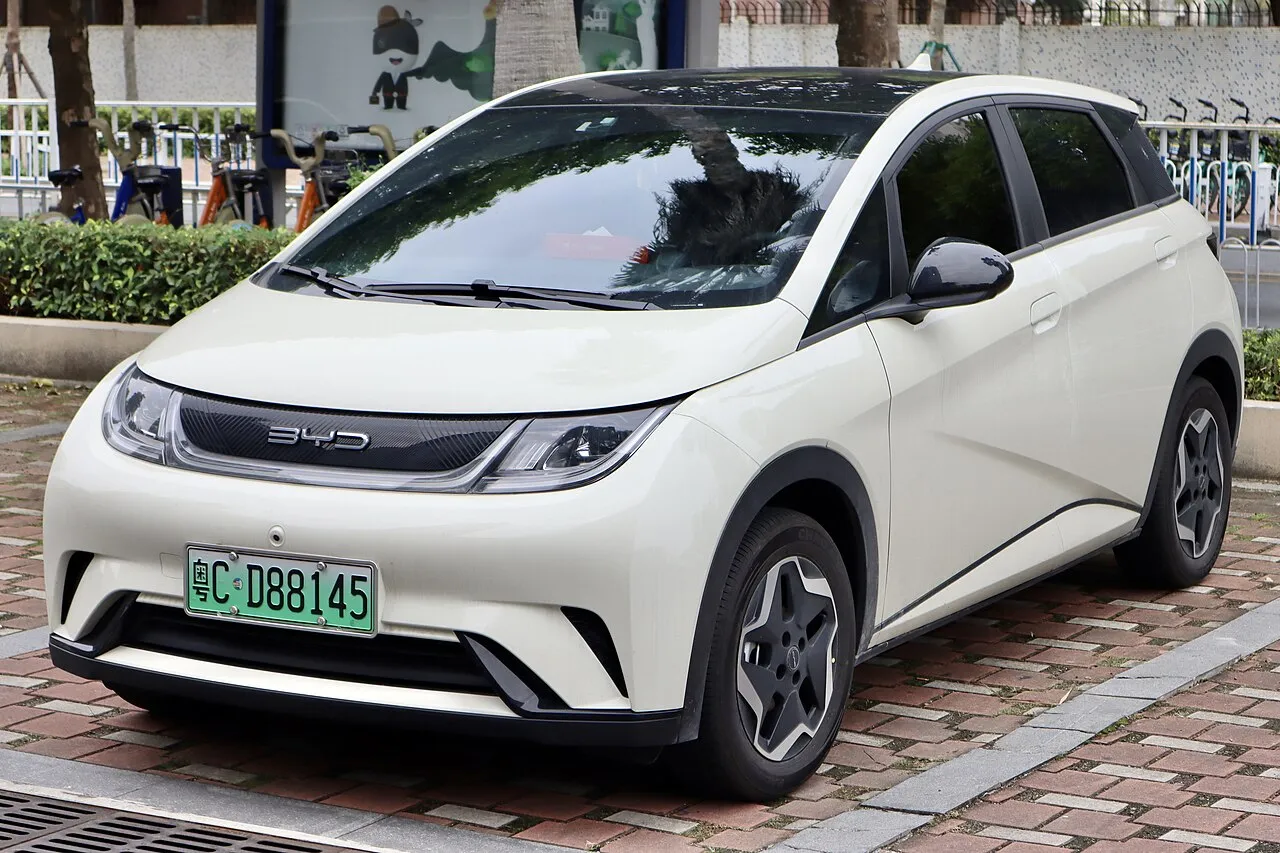
The short answer: The BYD DOLPHIN offers a narrower body and, in some European trims, a higher AC charging rating; the Hyundai KONA Electric versions compared here are shorter and have a higher peak DC charging rating. Neither the crossover label nor exterior height establishes a seating-position or luggage-space winner.
The BYD DOLPHIN is the narrower choice, while the Hyundai KONA Electric is shorter in the European versions compared here. Selected DOLPHIN trims also offer a higher AC charging rating, whereas the KONA Electric has a higher peak DC rating. For buyers choosing between a hatchback and a compact crossover, those are useful distinctions. A higher seating position, easier entry, or more usable luggage space needs a separate assessment: exterior dimensions alone cannot establish those advantages.
Market and trim matter throughout this comparison. The DOLPHIN figures below cover European models; American KONA Electric EPA ratings appear separately. European range results use WLTP, so they should not be ranked against American EPA results as though both describe the same test.
Compare the exact versions first
OpenEV Data and EVDB attribute different battery capacities and charging ratings to the DOLPHIN Design and Premium Extended Range. Those names therefore should not be treated as interchangeable. The KONA Electric also needs a precise identifier: its American EPA entries distinguish wheel sizes, while its European versions distinguish battery sizes.
The table keeps those identities separate. WLTP and EPA labels apply to rated range; dimensions, battery capacities, and charging power are source-reported technical figures rather than results from those range tests. Battery figures are gross/usable, and dimensions are length × width × height.
| Vehicle and version | Market and model year | Rated range and test standard | Battery gross/usable | Exterior dimensions; wheelbase | AC / peak DC charging | Source |
|---|---|---|---|---|---|---|
| BYD DOLPHIN Standard | Europe, 2025 | 340 km, WLTP | 44.9 / 44 kWh | 4,290 × 1,770 × 1,550 mm; 2,700 mm | 7 / 60 kW | OpenEV Data |
| BYD DOLPHIN Boost | Europe, 2025 | 310 km, WLTP | 44.9 / 44 kWh | 4,290 × 1,770 × 1,550 mm; 2,700 mm | 7 / 60 kW | OpenEV Data |
| BYD DOLPHIN Design | Europe, 2025 | 435 km, WLTP | 63 / 60.4 kWh | 4,290 × 1,770 × 1,550 mm; 2,700 mm | 11 / 95 kW | EVDB |
| BYD DOLPHIN Premium Extended Range | Europe, 2025 | 427 km, WLTP | 60.5 / 60 kWh | 4,290 × 1,770 × 1,550 mm; 2,700 mm | 11 / 88 kW | OpenEV Data |
| Hyundai KONA Electric Standard Range | Europe, 2025 | 305 km, WLTP | 39.2 / 36 kWh | 4,180 × 1,800 × 1,570 mm; 2,600 mm | 7.2 / 100 kW | OpenEV Data; EVDB |
| Hyundai KONA Electric Long Range | Europe, 2025 | 484 km, WLTP | 64 / 58 kWh | 4,180 × 1,800 × 1,570 mm; 2,600 mm | 7.2 / 100 kW | OpenEV Data; EVDB |
| Hyundai KONA Electric, 17-inch wheels | US, 2025 | 261 miles, EPA | — | — | — | US EPA fueleconomy.gov |
| Hyundai KONA Electric, 19-inch wheels | US, 2025 | 230 miles, EPA | — | — | — | US EPA fueleconomy.gov |
Exterior footprint: narrower versus shorter
The European dimensions create a more useful distinction than simply calling the DOLPHIN small and the KONA Electric an SUV. According to OpenEV Data and EVDB, the 2025 DOLPHIN is longer but narrower than the European 2025 KONA Electric versions above. The Hyundai is slightly taller. Neither vehicle wins every dimension relevant to parking.
Length matters when fitting a vehicle into a short parking space or leaving clearance behind it. Width matters in a narrow garage and when opening doors beside another vehicle. That makes the DOLPHIN's narrower body potentially useful where side clearance is the constraint, while the KONA Electric's shorter body can help where available length is limited.
These dimensions do not establish a turning-circle advantage or describe the space needed with mirrors and doors extended. Likewise, the DOLPHIN's longer wheelbase does not prove that it has more rear legroom. Wheelbase describes the distance between axles; passenger space also depends on how the cabin, seats, and other components occupy the body.
Seating position needs more than an SUV label
A buyer moving toward a crossover may want a more upright posture, a clearer view ahead, or less bending when entering. Those are distinct requirements. Overall roof height cannot establish seat-cushion height, and seat-cushion height alone cannot establish comfort. The relationship among the seat, floor, pedals, and steering wheel determines how a driver actually sits.
The KONA Electric's taller exterior therefore supports only a claim about its body height. It does not establish how much higher its occupants sit than those in the DOLPHIN. Nor does the hatchback label establish that getting into the BYD requires an awkward drop into a low seat.
For this particular decision, assess entry and driving posture separately. Notice whether the doorway allows comfortable head clearance, whether the seat supports the thighs with the pedals within reach, and whether the steering wheel allows a relaxed arm position. These checks address the reason for wanting a crossover more directly than its category name does.
Luggage space: shape matters alongside volume
There is no defensible luggage-space winner from exterior size alone. A longer body can allocate space to passengers, cargo, or other components; a taller roof does not guarantee a taller usable cargo opening. The DOLPHIN's length and the KONA Electric's SUV classification cannot settle which will carry a particular household's belongings more easily.
For luggage, distinguish capacity from access. A bag must pass through the opening before it can use the space inside. Floor shape, wheel-arch intrusions, the loading lip, and the rear seatbacks can all affect whether a bulky object fits conveniently. A volume figure, even when available, does not explain every one of those constraints.
The useful comparison is the same load with the same seating arrangement. If rear passengers travel regularly, assess cargo room with their seats upright. If carrying larger objects is the priority, assess the folded-seat floor and loading path. Neither arrangement should silently stand in for the other when deciding which body style works better.
AC charging favors different DOLPHIN trims
For the European 2025 versions, EVDB credits the DOLPHIN Design with 11 kW AC charging, and OpenEV Data gives the Premium Extended Range the same rating. OpenEV Data puts the Standard and Boost at 7 kW. The European KONA Electric versions carry a 7.2 kW AC rating from OpenEV Data and EVDB.
The higher-rated DOLPHIN versions can accept more AC power when the installation can deliver it. That condition matters: the vehicle's charging capability is a ceiling, not a promise that every home or destination charger will reach it. The electrical connection and charging equipment must support the required power.
Power also differs from charging time. Kilowatts describe the rate of energy transfer; kilowatt-hours describe energy capacity. A larger battery can require more energy to refill, so a higher AC rating does not automatically mean a shorter full charge. Comparing daily replenishment requires considering both the energy needed and the available charging window.
Peak DC power does not determine the whole stop
OpenEV Data and EVDB give the European 2025 KONA Electric versions a 100 kW peak DC rating. The DOLPHIN ratings range from 60 kW for Standard and Boost to 88 kW for Premium Extended Range and 95 kW for Design, according to their respective sources.
That establishes the Hyundai's higher peak rating, but it does not establish a proportional reduction in time at a charger. Charging power changes during a session. Battery temperature, starting charge level, the vehicle's charging controls, and the station's available output affect the rate actually sustained.
Gross and usable battery capacity also need separate treatment. Gross capacity describes the total battery capacity, while usable capacity describes the portion available for operation. Neither number, combined with peak DC power, is enough to calculate a reliable charging-stop duration. A charging curve or a timed session over a defined charge interval would answer a different, more practical question.
Keep range comparisons within the same standard
For European 2025 models, WLTP allows a direct comparison of the published ratings: the KONA Electric Long Range leads the versions in the table, while the DOLPHIN Standard exceeds the KONA Electric Standard Range. Battery size alone does not explain the ordering; range reflects energy capacity and consumption under the applicable procedure.
For American shoppers, the 2025 KONA Electric EPA ratings distinguish the wheel configurations. US EPA fueleconomy.gov rates the 17-inch-wheel version above the 19-inch-wheel version. Those EPA results should remain separate from the European DOLPHIN's WLTP figures, even after converting kilometers to miles.
The choice ultimately depends on the constraint that matters most: body width, parking length, access, cargo fit, or charging opportunities. The DOLPHIN's narrower exterior and selected trims' higher AC capability are concrete advantages for particular needs. The KONA Electric's shorter exterior and higher peak DC rating offer different advantages, while seating comfort and luggage usefulness require their own comparison.
Frequently asked questions
Is the BYD DOLPHIN smaller than the Hyundai KONA Electric?
It depends on the dimension. OpenEV Data and EVDB give the European 2025 DOLPHIN dimensions of 4,290 mm long, 1,770 mm wide, and 1,550 mm tall. The European 2025 KONA Electric versions measure 4,180 mm long, 1,800 mm wide, and 1,570 mm tall, making the BYD longer but narrower and lower.
Which has the higher AC charging rating?
For European 2025 versions, the DOLPHIN Design and Premium Extended Range have 11 kW AC ratings from EVDB and OpenEV Data, respectively. The KONA Electric Standard Range and Long Range have 7.2 kW ratings from OpenEV Data and EVDB; the DOLPHIN Standard and Boost have 7 kW ratings from OpenEV Data.
Which has the higher peak DC charging rating?
OpenEV Data and EVDB rate the European 2025 KONA Electric Standard Range and Long Range at 100 kW peak DC. The European 2025 DOLPHIN ratings are 60 kW for Standard and Boost, 88 kW for Premium Extended Range, and 95 kW for Design, according to OpenEV Data or EVDB for the respective version. Peak power alone does not establish charging time.
Can the DOLPHIN's WLTP range be compared directly with the KONA Electric's EPA range?
No. The European 2025 DOLPHIN ratings use WLTP, while the American 2025 KONA Electric ratings use EPA testing. Converting distance units does not make the test procedures equivalent.
Related stories
BYD Dolphin vs. Atto 3: Which Body Style Fits Better?
The BYD Dolphin is the smaller hatchback, while the Atto 3 is a taller, wider SUV. Their dimensions help show which format may suit your passengers, cargo and parking routine.

How to Plan an EV’s Winter Range Buffer for Your Route
Set a winter range reserve around your route, weather, speed, terrain and charging access. A practical plan accounts for uncertainty instead of relying on a single fixed buffer.
How to Choose an EV for Frequent Rural Errands
Compare cargo space, ground clearance, charging access and a realistic range buffer to find an EV that can handle your regular rural trips.