BYD DOLPHIN or Hyundai INSTER: Which Small EV Fits?
The DOLPHIN offers a larger footprint, while the INSTER is easier to place in a tight parking space. Compare European range ratings and charging by trim.
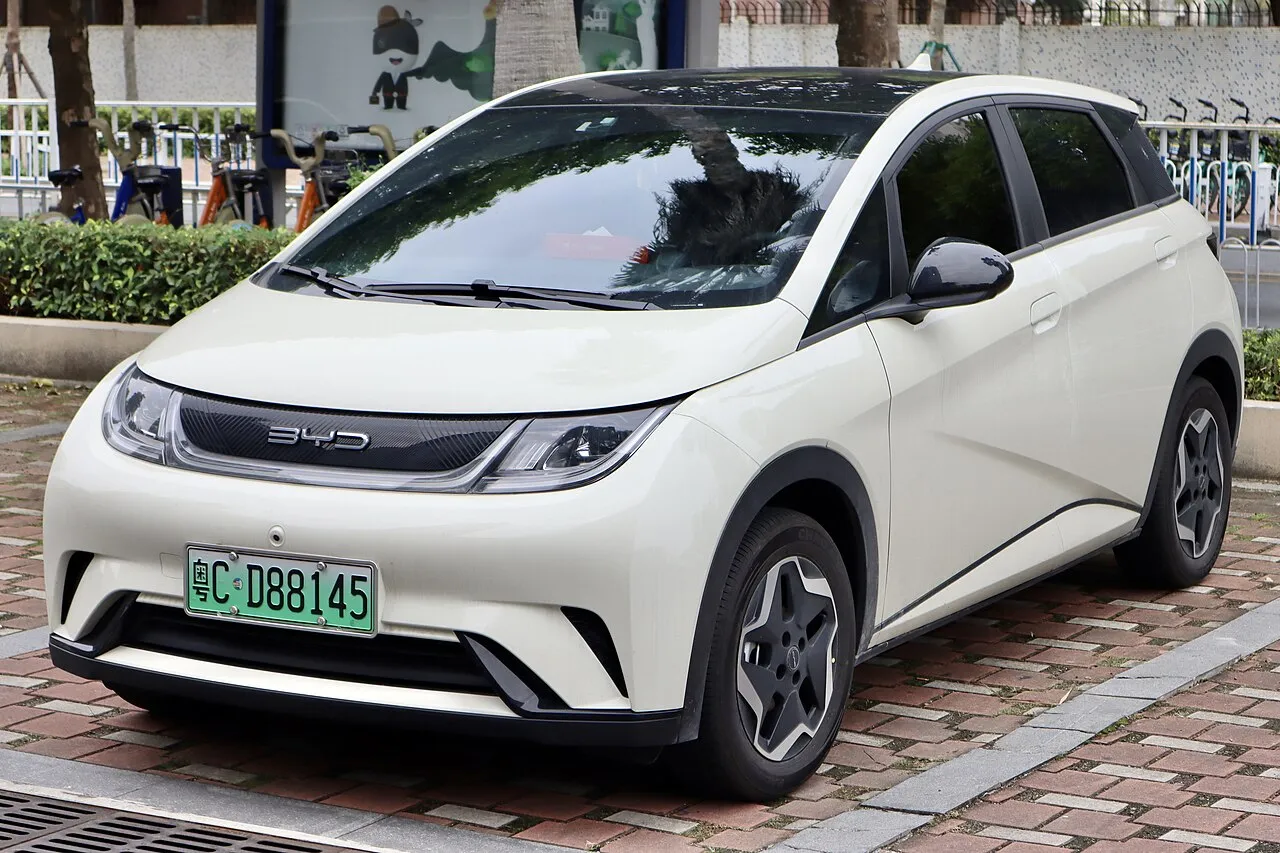
The short answer: Choose the BYD DOLPHIN if you want the larger car and, in an extended-range trim, the higher WLTP range rating. Choose the Hyundai INSTER if a shorter, narrower car matters more for city parking; compare charging and range by trim before deciding.
The BYD DOLPHIN is the larger of these two European-market hatchbacks, while the Hyundai INSTER has the smaller footprint for tight streets and parking spaces. Their range and charging figures tell a more detailed story: the longest-rated DOLPHIN trims go farther under WLTP, but the INSTER has an 11 kW AC rating and a 120 kW peak DC rating in both versions shown here. A useful choice starts with where the car must fit, then moves to the particular trim and the way it will be charged.
Size: the clearest difference
For the European 2025 versions, OpenEV Data and EVDB give the DOLPHIN a length of 4,290 mm and a width of 1,770 mm. EVDB gives the INSTER a length of 3,825 mm and a width of 1,610 mm. Those dimensions make the INSTER the more promising choice when a parking space, narrow driveway or crowded street sets a hard limit. The DOLPHIN asks for more room around the car, especially when opening doors or maneuvering beside other vehicles.
The DOLPHIN is also lower, at 1,550 mm versus the INSTER’s 1,575 mm, according to the same European 2025 figures. Its wheelbase is 2,700 mm, compared with 2,580 mm for the INSTER. Wheelbase describes the distance between the axles; it can help frame questions about passenger space, but it cannot establish how comfortable either cabin feels. Seat shape, floor height and where passengers sit also matter. The exterior dimensions make the DOLPHIN’s larger footprint clear without establishing how much luggage either car can carry.
European 2025 figures by version
All range ratings in this table use WLTP. Battery figures distinguish gross capacity from usable capacity, while charging figures are power ratings rather than promised charging times. Each row identifies its source so differences between trims stay visible.
| Vehicle and trim | Market, model year and range test | Battery: usable / gross | Rated range | AC / peak DC charging | Length × width × height; wheelbase | Source |
|---|---|---|---|---|---|---|
| BYD DOLPHIN Standard | Europe; 2025; WLTP | 44 / 44.9 kWh | 340 km | 7 / 60 kW | 4,290 × 1,770 × 1,550 mm; 2,700 mm | OpenEV Data |
| BYD DOLPHIN Boost | Europe; 2025; WLTP | 44 / 44.9 kWh | 310 km | 7 / 60 kW | 4,290 × 1,770 × 1,550 mm; 2,700 mm | OpenEV Data |
| BYD DOLPHIN Premium Extended Range | Europe; 2025; WLTP | 60 / 60.5 kWh | 427 km | 11 / 88 kW | 4,290 × 1,770 × 1,550 mm; 2,700 mm | OpenEV Data |
| BYD DOLPHIN Design | Europe; 2025; WLTP | 60.4 / 63 kWh | 435 km | 11 / 95 kW | 4,290 × 1,770 × 1,550 mm; 2,700 mm | EVDB |
| Hyundai INSTER Standard 42 kWh | Europe; 2025; WLTP | 42 / 44.6 kWh | 327 km | 11 / 120 kW | 3,825 × 1,610 × 1,575 mm; 2,580 mm | EVDB |
| Hyundai INSTER Long Range 49 kWh | Europe; 2025; WLTP | 49 / 51.8 kWh | 370 km | 11 / 120 kW | 3,825 × 1,610 × 1,575 mm; 2,580 mm | EVDB |
What the size difference means inside
A compact exterior can make daily parking easier, but it also makes cabin layout especially important. Before choosing the INSTER for its smaller footprint, check whether the people who usually ride in the back have enough knee and head room with the front seats set for their drivers. Then check the luggage area with those passengers aboard. A car can meet a household’s normal commuting needs yet struggle with a stroller, shopping or bags when every seat is occupied.
The same checks matter in the DOLPHIN. Its greater length and width give it a different starting point, but exterior size alone does not reveal cargo volume, the shape of the load opening or how much room is available behind an occupied rear seat. If carrying bulky objects is part of the decision, inspect the cargo opening and see how the seating arrangement works for the people who will use it. For a city car, a flexible cabin is valuable only if the necessary passenger and cargo arrangements work on the same trip.
Think through the least convenient regular journey rather than the easiest one. For example, a short commute with one occupant puts little pressure on rear seating, while a trip with rear passengers and luggage tests both at once. That distinction helps keep the choice grounded in use. The INSTER’s smaller dimensions are a practical advantage where space outside the car is scarce; the DOLPHIN’s larger dimensions make a cabin inspection especially worthwhile for shoppers who prioritize room inside.
Range: compare trims under the same test
Because these European 2025 ratings all use WLTP, they can be compared as ratings within this group. OpenEV Data rates the DOLPHIN Standard at 340 km WLTP and the Boost at 310 km WLTP, despite both having 44 kWh of usable battery capacity. Their different ratings show why battery capacity by itself is a poor shortcut for predicting a trim’s rated range. EVDB rates the INSTER Standard 42 kWh at 327 km WLTP, placing it near the smaller-battery DOLPHIN versions on this measure.
The larger-battery versions spread out more. EVDB rates the European 2025 DOLPHIN Design at 435 km WLTP and the INSTER Long Range 49 kWh at 370 km WLTP. OpenEV Data rates the DOLPHIN Premium Extended Range at 427 km WLTP. If longer drives are common, those DOLPHIN trims offer the highest WLTP ratings in this comparison. If most journeys are local, the practical question is whether a trim’s range leaves a comfortable margin between opportunities to charge.
WLTP is a standardized test rating, not a promise for an individual drive. Speed, weather, heating or cooling, terrain and driving conditions can change energy use. Plan around the trips you actually make and leave room for less favorable conditions, especially when charging away from home would be inconvenient. These are European WLTP figures; they should not be read as EPA range estimates for an American-market car.
Charging: match the car to the stop
AC charging matters most when the car can remain parked for an extended period, such as during a regular overnight stop. OpenEV Data gives the European 2025 DOLPHIN Standard and Boost a 7 kW AC rating, and the Premium Extended Range an 11 kW rating. EVDB gives the DOLPHIN Design and both European 2025 INSTER versions an 11 kW AC rating. An AC rating is the car’s charging capability; the power it receives also depends on the charging equipment and electrical installation.
If reliable charging is available where the car spends long periods parked, a lower AC rating may have little effect on daily use. The comparison becomes more consequential when charging time is limited and a compatible AC charger can deliver the higher power. Start with how long the car is usually parked and how much energy must be replaced, then consider the rating. A charging figure has little value in isolation from the stop where it will be used.
DC charging is more relevant to shorter stops during longer journeys. EVDB gives both European 2025 INSTER versions a 120 kW peak DC rating. OpenEV Data gives the DOLPHIN Standard and Boost a 60 kW peak and the Premium Extended Range an 88 kW peak; EVDB gives the Design a 95 kW peak. Peak power indicates a maximum, not the rate sustained throughout a session. Battery state of charge, temperature and the charger can affect the power seen during a stop, so peak ratings alone cannot establish which car will finish a particular charge first.
OpenEV Data identifies CCS2 connectors for the European 2025 DOLPHIN Standard, Boost and Premium Extended Range. Connector compatibility matters when planning public charging, particularly for a reader accustomed to a different market. Check the actual car and the chargers along a route before treating these European charging figures as a plan for travel elsewhere.
Which one suits your routine?
Choose the INSTER’s smaller footprint if fitting the car into tight spaces is the recurring problem, then confirm that its cabin works with your usual passengers and cargo. Choose the DOLPHIN if the larger car better suits those needs, paying close attention to trim: its WLTP range and charging ratings change substantially across the versions here. For either hatchback, the best fit depends on the particular parking space, the trips that stretch its range and the charging stops available when the car needs energy.
Frequently asked questions
Which is smaller, the BYD DOLPHIN or Hyundai INSTER?
The INSTER is shorter and narrower. For the European 2025 versions, EVDB gives it dimensions of 3,825 mm long and 1,610 mm wide; OpenEV Data and EVDB give the DOLPHIN 4,290 mm and 1,770 mm.
Which has the highest rated range?
The European 2025 DOLPHIN Design has the highest rating here, at 435 km WLTP according to EVDB. These are WLTP ratings, not EPA estimates.
Do all DOLPHIN trims have the same charging rating?
No. For the European 2025 trims shown, OpenEV Data gives the Standard and Boost 7 kW AC and 60 kW peak DC, and the Premium Extended Range 11 kW AC and 88 kW peak DC. EVDB gives the Design 11 kW AC and 95 kW peak DC.
Does a higher peak DC rating guarantee a shorter charging stop?
No. Peak power is a maximum, while the power during a session can vary with battery state of charge, temperature and the charger.
Related stories

How to Choose an EV for Caregiving and Support Trips
Compare passenger access, rear-seat comfort, equipment storage and charging routines to find an EV that fits recurring appointments and support trips.

Choosing 120V or 240V Charging for an EV at Home
A standard outlet may work for an EV that sits parked for long stretches. A 240V setup adds charging power, which can matter when daily driving uses more energy.

How to Plan EV Charging When You Park on the Street
Street parking can work with EV ownership when you confirm local rules, identify dependable charging, and build a routine that fits where you park.