BYD ATTO 3 or Volvo EX40: Which Fits Family Life?
Compare the BYD ATTO 3 and Volvo EX40 by market, model year, range rating and charging capability, with a clear look at what their dimensions cannot tell you.
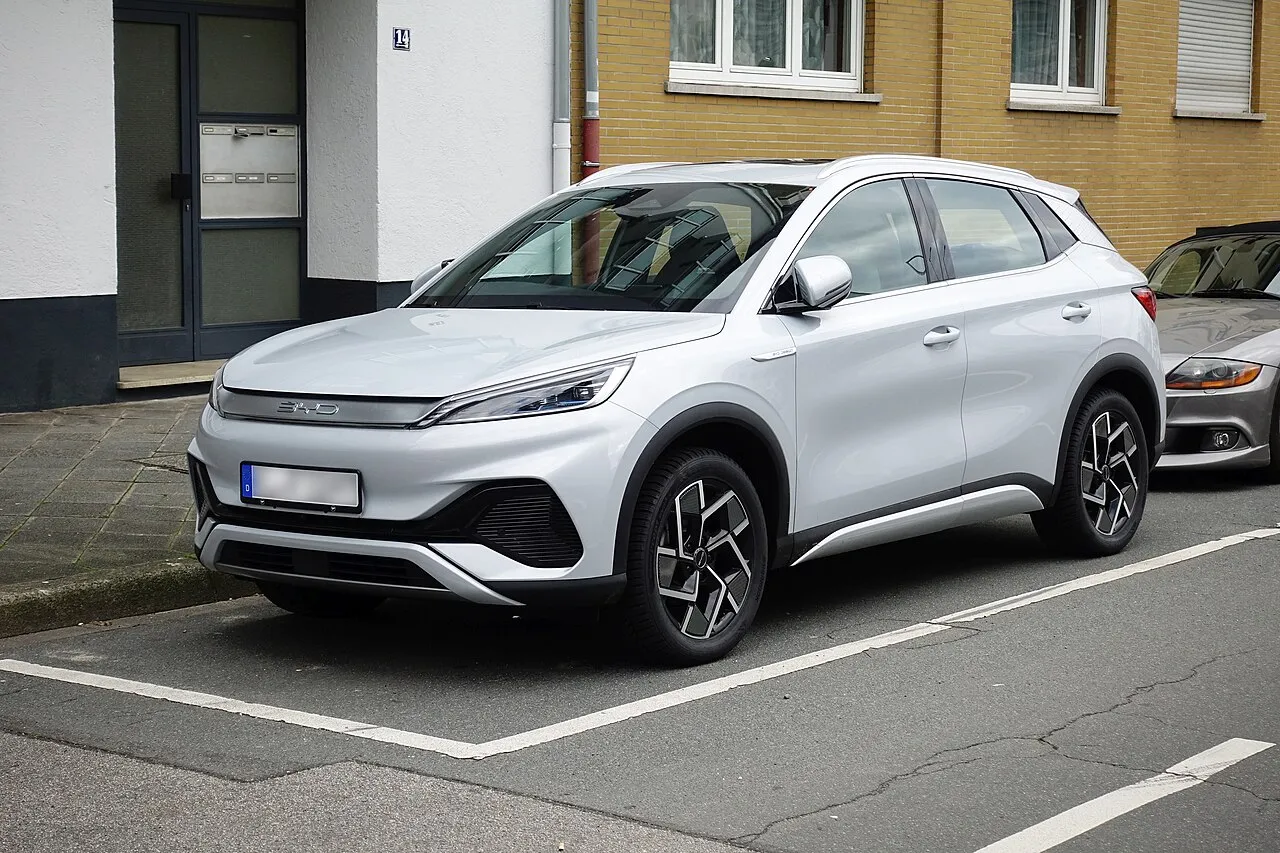
The short answer: The Volvo EX40 offers higher published charging power in the European versions shown, while the BYD ATTO 3 has a slightly longer body and wheelbase. Neither vehicle has a published passenger-room or cargo-capacity figure here, so those dimensions cannot settle which works better for a family.
For a family choosing between the BYD ATTO 3 and Volvo EX40, the clearest differences are in the European charging and range figures. The 2025 European EX40 versions shown have higher AC and peak DC charging ratings than the 2025 European ATTO 3 versions. The ATTO 3 is slightly longer and has a slightly longer wheelbase. Neither measurement establishes which has more usable cabin or cargo space, however. A family decision still depends on whether passengers, child seats and everyday luggage fit the particular vehicle under consideration.
Key figures by market and version
Each range figure below carries its own test standard. WLTP figures can be compared with other WLTP figures as ratings, but EPA, Natural Resources Canada (NRCan) and CLTC figures should each be read within their own standard. Charging entries are equipment ratings or published Level 2 charge times; they are not range-test results. An empty entry means that figure has not been published for that version here.
| Vehicle and version | Market and model year | Rated range and test standard | Charging | Length; wheelbase | Figure credit |
|---|---|---|---|---|---|
| BYD ATTO 3 Standard Range | Europe, 2025 | 345 km, WLTP | 7 kW AC; 70 kW peak DC | 4,455 mm; 2,720 mm | OpenEV Data |
| BYD ATTO 3 Extended Range | Europe, 2025 | 420 km, WLTP | 7 kW AC; 88 kW peak DC | 4,455 mm; 2,720 mm | OpenEV Data; EVDB |
| Volvo EX40 Base | Europe, 2025 | 425 km, WLTP | 11 kW AC; 150 kW peak DC | 4,440 mm; 2,702 mm | OpenEV Data |
| Volvo EX40 Base Twin Motor | Europe, 2025 | 418 km, WLTP | 11 kW AC; 150 kW peak DC | 4,440 mm; 2,702 mm | OpenEV Data |
| Volvo EX40 Single Motor Extended Range | Europe, 2025 | 515 km, WLTP | 11 kW AC; 200 kW peak DC | 4,440 mm; 2,702 mm | EVDB |
| Volvo EX40 Twin Motor | Europe, 2025 | 460 km, WLTP | 11 kW AC; 200 kW peak DC | 4,440 mm; 2,702 mm | EVDB |
| Volvo EX40, rear-wheel drive | US, 2026 | 296 miles, EPA | 8 hours, Level 2 full charge | — | US EPA fueleconomy.gov |
| Volvo EX40 Twin, all-wheel drive | US, 2026 | 260 miles, EPA | 8 hours, Level 2 full charge | — | US EPA fueleconomy.gov |
| Volvo EX40 | Canada, 2026 | 476 km, NRCan | 8 hours, Level 2 full charge | — | Natural Resources Canada |
| Volvo EX40 Twin | Canada, 2026 | 418 km, NRCan | 8 hours, Level 2 full charge | — | Natural Resources Canada |
| BYD ATTO 3 Standard Range | China, 2025 | 430 km, CLTC | 7 kW AC; 70 kW peak DC | 4,455 mm; 2,720 mm | OpenEV Data |
| BYD ATTO 3 Extended Range | China, 2025 | 510 km, CLTC | 7 kW AC; 88 kW peak DC | 4,455 mm; 2,720 mm | OpenEV Data |
What the exterior dimensions say about family space
The 2025 European ATTO 3 measures 4,455 mm long with a 2,720 mm wheelbase, according to OpenEV Data and EVDB for the Extended Range version and OpenEV Data for Standard Range. OpenEV Data and EVDB report a 4,440 mm length and 2,702 mm wheelbase for the respective 2025 European EX40 versions. That makes the ATTO 3 longer by 15 mm, with 18 mm more between its axles. These are small differences in exterior measurements, not measurements of legroom, headroom or the distance between seats.
Body height is another reason to avoid judging the cabin by a single number. OpenEV Data records the 2025 European EX40 Base at 1,652 mm tall, while EVDB records the European Single Motor Extended Range at 1,596 mm. The European ATTO 3 versions are 1,615 mm tall in OpenEV Data, with EVDB also crediting the Extended Range figures. An exterior height may be affected by the particular version, and it does not reveal how much space a seated passenger has beneath the roof.
Passenger-room measurements and cargo-capacity figures have not been published for these versions here. It would be misleading to declare either SUV the roomier family car from length, wheelbase or height alone. Seat shape, floor height and the position of the front seats all affect how a rear passenger fits. The practical check is to put the intended child seats in place, set the front seats for the usual drivers and then assess rear-seat access and remaining passenger space. That check answers a different question from whether one vehicle is a few millimeters longer outside.
Cargo space needs a separate check
A cargo-capacity number for either vehicle has not been published here. Even when a volume figure is available, it cannot by itself establish whether a stroller, sports bag or a set of suitcases will fit: the shape of the load area and the opening matter. For this comparison, there is no sound numerical basis for naming a cargo winner or calculating a difference in capacity.
Bring the items that determine whether an SUV works for the household, or check their dimensions against the actual cargo opening and load floor of the version being considered. Check the space with the rear seats in their normal passenger position if those seats will be occupied on trips. Folding the seats can change what fits, but it does not solve a family’s need to carry people and luggage at the same time. Exterior length is useful for judging parking space; it is a poor substitute for this cargo check.
Range comparisons depend on the market
In Europe, the 2025 ATTO 3 Standard Range has a 345 km WLTP rating and the Extended Range has a 420 km WLTP rating, according to OpenEV Data, with EVDB also credited for Extended Range. The European EX40 ratings shown span 418 km WLTP for the Base Twin Motor to 515 km WLTP for the Single Motor Extended Range, according to OpenEV Data and EVDB for their respective versions. Because these are WLTP ratings, a shopper can compare the published figures within that European group while still allowing for differences in driving conditions.
Those European ratings should not be mixed into a numerical ranking with the US, Canadian or Chinese entries. US EPA fueleconomy.gov rates the 2026 EX40 rear-wheel-drive version at 296 miles and the Twin all-wheel-drive version at 260 miles. Natural Resources Canada gives the 2026 Canadian EX40 ratings of 476 km and 418 km for the version without a trim name and the Twin, respectively. OpenEV Data gives the 2025 Chinese ATTO 3 Standard Range a 430 km CLTC rating and the Extended Range a 510 km CLTC rating. A larger number under one test standard does not establish more usable range than a smaller number under another.
Version names also matter. The European EX40 Base, Base Twin Motor, Single Motor Extended Range and Twin Motor do not share one range rating. Likewise, the ATTO 3 Standard Range and Extended Range have different WLTP ratings in Europe and different CLTC ratings in China. Select the market and version first, then read its rating. That keeps a family’s trip planning tied to the vehicle it could actually choose, rather than a figure attached to a different configuration.
Home and highway charging
For 2025 European versions, OpenEV Data and EVDB credit the ATTO 3 with 7 kW AC charging and the EX40 with 11 kW AC charging for their respective versions. These ratings describe how much AC power the vehicle can accept at most; the power available from a home charger or public AC station can set a lower limit. A higher vehicle rating is most useful when the charging equipment can deliver it and the household needs to replenish energy within a shorter window.
The European DC peak ratings also differ by version. OpenEV Data credits the ATTO 3 Standard Range at 70 kW and, with EVDB, the Extended Range at 88 kW. OpenEV Data credits the EX40 Base and Base Twin Motor at 150 kW; EVDB credits the Single Motor Extended Range and Twin Motor at 200 kW. A peak is the highest stated charging power, not the power maintained throughout a stop. The battery’s state of charge, temperature and the charger’s capability affect a session, so these figures alone cannot establish how long a family will wait on a road trip.
The North American EX40 entries answer a narrower charging question. US EPA fueleconomy.gov and Natural Resources Canada each show an eight-hour Level 2 full-charge time for their respective 2026 EX40 versions. A time for a full charge is different from an AC power rating, and neither agency’s entry here gives a peak DC rating. The European EX40 DC peaks should therefore not be treated as published figures for a US or Canadian version.
Which one should a family choose?
If European public charging capability and the longest European WLTP rating shown are priorities, the EX40 Single Motor Extended Range is the version to examine: EVDB credits it with 515 km WLTP, 11 kW AC charging and a 200 kW DC peak. If the ATTO 3 is the preferred size or configuration, identify whether the choice is Standard Range or Extended Range before planning charging stops; their European WLTP ratings and DC peaks differ. Neither conclusion settles passenger comfort or luggage fit.
For an American shopper, the directly relevant published range comparison here is between the two 2026 US EX40 versions under EPA testing. There is no US ATTO 3 rating here to put beside them. Across all markets, the strongest family-space conclusion is also the most limited one: the exterior dimensions are close, while passenger-room and cargo-capacity figures have not been published here. Check the actual seating and load area before letting a range rating or charging peak decide the whole purchase.
Frequently asked questions
Which has more cargo space, the BYD ATTO 3 or Volvo EX40?
Cargo-capacity figures have not been published here for either vehicle, so a numerical comparison or cargo-space winner cannot be established.
Is the BYD ATTO 3 longer than the Volvo EX40?
Yes. For the 2025 European versions, OpenEV Data and EVDB credit the ATTO 3 with a 4,455 mm length and the EX40 with a 4,440 mm length, depending on version. Exterior length does not establish passenger or cargo room.
Which European version has the highest published DC charging peak?
EVDB credits the 2025 European EX40 Single Motor Extended Range and Twin Motor with 200 kW peak DC charging, the highest ratings among the versions shown.
Can the ATTO 3’s Chinese range rating be compared directly with the EX40’s US rating?
No. OpenEV Data reports the Chinese ATTO 3 ratings under CLTC, while US EPA fueleconomy.gov reports the US EX40 ratings under EPA testing. They are different test standards.
Related stories

How to Build a Flexible EV Charging Routine for Work
Build charging around the miles you need for your next drive, using home, work, or public charging as your schedule allows. Keep a practical buffer.

How to Check EV Charger Plug Compatibility Before a Trip
Match your EV’s connector and charging limits to each route stop. Learn what charger labels mean, when an adapter may work, and what to confirm before you leave.

How to Estimate Electric Car Range While Towing
Estimate towing range from your vehicle’s normal range, then adjust for trailer shape, speed, weather and hills. Use the result to plan charging stops.