A Practical Comparison of the Tesla Model X and Volvo EX90
Compare Tesla Model X and Volvo EX90 EPA range, charging, batteries and size, with clear distinctions between US ratings and European performance figures.
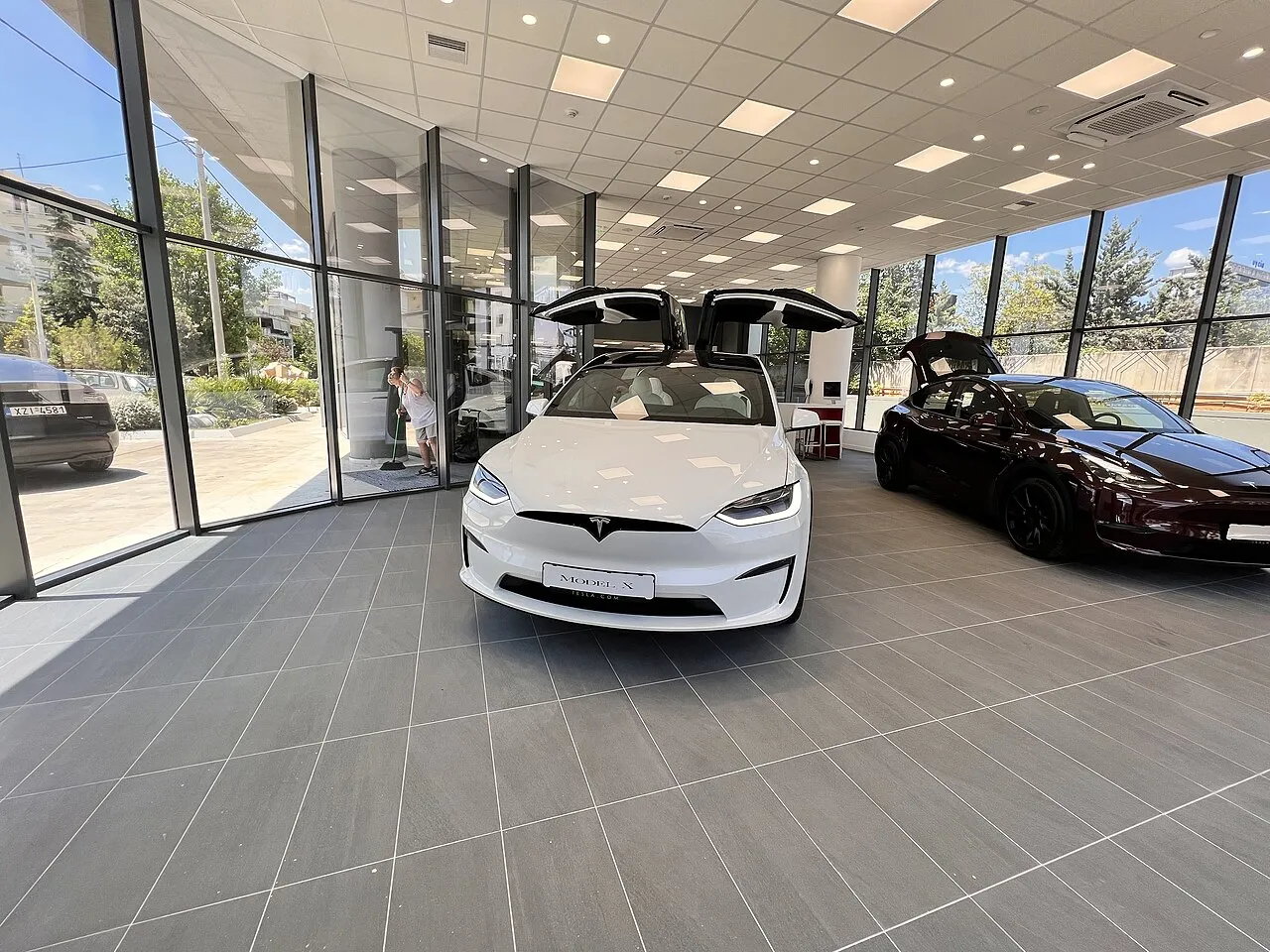
The short answer: The US 2026 Tesla Model X leads on EPA range, while the US 2027 Volvo EX90 has shorter EPA Level 2 full-charge estimates and offers rear-wheel-drive and all-wheel-drive versions. European figures favor Tesla for acceleration, but US starting prices have not been published for the versions compared here.
The Tesla Model X is the stronger choice for a US shopper prioritizing EPA-rated range. The Volvo EX90 offers shorter EPA Level 2 full-charge estimates and a choice of rear-wheel drive or all-wheel drive. Performance figures from Europe favor Tesla, although those figures describe different model years and markets from the US range ratings.
The comparison needs that distinction throughout: US EPA ratings cover the 2026 Model X and 2027 EX90, while battery capacities, peak charging rates, acceleration and dimensions below come from European versions. US starting prices have not been published for the versions compared here, leaving the purchase-price question unresolved.
EPA range gives the Model X a clear advantage
According to US EPA fueleconomy.gov, the US 2026 Model X AWD has a 352-mile EPA range rating, while the Plaid has a 335-mile rating. Both exceed every US 2027 EX90 rating in this comparison. Choosing the Plaid therefore reduces Tesla's range advantage without eliminating it.
The EX90 requires closer attention to the exact configuration. Its US 2027 rear-wheel-drive version is rated at 276 miles, or 291 miles in the version identified with 21-inch wheels. The Twin Motor and Twin Motor Performance each achieve 300 miles, rising to 310 miles for their respective 21-inch-wheel versions, according to EPA ratings.
That makes the 310-mile EX90 variants the relevant Volvo alternatives for a shopper seeking maximum rated range. It also means the rear-wheel-drive EX90 does not lead this particular lineup on range. Choosing a drivetrain alone is insufficient; the wheel-specific EPA rating matters too.
The figures, with markets and model years identified
The table separates US EPA figures from European technical figures credited to EVDB. EPA is the range standard for the US rows. No charging, acceleration or dimensional test standard is identified for the European figures, so those measurements should not be read as EPA results.
| Vehicle, market and model year | Measure and standard | Figure | Source |
|---|---|---|---|
| Model X AWD; US, 2026 | EPA range; EPA Level 2 full-charge estimate | 352 miles; 14 hours | US EPA fueleconomy.gov |
| Model X Plaid; US, 2026 | EPA range; EPA Level 2 full-charge estimate | 335 miles; 12 hours | US EPA fueleconomy.gov |
| EX90 RWD; US, 2027 | EPA range; EPA Level 2 full-charge estimate | 276 miles; 10 hours | US EPA fueleconomy.gov |
| EX90 RWD, 21-inch wheels; US, 2027 | EPA range; EPA Level 2 full-charge estimate | 291 miles; 10 hours | US EPA fueleconomy.gov |
| EX90 Twin Motor and Twin Motor Performance; US, 2027 | EPA range; EPA Level 2 full-charge estimate | 300 miles each; 11 hours each | US EPA fueleconomy.gov |
| EX90 Twin Motor and Twin Motor Performance, 21-inch wheels; US, 2027 | EPA range; EPA Level 2 full-charge estimate | 310 miles each; 11 hours each | US EPA fueleconomy.gov |
| Model X AWD / Plaid; Europe, 2026 | Gross / usable battery capacity; measurement standard unspecified | 100 / 95 kWh each; NCA chemistry | EVDB |
| EX90 Single Motor; Europe, 2025 | Gross / usable battery capacity; measurement standard unspecified | 107 / 101 kWh; NMC chemistry | EVDB |
| EX90 Twin Motor / Twin Motor Performance; Europe, 2025 | Gross / usable battery capacity; measurement standard unspecified | 117 / 111 kWh each; NMC chemistry | EVDB |
| Model X AWD / Plaid; Europe, 2026 | AC / peak DC charging; test standard unspecified | 11 / 250 kW each | EVDB |
| EX90 Single Motor / Twin Motor; Europe, 2025 | AC / peak DC charging; test standard unspecified | 11 / 250 kW each | EVDB |
| EX90 Twin Motor Performance; Europe, 2025 | AC / peak DC charging; test standard unspecified | 22 / 250 kW | EVDB |
| Model X AWD / Plaid; Europe, 2026 | Power; 0–100 km/h; test standard unspecified | 504 / 760 kW; 3.9 / 2.9 seconds | EVDB |
| EX90 Single Motor / Twin Motor / Twin Motor Performance; Europe, 2025 | Power; 0–100 km/h; test standard unspecified | 205 / 300 / 330 kW; 7.8 / 5.7 / 4.9 seconds | EVDB |
| Model X AWD / Plaid; Europe, 2026 | Length × width × height; wheelbase; measurement standard unspecified | 5,057 × 1,999 × 1,680 mm; 2,965 mm | EVDB |
| EX90 Single Motor / Twin Motor / Twin Motor Performance; Europe, 2025 | Length × width × height; wheelbase; measurement standard unspecified | 5,037 × 1,964 × 1,744 mm; 2,985 mm | EVDB |
| Model X; US, 2026 / EX90; US, 2027 | US starting price; test standard not applicable | Has not been published for either vehicle's versions compared here | No US price publication identified |
Battery size does not settle the range comparison
EVDB gives both European 2026 Model X versions a 100-kWh gross battery and 95-kWh usable capacity, with NCA chemistry. Its European 2025 EX90 Single Motor figures are 107 kWh gross and 101 kWh usable. The European Twin Motor and Twin Motor Performance each have 117 kWh gross and 111 kWh usable, with NMC chemistry.
These European EX90 versions have larger usable capacities than the European Teslas. However, those capacities should not be combined with US EPA mileage to calculate efficiency: that would mix markets and model years. They establish a battery-capacity comparison for the European vehicles, rather than an explanation of the US range gap.
There is also a separate European 2025 EX90 Base entry from OpenEV Data, with 111 kWh gross and 107 kWh usable. Its distinct capacity reinforces the importance of matching the source and version. Treating every EX90 as having one battery size would erase meaningful differences between the entries.
Charging presents two different comparisons
For US buyers, the directly relevant charging figures are the EPA Level 2 full-charge estimates. US EPA fueleconomy.gov gives the 2026 Model X AWD 14 hours and the Plaid 12 hours. The US 2027 EX90 rear-wheel-drive versions take 10 hours, while all four Twin Motor configurations take 11 hours.
The Volvo therefore has the shorter full-charge estimate in each of these US configurations. That is useful for comparing a complete charging session, but an elapsed time does not establish charging power by itself. Nor does it establish how quickly either vehicle completes a partial DC fast charge.
For European versions, EVDB reports the same 250-kW peak DC charging rate across both Teslas and the three EX90 variants it covers. AC charging is 11 kW except for the European 2025 EX90 Twin Motor Performance, which is rated at 22 kW. Those European ratings do not establish the corresponding US charging capability, and equal DC peaks do not establish equal charging times.
European performance and size figures favor different priorities
EVDB's European acceleration figures put the 2026 Model X AWD ahead of all three European 2025 EX90 variants it covers. The Plaid extends that advantage further. These are 0–100 km/h figures, so they should retain that label rather than being presented as American 0–60 mph results.
The US EPA ratings reveal another distinction: the EX90 Twin Motor Performance has the same rated range and full-charge time as the corresponding Twin Motor version, including when comparing their 21-inch-wheel configurations. The European acceleration figures suggest a performance difference between those trim names, but do not quantify it for the US 2027 vehicles.
On exterior dimensions, EVDB's European Model X is longer and wider than the European EX90 versions it covers, while the Volvo is taller and has a longer wheelbase. Those measurements describe the vehicles' exterior proportions. They do not establish passenger room, cargo capacity or how useful either cabin will be for a particular household.
US starting price remains an open question
US starting prices have not been published for the 2026 Model X and 2027 EX90 versions compared here. EVDB publishes German-market prices for European versions, but those are not US starting prices. They cannot support a dollar-price comparison or a conclusion that either SUV is the better value for an American buyer.
Which buyer does each SUV suit?
The Model X suits the buyer whose leading priority is EPA-rated range. Both US versions exceed the highest-rated EX90, and the European performance figures also make Tesla the more compelling candidate for acceleration-focused shoppers, subject to confirming the relevant US version's performance.
The EX90 suits a buyer who values its shorter US EPA full-charge estimates or wants a rear-wheel-drive option. Its strongest EPA range comes from the 21-inch-wheel Twin Motor configurations, including Performance. Buyers choosing primarily on purchase price will need published US pricing before either vehicle can earn a defensible value recommendation.
Frequently asked questions
Which has more EPA range, the Tesla Model X or Volvo EX90?
US EPA fueleconomy.gov rates the US 2026 Model X AWD at 352 miles and the Plaid at 335 miles. The US 2027 EX90 ranges from 276 to 310 miles, with the highest rating applying to the Twin Motor and Twin Motor Performance versions with 21-inch wheels.
Which has the shorter Level 2 full-charge estimate?
The US 2027 EX90 has EPA estimates of 10 hours for rear-wheel-drive versions and 11 hours for Twin Motor versions. The US 2026 Model X AWD is estimated at 14 hours and the Plaid at 12 hours.
Do both SUVs support 250-kW DC charging?
EVDB reports 250-kW peak DC charging for the European 2026 Model X AWD and Plaid and the European 2025 EX90 Single Motor, Twin Motor and Twin Motor Performance. Those European figures do not establish US charging capability or equal charging times.
Does the Volvo EX90 have a larger battery?
For European versions covered by EVDB, yes. The 2025 EX90 Single Motor has 101 kWh usable, and the Twin Motor variants have 111 kWh usable, compared with 95 kWh for both European 2026 Model X versions.
What are their US starting prices?
US starting prices have not been published for the 2026 Model X and 2027 EX90 versions compared here. German-market prices do not establish what either vehicle costs in the United States.
Related stories

How to Choose an EV for Caregiving and Support Trips
Compare passenger access, rear-seat comfort, equipment storage and charging routines to find an EV that fits recurring appointments and support trips.

Choosing 120V or 240V Charging for an EV at Home
A standard outlet may work for an EV that sits parked for long stretches. A 240V setup adds charging power, which can matter when daily driving uses more energy.

How to Plan EV Charging When You Park on the Street
Street parking can work with EV ownership when you confirm local rules, identify dependable charging, and build a routine that fits where you park.