Which Volvo Electric SUV or Sedan Fits Your Needs?
Compare Volvo's electric SUVs by EPA range and home charging time, then see how European battery and charging figures inform the choice.
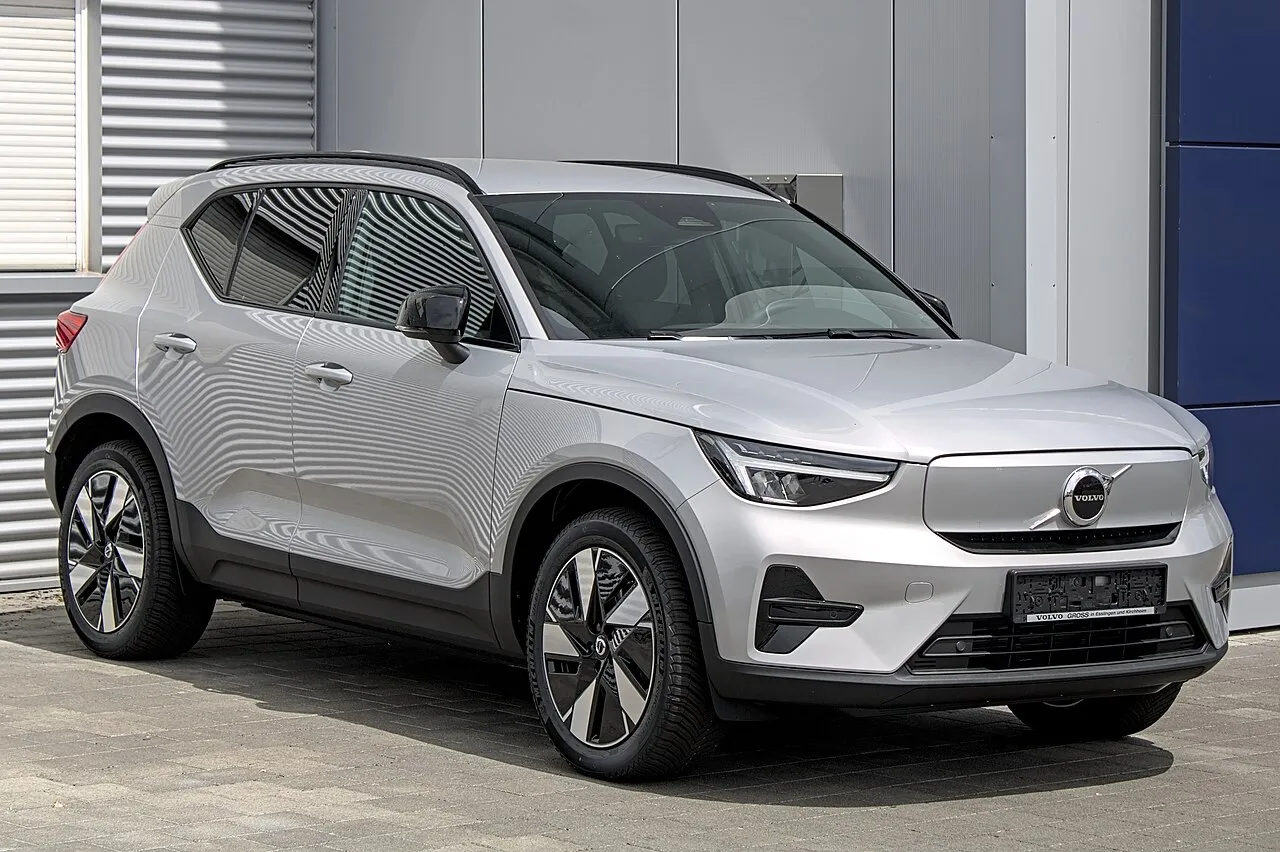
The short answer: For a US shopper, the EX30 is the smallest SUV, the EX40 and EC40 offer similar EPA range, and the EX60 has the highest EPA rating here. Choose the EX90 if its larger size matters more; the ES90 sedan has European figures but no US EPA rating here.
Start with the space you need, then compare versions within that model. The EX30 is Volvo's shortest electric SUV in the European dimensions below. The EX40 and EC40 occupy the middle of the lineup, while the EX60 and EX90 are larger SUVs. The ES90 is a sedan. For US range shopping, the 2027 EX60 P10 AWD Electric has the highest EPA rating shown here at 330 miles. The 2027 EX90 offers up to 310 EPA miles with 21-inch wheels. Those numbers identify particular versions, so the trim and wheels matter as much as the model name.
Volvo electric models at a glance
US EPA figures come from US EPA fueleconomy.gov. European WLTP range, battery capacity, charging power and dimensions in the table come from OpenEV Data or EVDB, as identified in each row. A European version is useful for understanding the range of configurations within a model, but its battery and charging figures should not be assumed to describe a US version with a similar name. EPA and WLTP are different range test standards; compare ratings within the same standard.
| Model and version | Market and model year | Rated range and test standard | Charging figure | Usable battery | Length | Source |
|---|---|---|---|---|---|---|
| EX30 Cross Country, 18-inch wheels | US, 2026 | 203 mi, EPA | 8 hours, Level 2 full charge | — | — | US EPA fueleconomy.gov |
| EX30 Cross Country, 19-inch wheels | US, 2026 | 227 mi, EPA | 8 hours, Level 2 full charge | — | — | US EPA fueleconomy.gov |
| EX30 Single Motor Extended Range | US, 2026 | 261 mi, EPA | 8 hours, Level 2 full charge | — | — | US EPA fueleconomy.gov |
| EX30 Twin Performance | US, 2026 | 253 mi, EPA | 8 hours, Level 2 full charge | — | — | US EPA fueleconomy.gov |
| EX40, rear-wheel drive | US, 2026 | 296 mi, EPA | 8 hours, Level 2 full charge | — | — | US EPA fueleconomy.gov |
| EX40 Twin, all-wheel drive | US, 2026 | 260 mi, EPA | 8 hours, Level 2 full charge | — | — | US EPA fueleconomy.gov |
| EC40, rear-wheel drive | US, 2026 | 298 mi, EPA | 8 hours, Level 2 full charge | — | — | US EPA fueleconomy.gov |
| EC40 Twin, all-wheel drive | US, 2026 | 268 mi, EPA | 8 hours, Level 2 full charge | — | — | US EPA fueleconomy.gov |
| EX60 P6 Electric | US, 2027 | 307 mi, EPA | 8 hours, Level 2 full charge | — | — | US EPA fueleconomy.gov |
| EX60 P10 AWD Electric | US, 2027 | 330 mi, EPA | 9 hours, Level 2 full charge | — | — | US EPA fueleconomy.gov |
| EX90, rear-wheel drive | US, 2027 | 276 mi, EPA | 10 hours, Level 2 full charge | — | — | US EPA fueleconomy.gov |
| EX90 Twin Motor, 21-inch wheels | US, 2027 | 310 mi, EPA | 11 hours, Level 2 full charge | — | — | US EPA fueleconomy.gov |
| EX30 Base | Europe, 2025 | 344 km, WLTP | 11 kW AC; 153 kW peak DC | 49 kWh | 4,233 mm | OpenEV Data |
| EX30 Base 69 kWh | Europe, 2025 | 480 km, WLTP | 11 kW AC; 153 kW peak DC | 66 kWh | 4,233 mm | OpenEV Data |
| EX40 Single Motor Extended Range | Europe, 2025 | 515 km, WLTP | 11 kW AC; 200 kW peak DC | 75 kWh | 4,440 mm | EVDB |
| EC40 Single Motor Extended Range | Europe, 2025 | 590 km, WLTP | 11 kW AC; 200 kW peak DC | 79 kWh | 4,440 mm | EVDB |
| EX60 P10 AWD | Europe, 2027 | 660 km, WLTP | 22 kW AC; 370 kW peak DC | 91 kWh | 4,690 mm | EVDB |
| EX60 P12 AWD | Europe, 2027 | 810 km, WLTP | 22 kW AC; 370 kW peak DC | 112 kWh | 4,690 mm | EVDB |
| EX90 Twin Motor | Europe, 2025 | 610 km, WLTP | 11 kW AC; 250 kW peak DC | 111 kWh | 5,037 mm | EVDB |
| ES90 Twin Motor | Europe, 2026 | 700 km, WLTP | 11 kW AC; 350 kW peak DC | 102 kWh | 5,000 mm | EVDB |
Which SUV size makes sense?
The EX30 makes the clearest case for a shopper seeking the shortest SUV. OpenEV Data puts the European 2025 EX30 Base at 4,233 mm long, compared with 4,440 mm for the European 2025 EX40 Single Motor Extended Range and EC40 Single Motor Extended Range, according to EVDB. EVDB puts the European 2027 EX60 P10 AWD at 4,690 mm and the European 2025 EX90 Twin Motor at 5,037 mm. These are exterior lengths, not measurements of passenger space or cargo room. They can help narrow a search when parking space or overall vehicle size is a concern, but they cannot establish how much luggage will fit.
The EX40 and EC40 require a closer look because the European versions in the table have the same 4,440 mm length, while the US rear-wheel-drive versions have nearly identical EPA ratings: 296 miles for the 2026 EX40 and 298 miles for the 2026 EC40. Their US Twin versions are rated at 260 and 268 EPA miles, respectively. Those small differences offer little reason to choose one solely on rated range. A shopper comparing the pair should pay attention to the particular vehicle and configuration they prefer, while keeping the EPA trim ratings in view.
The EX60 sits between that pair and the EX90 in the European lengths shown. Its US range figures also give it a distinct role: the 2027 P6 Electric is rated at 307 EPA miles, and the P10 AWD Electric at 330 EPA miles. The EX90 is the longest SUV in the European examples, but its US ratings vary substantially by version and wheels. Size and rated range therefore point to different choices: the EX60 P10 leads these US EPA figures, while the EX90 is the choice to investigate when a larger SUV is the priority.
How much does the version change range?
The EX30 shows why its badge alone is an incomplete range answer. US EPA fueleconomy.gov rates the 2026 rear-wheel-drive Single Motor Extended Range at 261 miles and the all-wheel-drive Twin Performance at 253 miles. The all-wheel-drive Cross Country versions are rated at 203 miles with 18-inch wheels and 227 miles with 19-inch wheels. That Cross Country result runs counter to any assumption that the smaller wheel in these named configurations must have the higher rating. Use the rating attached to the exact version rather than guessing from wheel size.
The US EX60 ratings show another wheel effect. US EPA fueleconomy.gov rates the 2027 P10 AWD Electric at 330 miles and its 22-inch-wheel version at 312 miles. The rear-wheel-drive P6 Electric is rated at 307 miles, or 295 miles with 22-inch wheels. The P10's all-wheel drive therefore does not make its EPA rating lower than the P6's in these configurations. Drive type matters, but it does not tell the whole range story when versions differ.
The 2027 US EX90 offers a further reason to check the complete trim name. Its rear-wheel-drive version is rated at 276 EPA miles, while the version identified with 21-inch wheels is rated at 291 EPA miles. The Twin Motor and Twin Motor Performance versions are each rated at 300 EPA miles, rising to 310 EPA miles in their respective 21-inch-wheel versions. A shopper who sees a single EX90 range number could easily miss a meaningful difference between the versions under consideration.
What do the battery and charging figures tell you?
European battery capacities show how widely configurations can differ within a model. OpenEV Data reports a 49 kWh usable lithium iron phosphate battery for the 2025 European EX30 Base, with 344 km of WLTP range. Its European Base 69 kWh version has a 66 kWh usable nickel manganese cobalt battery and 480 km of WLTP range. The chemistry, usable capacity and WLTP rating all differ. That makes the trim name essential when researching an EX30 battery; a single capacity would conceal the distinction.
EVDB reports 75 kWh usable for the European 2025 EX40 Single Motor Extended Range and 79 kWh for the European 2025 EC40 Single Motor Extended Range. Their respective WLTP ratings are 515 and 590 km. These figures describe those European versions, while US shoppers have separate EPA ratings for the 2026 EX40 and EC40. Do not convert the WLTP kilometer figures into miles and treat the results as US EPA ratings, or assign the European battery capacities to the US vehicles.
The European 2027 EX60 P10 AWD has 91 kWh usable and a 660 km WLTP rating, according to EVDB. EVDB reports 112 kWh usable and 810 km WLTP for the European P12 AWD. Only the P10 and P6 versions have US EPA figures here, so the P12's European WLTP rating does not establish its US EPA range. Likewise, EVDB reports 111 kWh usable for the European 2025 EX90 Twin Motor; that figure describes a different market and model year from the US 2027 EX90 ratings.
For charging at home, US EPA fueleconomy.gov gives a Level 2 full-charge time of eight hours for each 2026 US EX30, EX40 and EC40 version shown. The 2027 US EX60 P6 is also eight hours, while the P10 is nine hours. The 2027 US EX90 rear-wheel-drive versions are listed at 10 hours and the Twin versions at 11 hours. These are full-charge estimates for the named versions; they are more directly relevant to US home charging plans than the European AC power figures in the table.
European DC figures answer a different question: the peak charging power associated with a particular version. EVDB reports 200 kW peak DC for the European 2025 EX40 and EC40 Extended Range versions, 370 kW for the European 2027 EX60 P10 and P12, 250 kW for the European 2025 EX90 Twin Motor, and 350 kW for the European 2026 ES90 Twin Motor. A peak power figure is not a complete charging-time estimate. It also does not establish a US model's DC peak when the figure belongs to a European version.
Where does the ES90 fit?
The ES90 is the sedan in this group. EVDB puts the European 2026 ES90 Twin Motor at 5,000 mm long, with 102 kWh of usable battery capacity and 700 km of WLTP range. EVDB also reports a European Single Motor version with 88 kWh usable and 651 km WLTP, and a Twin Motor Performance version with 102 kWh usable and 700 km WLTP. A US EPA range rating for the ES90 has not been published here, so its European WLTP numbers cannot resolve a US range comparison with the SUVs.
For a US shortlist, choose the EX30 when its smaller exterior size is the draw, and compare its specific trims carefully for range. Put the EX40 and EC40 side by side if their similar EPA ratings suit your needs. Look at the EX60 P10 for the highest EPA rating among these versions, or the EX90 when a larger SUV is the deciding factor. Keep the ES90 on the sedan shortlist while awaiting a US EPA figure. In every case, confirm the market, model year, trim and wheels beside the number you intend to use.
Frequently asked questions
Which Volvo electric SUV has the highest US EPA range shown here?
The 2027 Volvo EX60 P10 AWD Electric is rated at 330 miles by US EPA fueleconomy.gov. Its 22-inch-wheel version is rated at 312 miles.
How do the US EX40 and EC40 range ratings compare?
US EPA fueleconomy.gov rates the 2026 rear-wheel-drive EX40 at 296 miles and EC40 at 298 miles. Their Twin all-wheel-drive versions are rated at 260 and 268 miles, respectively.
How long is a Level 2 full charge for the US EX30?
US EPA fueleconomy.gov gives an eight-hour Level 2 full-charge estimate for each 2026 US EX30 version shown.
Does the ES90 have a US EPA range rating here?
A US EPA rating for the ES90 has not been published here. EVDB reports European 2026 ES90 range figures under the WLTP standard.
Related stories

How to Build a Flexible EV Charging Routine for Work
Build charging around the miles you need for your next drive, using home, work, or public charging as your schedule allows. Keep a practical buffer.

How to Check EV Charger Plug Compatibility Before a Trip
Match your EV’s connector and charging limits to each route stop. Learn what charger labels mean, when an adapter may work, and what to confirm before you leave.

How to Estimate Electric Car Range While Towing
Estimate towing range from your vehicle’s normal range, then adjust for trailer shape, speed, weather and hills. Use the result to plan charging stops.