What the 2026 Volvo EX90 Changes Mean for US Buyers
The 2026 Volvo EX90 adds rear-wheel drive, but AWD range falls slightly. Compare EPA range, Level 2 charging times and the case for either model year.
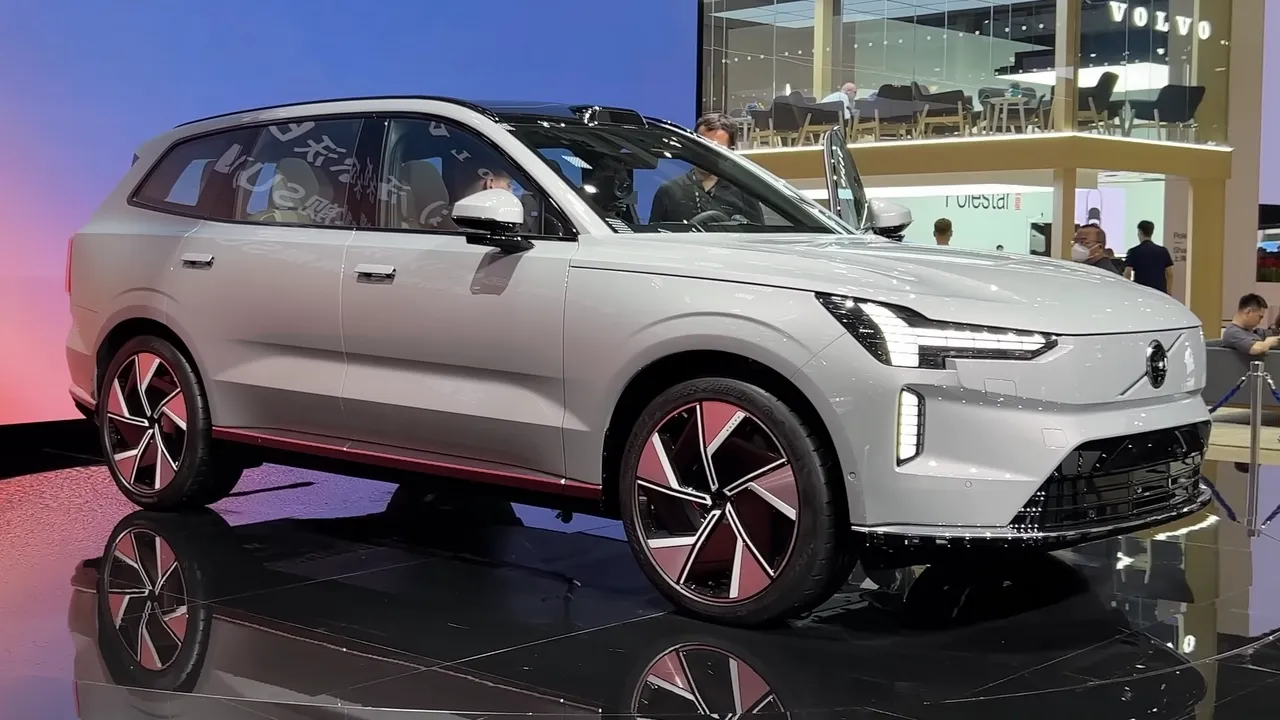
The short answer: The 2026 US Volvo EX90 adds rear-wheel-drive choices, while Twin Motor and Twin Motor Performance versions retain AWD but have slightly lower EPA range and longer Level 2 full-charge times than their 2025 counterparts. The 2025 is the stronger choice for maximum rated range; the 2026 adds an option for buyers who want rear-wheel drive.
The main US-market change for the 2026 Volvo EX90 is the addition of rear-wheel-drive versions. For buyers considering the familiar all-wheel-drive Twin Motor models, the newer model year brings slightly less EPA-rated range and a longer Level 2 full-charge time. The 2025 EX90 reaches 310 miles on the EPA cycle with 21-inch wheels, compared with 305 miles for the equivalent 2026 Twin Motor and Twin Motor Performance versions.
That makes the buying decision fairly specific. Choose the 2026 if rear-wheel drive is a priority. Favor the 2025 if the goal is the highest EPA range or the shorter published Level 2 full-charge time among the AWD choices. Battery capacity and power-output figures have not been published, so neither establishes a reason to choose one model year over the other.
The US versions at a glance
The figures below come from US EPA fueleconomy.gov. Each row identifies the US model year, drivetrain and version, with EPA range and EPA-reported Level 2 full-charge time kept in separate columns. Wheel descriptions follow the EPA version names; a version without a wheel description should not automatically be treated as having the same wheels as another entry.
| Market and model year | Version | Drive | EPA-rated range | EPA-reported Level 2 full-charge time |
|---|---|---|---|---|
| US, 2025 | Twin Motor, 20- and 22-inch wheels | AWD | 300 miles | 10 hours |
| US, 2025 | Twin Motor, 21-inch wheels | AWD | 310 miles | 10 hours |
| US, 2025 | Twin Motor Performance, 20- and 22-inch wheels | AWD | 300 miles | 10 hours |
| US, 2025 | Twin Motor Performance, 21-inch wheels | AWD | 310 miles | 10 hours |
| US, 2026 | Rear-wheel drive | RWD | 276 miles | 10 hours |
| US, 2026 | Rear-wheel drive, 21-inch wheels | RWD | 291 miles | 10 hours |
| US, 2026 | Twin Motor | AWD | 298 miles | 11 hours |
| US, 2026 | Twin Motor, 21-inch wheels | AWD | 305 miles | 11 hours |
| US, 2026 | Twin Motor Performance | AWD | 298 miles | 11 hours |
| US, 2026 | Twin Motor Performance, 21-inch wheels | AWD | 305 miles | 11 hours |
Range: the 2025 AWD models keep a small advantage
The clearest comparison uses the versions explicitly identified with 21-inch wheels. Both the 2025 Twin Motor and 2025 Twin Motor Performance have EPA ratings of 310 miles. Their 2026 counterparts each receive 305-mile EPA ratings. That is a reduction of 5 miles for either version, with the same named wheel size on both sides of the comparison.
The other AWD EPA ratings also fall slightly: the 2025 Twin Motor and Twin Motor Performance with 20- and 22-inch wheels are rated at 300 miles, while the 2026 versions without a wheel-size designation are rated at 298 miles. That is a 2-mile difference between those ratings, although the wheel descriptions do not establish an exact wheel-for-wheel comparison.
Wheel choice remains relevant within each model year. For 2025, the 21-inch versions have a 10-mile EPA advantage over the versions identified with 20- and 22-inch wheels. For 2026, the explicitly named 21-inch AWD versions have a 7-mile advantage over the corresponding Twin Motor entries without a wheel designation.
The new rear-wheel-drive choices do not take the range lead. Their EPA ratings are 276 miles and 291 miles, with the latter applying to the 21-inch-wheel version. Comparing the explicitly named 21-inch versions, the 2026 RWD model trails either 2026 AWD model by 14 EPA-rated miles. Rear-wheel drive therefore expands the choice of drivetrain without establishing a new range maximum.
Trims and power: what changes, and what stays the same
The Twin Motor and Twin Motor Performance names carry over into 2026, and both remain AWD. The meaningful addition is RWD, which gives shoppers a drivetrain choice beyond the AWD versions available for comparison in 2025. The EPA version names identify powertrain and wheel combinations; they do not establish differences in cabin equipment or other trim features.
Nothing changes in the rated-range relationship between Twin Motor and Twin Motor Performance. For both model years, matching wheel descriptions produce identical EPA range ratings for the two powertrain names. Choosing the Performance version therefore carries no EPA-rated range penalty within those matched pairs.
That does not establish how much power either version makes. Horsepower and torque figures have not been published, so a numerical power comparison is unavailable. The Performance name alone cannot quantify an output increase, and the EPA range ratings do not resolve whether power changed between model years. Buyers should distinguish the confirmed drivetrain choices from an unverified claim about greater performance.
Charging: AWD full-charge time rises by an hour
US EPA fueleconomy.gov reports a Level 2 full-charge time of 10 hours for every 2025 EX90 version in this comparison. For 2026, the Twin Motor and Twin Motor Performance versions each move to 11 hours, including their 21-inch-wheel variants. The published change is therefore one additional hour for the AWD models.
The 2026 RWD versions retain a 10-hour Level 2 full-charge figure. That matches the outgoing AWD models and is one hour shorter than the 2026 AWD figure. Within the newer model year, the RWD and AWD versions consequently differ in both EPA range and reported full-charge time.
These figures describe a full Level 2 charge. They are not DC fast-charging times, and they do not establish how long a particular partial recharge will take. DC charging power and fast-charge interval figures have not been published, so these numbers cannot support a claim that the newer EX90 charges faster during a road trip.
Battery: the charging figures do not prove a capacity change
Battery capacity has not been published, preventing a numerical comparison between the two model years or between the 2026 drivetrains. The longer AWD full-charge time does not, by itself, establish that the battery grew. Likewise, the slightly lower AWD range does not establish that battery capacity fell.
The supported conclusions are narrower: EPA-rated AWD range decreases slightly, EPA-reported AWD Level 2 full-charge time increases, and RWD joins the US choices. A specific battery-capacity change or charging-hardware explanation would go beyond those findings.
Which model year makes more sense?
The 2025 EX90 is the better fit for an AWD buyer prioritizing the strongest published range figure. Its 21-inch Twin Motor and Twin Motor Performance versions share the comparison's highest EPA rating, at 310 miles, and all four 2025 versions have the shorter 10-hour Level 2 full-charge figure. Those are concrete reasons to consider the outgoing model year.
The 2026 makes the clearest case for someone who specifically wants rear-wheel drive. Its 21-inch RWD version offers the higher of the two RWD range ratings, while retaining the same reported full-charge time. An AWD shopper should choose the newer model year knowing that these EPA figures show no range or Level 2 charging-time improvement.
Price cannot settle the model-year choice here. US EPA fueleconomy.gov records a US price of $76,695 for the 2026 RWD version as of October 2026, but comparable 2025 and AWD prices have not been published. That figure alone does not establish savings for either year. The defensible decision rests on drivetrain preference, the exact wheel version and the modest differences in EPA range and charging time.
Frequently asked questions
Does the 2026 Volvo EX90 have more range than the 2025?
No. For US versions with 21-inch wheels, EPA range falls from 310 miles in 2025 to 305 miles in 2026 for both Twin Motor and Twin Motor Performance. The 2026 RWD versions are EPA-rated at 276 or 291 miles.
What is the main drivetrain change for the 2026 Volvo EX90?
The 2026 US lineup adds rear-wheel-drive choices. Twin Motor and Twin Motor Performance continue with AWD.
Does the 2026 Volvo EX90 charge faster?
The EPA-reported Level 2 full-charge figures show the AWD versions moving from 10 hours in 2025 to 11 hours in 2026. The 2026 RWD versions have a 10-hour figure. DC fast-charging figures have not been published.
Does Twin Motor Performance have less EPA range than Twin Motor?
No. In both US model years, Twin Motor Performance and Twin Motor have identical EPA range ratings when their wheel descriptions match.
Did battery capacity or power change for 2026?
Battery-capacity, horsepower and torque figures have not been published, so a numerical model-year comparison is unavailable. The range and Level 2 charging-time differences alone do not establish a battery-capacity change.
Related stories
2028 Volvo XC60 T8 Gets 78 Miles of EPA Electric Range
Volvo’s updated XC60 T8 pairs a 37.9-kWh battery with 455 hp and 78 miles of EPA electric range, extending the life of its aging plug-in hybrid SUV.

InsideEVs Writer Says EVs Make Everyday Exploring Easier
An InsideEVs writer says quiet driving, lower energy costs and easy power make local exploring more enjoyable, while noting that prices and charging still need work.

How Public EV Charging Hubs Differ From Smaller Stations
A public EV charging hub brings multiple charging options and services together in one location. Its layout can make stops easier to use and manage.