What Changed Between the 2026 and 2027 Volvo EX90
The US 2027 Volvo EX90 gains a little EPA range in AWD form. Compare both model years for range, Level 2 charging, configurations and what remains unconfirmed.
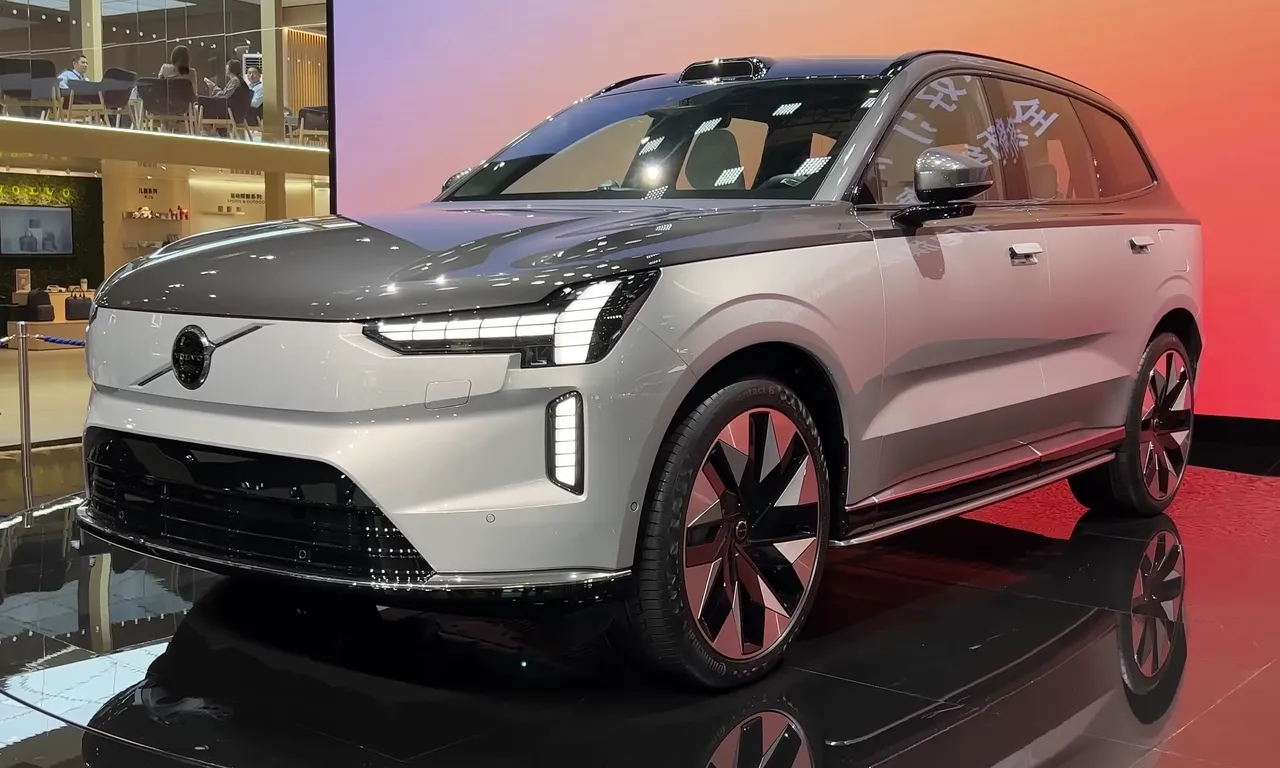
The short answer: The US 2027 Volvo EX90 adds 2 miles of EPA range to the Twin Motor and Twin Motor Performance versions, or 5 miles with 21-inch wheels; rear-wheel-drive range and reported Level 2 full-charge times are unchanged. Choose the newer model for the highest AWD EPA range, while the 2026 remains a reasonable choice when those small gains do not matter.
The US 2027 Volvo EX90 brings a modest EPA range improvement to its all-wheel-drive versions. Twin Motor and Twin Motor Performance models rise from 298 to 300 miles, while their 21-inch-wheel configurations increase from 305 to 310 miles. Rear-wheel-drive versions keep their 276-mile and 291-mile EPA ratings. Reported Level 2 full-charge times also stay the same across the two model years.
That makes the buying decision fairly narrow: the 2027 offers the highest AWD range rating, but the 2026 gives up little on that measure and nothing on the reported RWD range or Level 2 charging time. A battery-capacity increase, additional power or faster DC charging cannot be confirmed. Those distinctions matter because a higher range rating alone does not establish a broader mechanical upgrade.
The US range and charging comparison
The figures below come from US EPA fueleconomy.gov. Every range figure is a US EPA rating for the model year identified. Charging figures are EPA-reported Level 2 full-charge times, a separate measure from driving range. Configurations without a wheel size in their names are kept separate from the explicitly identified 21-inch-wheel versions.
| US configuration | 2026 US EPA range | 2027 US EPA range | 2026 US EPA-reported Level 2 full charge | 2027 US EPA-reported Level 2 full charge |
|---|---|---|---|---|
| RWD; wheel size unspecified | 276 mi | 276 mi | 10 hours | 10 hours |
| RWD; 21-inch wheels | 291 mi | 291 mi | 10 hours | 10 hours |
| Twin Motor AWD; wheel size unspecified | 298 mi | 300 mi | 11 hours | 11 hours |
| Twin Motor AWD; 21-inch wheels | 305 mi | 310 mi | 11 hours | 11 hours |
| Twin Motor Performance AWD; wheel size unspecified | 298 mi | 300 mi | 11 hours | 11 hours |
| Twin Motor Performance AWD; 21-inch wheels | 305 mi | 310 mi | 11 hours | 11 hours |
AWD range improves, while RWD stays unchanged
The range changes are consistent across the two AWD powertrain names. For both Twin Motor and Twin Motor Performance, the configuration without a specified wheel size gains 2 miles, comparing US EPA ratings for 2026 and 2027. With 21-inch wheels, each gains 5 miles. The newer model year therefore improves every AWD configuration in this comparison, although the size of the improvement depends on the wheel configuration.
The RWD result is simpler. Its US EPA range remains 276 miles for both model years, or 291 miles with 21-inch wheels. A shopper choosing between equivalent RWD configurations gets no additional rated driving distance by moving to the 2027. The newer model year does not bring a range benefit across the entire EX90 family.
For the longest EPA-rated distance, the choice is either 2027 AWD version with 21-inch wheels, each rated at 310 miles in the US. The equivalent 2026 versions reach 305 miles. That is a measurable distinction, but it should be kept in proportion: the outgoing model is close to the newer one on this particular measure.
Wheel configuration deserves attention
The wheel-specific entries create a larger range separation than the model-year change does. In the US EPA ratings, the 21-inch-wheel RWD configuration exceeds the other RWD entry by 15 miles in both 2026 and 2027. For AWD, the corresponding difference is 7 miles in 2026 and 10 miles in 2027. These comparisons describe the complete rated configurations; they do not isolate wheels as the sole cause.
This also creates a useful crossover when shopping across years. A 2026 Twin Motor or Twin Motor Performance with 21-inch wheels has a 305-mile US EPA rating, exceeding the 300-mile rating of the corresponding 2027 entry without a specified wheel size. Choosing the newer year alone therefore does not guarantee the higher-rated vehicle. Match the powertrain and wheel description before judging the change.
Level 2 charging times do not change
US EPA fueleconomy.gov reports the same Level 2 full-charge times for both model years: 10 hours for RWD and 11 hours for Twin Motor and Twin Motor Performance. The 21-inch-wheel configurations retain the same times as their respective powertrain counterparts. There is no reported model-year improvement in this charging measure.
For someone focused on Level 2 charging, these figures give no reason to favor the 2027 over an equivalent 2026. They also show that the small AWD range gain does not come with a longer reported full-charge time. The newer AWD versions combine a slightly higher EPA range rating with the same reported charging duration.
Level 2 full-charge duration does not establish DC fast-charging performance. A peak DC charging rate or a timed DC charging interval cannot be confirmed for this comparison, so there is no basis for promising shorter fast-charging stops in the 2027. The supported conclusion is limited to unchanged reported Level 2 times.
Battery and power changes remain unconfirmed
The higher AWD range ratings do not identify a battery-capacity change. Neither a larger pack nor unchanged battery capacity can be established from these figures. It would therefore be misleading to describe the 2027 as receiving a bigger battery, or to state confidently that the battery carries over unchanged. The confirmed change is the EPA-rated distance.
The same distinction applies to power. Horsepower, torque and acceleration differences cannot be confirmed between these US model years. The Twin Motor Performance name appears in both years, but its presence does not establish whether output changed. Buyers seeking a power increase should not treat the range improvement as evidence of one.
The same powertrain choices appear in both years
Both model years have RWD, Twin Motor AWD and Twin Motor Performance AWD configurations, including the separately identified 21-inch-wheel versions. There is no addition or deletion among those powertrain and wheel combinations. This establishes continuity in the configurations compared, without establishing whether every equipment trim or package carries over.
Twin Motor and Twin Motor Performance share the same US EPA range and reported Level 2 charging time within each matching model year and wheel configuration. Consequently, these two measures do not favor one AWD variant over the other. Choosing between them requires another confirmed distinction; neither range nor full-charge duration supplies that distinction here.
Which model year makes more sense?
Choose the 2027 if the highest available US EPA range is the priority. Its AWD versions improve on their matching 2026 configurations, with the largest gain in the 21-inch-wheel entries. Buyers who want AWD and value every additional mile of rated range have a concrete reason to prefer the newer model.
Choose the 2026 if its range meets your needs and the small AWD increase would not affect the decision. For RWD shoppers, the case is particularly straightforward: matching configurations have identical EPA range and reported Level 2 charging times. The outgoing year remains competitive on both measures.
A price advantage for either year cannot be established without a comparable 2027 price, so the 2026 should not automatically be called the better bargain. Compare actual offers alongside the exact configuration. The defensible reason to move to the 2027 is its modest AWD range gain; a battery, power or fast-charging upgrade is not confirmed.
Frequently asked questions
How much more range does the 2027 Volvo EX90 have?
According to US EPA fueleconomy.gov, Twin Motor and Twin Motor Performance increase from 298 miles for 2026 to 300 miles for 2027. Their 21-inch-wheel versions rise from 305 to 310 miles. RWD ratings remain unchanged at 276 miles, or 291 miles with 21-inch wheels.
Does the 2027 Volvo EX90 charge faster than the 2026?
Reported Level 2 full-charge times are unchanged. US EPA fueleconomy.gov reports 10 hours for RWD and 11 hours for both AWD variants in each model year. A difference in DC fast-charging performance cannot be confirmed.
Does the 2027 Volvo EX90 have a bigger battery or more power?
A battery-capacity or power-output change cannot be confirmed. The higher AWD EPA range ratings alone do not establish either change.
Does Twin Motor Performance have less range than Twin Motor?
No. Their US EPA range ratings match within each model year and wheel configuration: 298 or 305 miles for 2026, and 300 or 310 miles for 2027.
Who should choose the 2026 Volvo EX90?
The 2026 suits buyers who do not need the small AWD range gain. RWD shoppers get the same EPA range and reported Level 2 full-charge times in both model years, while AWD shoppers give up 2 or 5 miles of EPA range in the equivalent 2026 configuration.
Related stories

How to Build a Flexible EV Charging Routine for Work
Build charging around the miles you need for your next drive, using home, work, or public charging as your schedule allows. Keep a practical buffer.

How to Check EV Charger Plug Compatibility Before a Trip
Match your EV’s connector and charging limits to each route stop. Learn what charger labels mean, when an adapter may work, and what to confirm before you leave.

How to Estimate Electric Car Range While Towing
Estimate towing range from your vehicle’s normal range, then adjust for trailer shape, speed, weather and hills. Use the result to plan charging stops.