Volkswagen ID.3 and Volvo EX30 Space and Access Compared
Compare the Volkswagen ID.3 and Volvo EX30 for cabin space, cargo loading, rear-seat access and parking, with a closer look beyond their body styles.
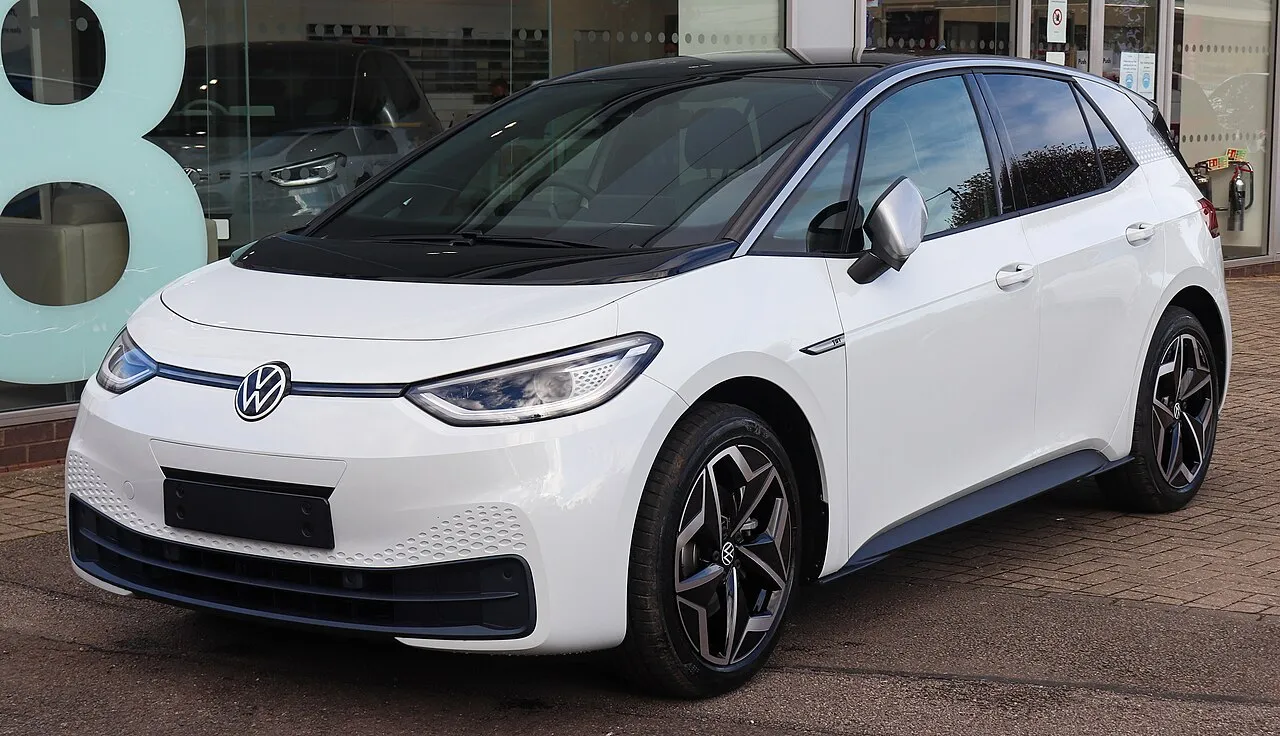
The short answer: The Volkswagen ID.3 offers a narrower body and longer wheelbase, while the Volvo EX30 has a shorter body in the European versions compared here. Those dimensions help frame the choice, but the EX30’s SUV designation alone does not establish easier rear-seat access, a higher seating position or a more convenient cargo opening.
The Volkswagen ID.3 is the stronger candidate if a narrower body and longer wheelbase suit your priorities; the Volvo EX30 deserves attention if shorter overall length matters more. Neither body style establishes a winner for loading height or rear-seat access. The European versions compared here have similar overall heights, so choosing between this hatchback and small SUV requires looking beyond their labels.
For everyday use, the important questions are where passengers sit, how easily they pass through the doors, and how far luggage must travel over the cargo sill. Exterior dimensions help explain the vehicles’ proportions, but they cannot establish those experiences on their own. A longer wheelbase creates a different packaging opportunity; it does not guarantee more usable rear legroom.
How their exterior dimensions compare
OpenEV Data and EVDB report the same exterior dimensions for the European Volkswagen ID.3 Pro, Pro S and GTX versions shown below. The Volvo EX30 requires more care: OpenEV Data and EVDB describe versions with different overall heights, and the Cross Country has a wider body. Match the dimensions to the particular version you are considering.
The table focuses on dimensions relevant to cabin packaging and parking. All measurements describe European-market, model-year 2025 vehicles. WLTP is the range-rating standard associated with these versions; it is not a test standard for body dimensions. No range figures are compared here, and these European measurements should not automatically be treated as measurements of American-market versions.
| Vehicle and version | Market and model year | Length | Width | Height | Wheelbase | Test-standard context | Source |
|---|---|---|---|---|---|---|---|
| Volkswagen ID.3 Pro, Pro S and GTX | Europe, 2025 | 4,261 mm | 1,809 mm | 1,552 mm | 2,765 mm | Dimensions: not applicable; range standard: WLTP | OpenEV Data and EVDB |
| Volvo EX30 Base, Base 69 kWh, Base Twin Motor and Performance Twin Motor Performance | Europe, 2025 | 4,233 mm | 1,837 mm | 1,555 mm | 2,650 mm | Dimensions: not applicable; range standard: WLTP | OpenEV Data |
| Volvo EX30 Single Motor, Extended Range Single Motor and Twin Motor Performance | Europe, 2025 | 4,233 mm | 1,837 mm | 1,550 mm | 2,650 mm | Dimensions: not applicable; range standard: WLTP | EVDB |
| Volvo EX30 Cross Country Twin Motor Performance | Europe, 2025 | 4,233 mm | 1,850 mm | 1,573 mm | 2,650 mm | Dimensions: not applicable; range standard: WLTP | EVDB |
The useful distinction is straightforward: the ID.3 is longer and narrower, with a longer wheelbase. The EX30 is shorter and wider. Overall height is close for the regular versions, while the Cross Country is taller. That makes this a comparison between different proportions within a broadly similar exterior envelope, rather than an automatic choice between a low car and a tall SUV.
Cabin packaging: wheelbase is a clue, not a verdict
Wheelbase is the distance between the axles. The ID.3’s longer wheelbase gives its layout more longitudinal space between those reference points. That is relevant when assessing passenger accommodation, but seat placement, seatback thickness, dashboard depth and the division between passenger and cargo space determine how much of it occupants can actually use.
The EX30’s wider exterior also needs interpretation. Body width does not translate directly into shoulder room because doors, trim and structural elements occupy space. A wider vehicle can require more parking clearance without delivering an equivalent increase in usable cabin width. Neither exterior width nor wheelbase can settle which rear seat will feel more comfortable to a particular passenger.
Compare the cabins with the front seat adjusted for the person who will normally use it. Then assess rear knee clearance, foot space beneath the front seat and thigh support. Moving the front seat forward solely to make the rear compartment look spacious defeats the purpose. The useful result is whether your usual occupants fit together in their normal seating positions.
Loading height: roof height does not tell the story
The EX30’s SUV designation does not establish the height of its cargo sill, just as the ID.3’s hatchback designation does not establish a lower lift. Overall vehicle height measures a different part of the vehicle. Cargo convenience depends on the opening, the sill, the floor behind it and the shape of the object being loaded.
A higher cargo floor can reduce bending once an object reaches floor level, but it can also require a heavier object to be lifted farther from the ground. A lower sill can ease that initial lift. An internal step between the sill and cargo floor can add another movement when unloading. These are separate characteristics, and a favorable result in one does not settle the others.
For a meaningful comparison, use the stroller, suitcase or mobility aid that will regularly travel with you. Check whether it passes through the opening without awkward rotation, whether it catches on the sill, and whether you can reach it comfortably once inside. If carrying long items matters, examine the transition across the folded seatbacks. Exterior dimensions cannot establish which vehicle handles those tasks better.
Rear-seat access depends on the doorway and seating position
Easy access involves more than rear legroom. The door opening must allow a passenger’s head, knees and feet to pass through, while the seat height determines how far that person needs to lower or raise their body. A convenient seat position can still be paired with an awkward doorway, so evaluate entry and exit as a complete movement.
The similar overall heights of the regular European ID.3 and EX30 versions are especially relevant here. They give no basis for assuming that the Volvo offers a substantially more upright entry simply because it is called an SUV. Roof height alone does not reveal the relationship between the seat cushion, floor, sill and door opening.
For passengers with limited mobility, check whether they can turn into the seat without excessive bending and place their feet inside comfortably. For child-seat use, assess the space available to lift a child through the doorway and reach the harness. Perform these checks with the front seat in its normal position and with only as much door opening as your parking space permits.
Maneuverability: shorter and narrower solve different problems
The EX30’s shorter body is relevant when available parking length is the constraint. The ID.3’s narrower body is relevant when lateral clearance is tight. A parking space can favor either characteristic: fitting between its front and rear boundaries is a different task from leaving enough room beside the vehicle to open a door.
Body width also does not establish total clearance around the mirrors. Likewise, a shorter body does not automatically produce a smaller turning circle. Steering geometry, wheel movement and the vehicle’s overall layout affect how it turns. The ID.3’s longer wheelbase therefore should not be used by itself to declare it less maneuverable.
Assess the maneuver you actually repeat: turning into a garage, reversing between parked cars or entering a space from a narrow aisle. Visibility and the ability to judge the vehicle’s corners matter alongside its dimensions. For the EX30 Cross Country, use its own width when considering a tight space rather than assuming every EX30 has the same body envelope.
Which body style makes more sense?
Start with the ID.3 if narrow-space clearance and its longer-wheelbase proportions align with your needs. Start with the EX30 if overall length is your main constraint. Those are supported reasons to prioritize a closer look; neither establishes a complete advantage in cabin comfort, loading or access.
The deciding comparison is a practical one with your passengers and usual cargo. Set the seats correctly, try the rear doorway, load a representative bulky item and assess your normal parking maneuver. Choose the vehicle that makes those movements easier. In this pairing, the hatchback and SUV labels explain less than the relationship between the body, seats, doors and cargo opening.
Frequently asked questions
Is the Volvo EX30 taller than the Volkswagen ID.3?
It depends on the version. For Europe, model year 2025, OpenEV Data and EVDB report an ID.3 height of 1,552 mm. OpenEV Data reports 1,555 mm for several regular EX30 versions, while EVDB reports 1,550 mm for others and 1,573 mm for the Cross Country. These are body dimensions, not WLTP test results.
Which is narrower, the Volkswagen ID.3 or Volvo EX30?
The European model-year 2025 ID.3 is narrower: OpenEV Data and EVDB report 1,809 mm. For European model-year 2025 EX30 versions, OpenEV Data and EVDB report 1,837 mm for regular versions, while EVDB reports 1,850 mm for the Cross Country. These dimensions are not measurements under the WLTP range standard.
Does the ID.3’s longer wheelbase guarantee more rear-seat space?
No. A longer wheelbase creates a packaging opportunity, but seat placement, seatback thickness, floor layout and the allocation of cabin space determine usable rear-seat room.
Does the EX30’s SUV body style guarantee easier loading or rear-seat access?
No. Loading depends on cargo-sill height, the opening and the floor, while rear-seat access depends on the doorway and seating position. Overall height and body-style labels cannot establish either advantage.
Related stories

Choosing an EV That Feels Easy to Place at Low Speeds
Compare accelerator response, sightlines, turning circle and parking aids in the places that matter: tight lots, driveways and slow, confined streets.

How to Compare Compact EVs for Tight Parking Spaces
Compare an EV’s width, turning circle, sightlines and door access against the spaces you use. A compact body alone does not ensure easy parking.

How to Set Fair Rules for EV Charging at Work
A clear workplace charging policy can make shared chargers easier to use. Set access, parking turnover, charging limits and communication rules employees can follow.