The 2026 Kia EV9’s Range and Charging Changes in Detail
The US-market 2026 Kia EV9 brings modest EPA range gains, shorter reported Level 2 charging times and a GT rating. Here is how it compares with 2025.
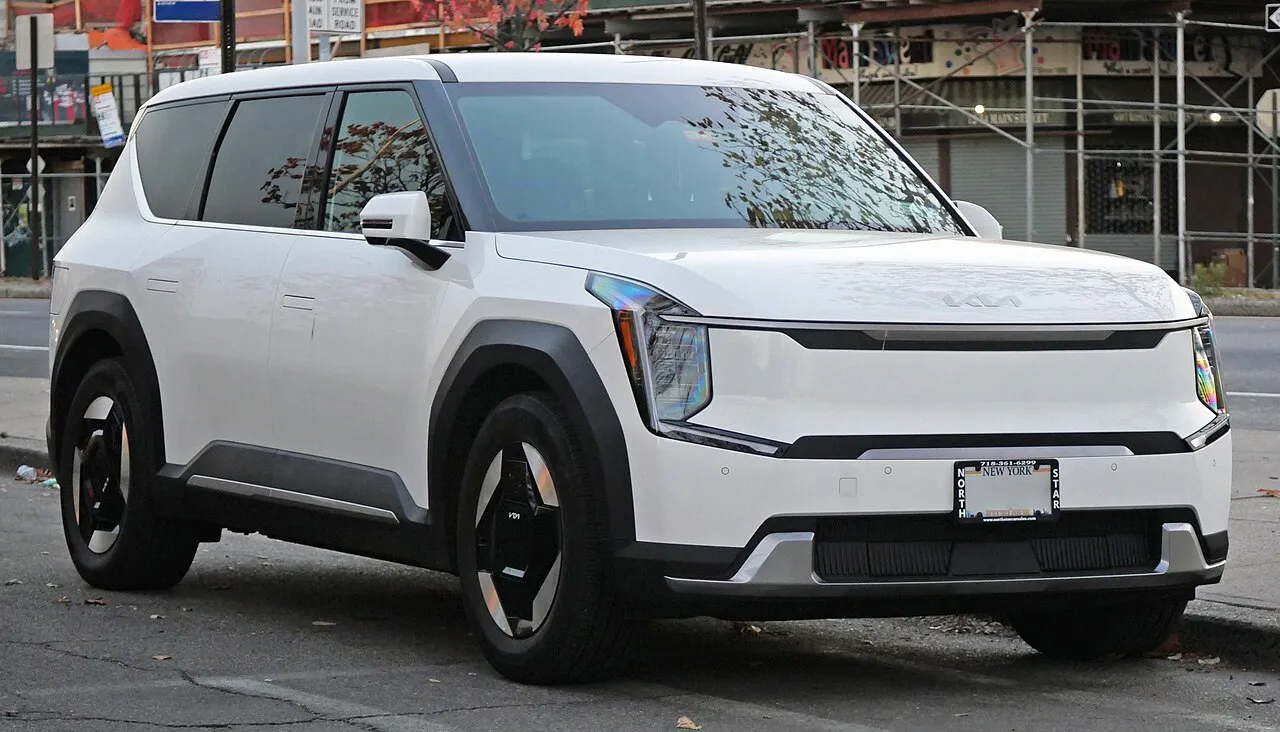
The short answer: The US-market 2026 Kia EV9 has modest EPA range gains in its Long Range versions, unchanged Standard Range RWD range, shorter EPA-reported Level 2 full-charge times and a GT with a 260-mile EPA rating. The range and charging ratings do not establish changes to battery capacity or motor power, so buyers should choose the newer model for its documented benefits and weigh the outgoing model against an actual price offer.
The 2026 Kia EV9 brings small EPA range increases for its US Long Range versions, unchanged range for the Standard Range RWD and shorter EPA-reported Level 2 full-charge times across the four versions comparable with 2025. A 2026 GT also has a 260-mile EPA rating. The clearest reason to choose the newer model year is its reported charging-time improvement; the range argument depends on which version you want.
Battery capacity and motor power require a separate distinction: these EPA range and charging ratings do not establish whether either changed. More range does not, by itself, prove a larger battery, and a shorter charging time does not identify the hardware responsible. The useful comparison is between the published outcomes for matching US versions.
The US EPA figures, side by side
All range figures below come from US EPA fueleconomy.gov and use the EPA standard. Full-charge times are the same source’s reported Level 2 figures; they are not DC fast-charging times. Each row identifies the US market and model year so the two years remain distinct.
| Market | Model year | Version | Drive | EPA-rated range | EPA-reported Level 2 full-charge time |
|---|---|---|---|---|---|
| US | 2025 | Standard Range RWD | RWD | 230 miles | 11.4 hours |
| US | 2026 | Standard Range RWD | RWD | 230 miles | 8.1 hours |
| US | 2025 | Long Range RWD | RWD | 304 miles | 15.2 hours |
| US | 2026 | Long Range RWD | RWD | 305 miles | 10.7 hours |
| US | 2025 | Long Range AWD | AWD | 280 miles | 14.5 hours |
| US | 2026 | Long Range AWD | AWD | 283 miles | 10.7 hours |
| US | 2025 | Long Range AWD GT-Line | AWD | 270 miles | 15.2 hours |
| US | 2026 | Long Range AWD GT-Line | AWD | 280 miles | 10.5 hours |
| US | 2026 | GT | AWD | 260 miles | 10.8 hours |
Range changes depend on the version
The Long Range AWD GT-Line has the largest year-over-year range improvement among the comparable versions. Its US EPA rating rises from 270 miles for 2025 to 280 miles for 2026, a gain of 10 miles. That gives the newer GT-Line the strongest range-based case for choosing 2026, although the increase remains modest beside its total rated distance.
The regular Long Range AWD moves from 280 to 283 miles under the same EPA standard. That three-mile improvement is much smaller. A shopper choosing between those two model years should recognize the increase without treating it as a substantial expansion of driving range.
For the Long Range RWD, the change is smaller still: 304 EPA-rated miles for 2025 becomes 305 for 2026. It remains the longest-range EV9 in this US comparison in both years. If maximum rated distance is the priority, the version choice matters much more than the one-mile model-year difference.
The Standard Range RWD stays at 230 EPA-rated miles. There is no range improvement to justify choosing its 2026 model over its 2025 counterpart. Its documented year-over-year benefit is instead in the reported Level 2 full-charge time.
These changes also narrow the range gap between the two Long Range AWD versions. In 2025, the regular AWD leads the GT-Line by 10 EPA-rated miles; in 2026, that gap is three miles. Buyers comparing those versions therefore face a smaller rated-range difference in the newer model year.
Level 2 charging times show the bigger change
US EPA fueleconomy.gov reports shorter Level 2 full-charge times for every directly comparable 2026 version. The Standard Range RWD falls from 11.4 to 8.1 hours, a reduction of 3.3 hours. The Long Range AWD falls from 14.5 to 10.7 hours, a reduction of 3.8 hours.
The Long Range RWD drops from 15.2 to 10.7 hours, reducing the reported duration by 4.5 hours. The Long Range AWD GT-Line falls from 15.2 to 10.5 hours, a reduction of 4.7 hours. Among the matching versions, the GT-Line therefore has both the largest range increase and the largest reduction in reported full-charge time.
These differences are more substantial than the range gains, but their meaning needs care. They compare reported full-charge durations. They do not establish that every charging session will take that long, nor do they establish an identical percentage improvement for every amount of energy added.
The ratings also do not identify the cause of the shorter durations. They are insufficient to attribute the change to a particular onboard charger, battery revision or charging-power increase. Buyers can credit the newer model with the shorter published times while keeping those hardware questions separate.
For someone whose purchase hinges on completing a full Level 2 charge within a particular window, the 2026 figures deserve close attention. Someone focused on charging during a road trip needs a different comparison: these Level 2 figures do not establish DC fast-charging performance or a change in charging connector.
Battery and power changes remain unconfirmed by these ratings
No battery-capacity or motor-output conclusion follows directly from the EPA figures here. The words Standard Range and Long Range distinguish versions, but they do not establish an exact battery capacity. Likewise, RWD and AWD identify drive configurations without stating horsepower or torque.
That limits how the model-year improvements should be described. The 2026 Long Range versions have higher EPA range ratings, but calling that a battery enlargement would go beyond the evidence. The shorter Level 2 times similarly cannot be turned into a claim about a specific increase in charging power.
The same restraint applies to the GT. Its name, AWD configuration and EPA range rating identify a distinct choice, but they do not quantify its performance. An acceleration or horsepower comparison with the GT-Line cannot be made from these ratings.
The GT and GT-Line are separate choices
The 2026 GT has a US EPA range rating of 260 miles and a reported Level 2 full-charge time of 10.8 hours. The 2026 Long Range AWD GT-Line has a 280-mile EPA rating and a 10.5-hour reported full-charge time. Their similar names should not obscure those different figures.
On range alone, the GT-Line leads the GT by 20 EPA-rated miles. The regular 2026 Long Range AWD leads the GT by 23 miles, while the Long Range RWD leads it by 45 miles. The GT therefore does not strengthen the case for 2026 if maximum rated range is the sole objective.
A year-over-year GT comparison is not established here. Its 2026 rating can be compared with the other 2026 choices, but a corresponding 2025 GT rating has not been published in this comparison. Nor should these EPA version names be treated as a complete account of equipment or trim-package changes.
Who should buy each model year?
Choose the 2026 EV9 if the shorter reported Level 2 full-charge time addresses a specific charging need. That benefit appears across every matching version. The newer GT-Line also has the strongest combined case on these measures, pairing its shorter charging duration with the largest year-over-year EPA range gain.
The 2025 EV9 remains a reasonable candidate when an actual purchase offer makes it more attractive. Range-focused Long Range RWD shoppers give up only one EPA-rated mile by choosing 2025, while Standard Range RWD shoppers give up no rated range at all. Regular Long Range AWD buyers face a three-mile difference.
There is no supported universal price premium for choosing 2026. Compare the actual offers against the benefits relevant to your version: unchanged or modestly higher EPA range, substantially shorter reported Level 2 full-charge times, and the separate GT choice. Battery size, motor power and DC charging improvements should not be assumed as additional reasons to pay more.
Frequently asked questions
Does the 2026 Kia EV9 have more range than the 2025 model?
For US models under the EPA standard, the Long Range RWD gains one mile to 305 miles, the Long Range AWD gains three miles to 283 miles, and the Long Range AWD GT-Line gains 10 miles to 280 miles. Standard Range RWD remains at 230 miles.
Does the 2026 Kia EV9 charge faster?
US EPA fueleconomy.gov reports shorter Level 2 full-charge times for all four comparable versions, with reductions ranging from 3.3 to 4.7 hours. Those figures do not establish a change in DC fast-charging performance.
Did Kia change the EV9 battery capacity or horsepower for 2026?
The EPA range and Level 2 charging ratings do not establish changes to battery capacity or motor power. Higher range and shorter full-charge times cannot independently confirm those hardware changes.
Is the 2026 Kia EV9 GT the same as the GT-Line?
They are separate US AWD versions. The 2026 GT has a 260-mile EPA range rating and a 10.8-hour reported Level 2 full-charge time; the Long Range AWD GT-Line has a 280-mile EPA rating and a 10.5-hour reported time.
Which Kia EV9 has the longest EPA range in this comparison?
The US 2026 Long Range RWD has the highest EPA range rating at 305 miles. Its 2025 counterpart is rated at 304 miles.
Related stories
2028 Volvo XC60 T8 Gets 78 Miles of EPA Electric Range
Volvo’s updated XC60 T8 pairs a 37.9-kWh battery with 455 hp and 78 miles of EPA electric range, extending the life of its aging plug-in hybrid SUV.

InsideEVs Writer Says EVs Make Everyday Exploring Easier
An InsideEVs writer says quiet driving, lower energy costs and easy power make local exploring more enjoyable, while noting that prices and charging still need work.

How Public EV Charging Hubs Differ From Smaller Stations
A public EV charging hub brings multiple charging options and services together in one location. Its layout can make stops easier to use and manage.