Tesla Model S vs Volkswagen ID.7: Space and Charging
Compare Tesla Model S and Volkswagen ID.7 dimensions, luggage access and charging, with clear distinctions between European ratings and US EPA figures.
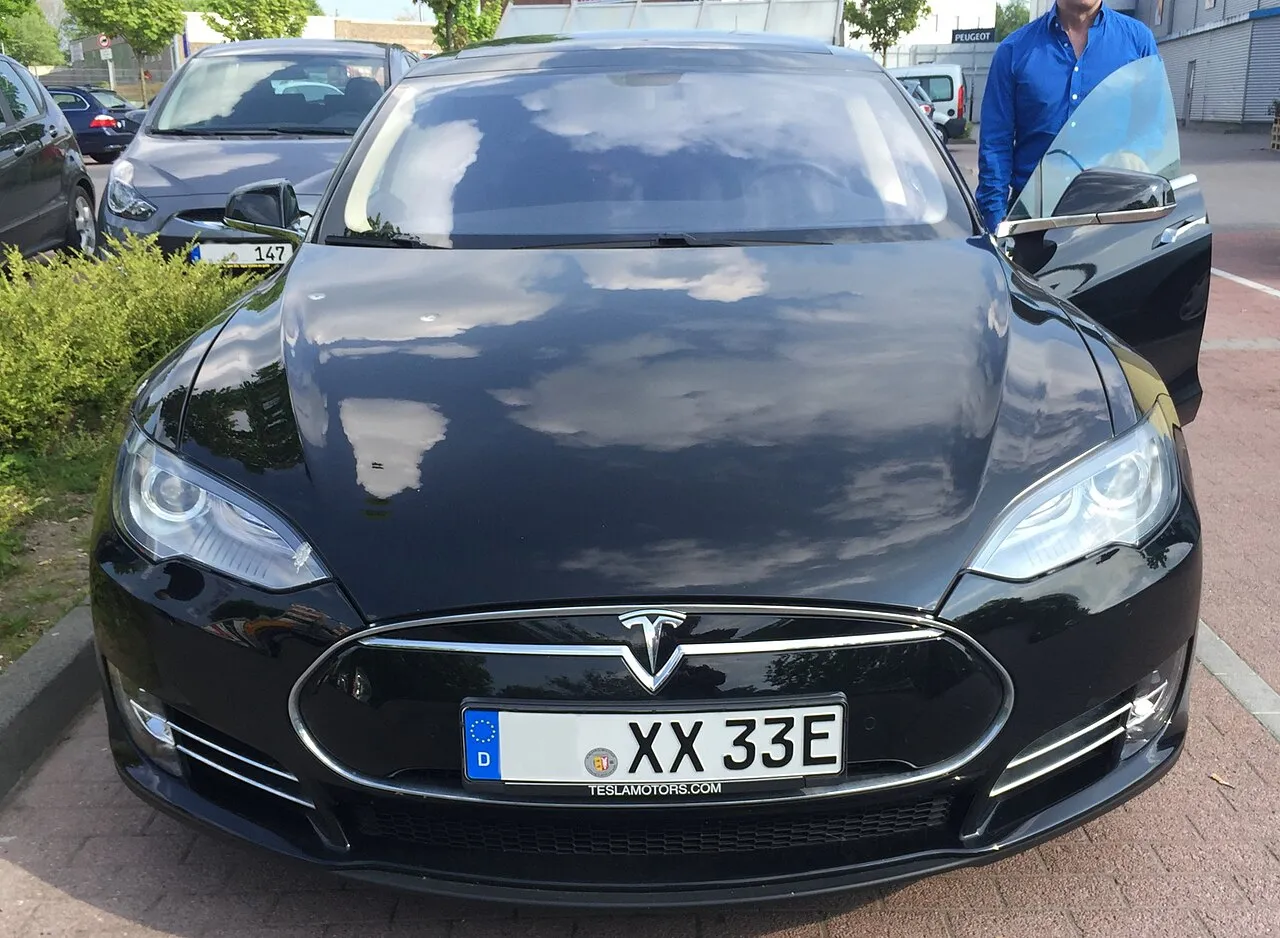
The short answer: The Volkswagen ID.7 offers a shorter, narrower and taller exterior, while the Tesla Model S has the higher published peak DC charging rate in the European versions compared here. Both suit buyers seeking liftback access, but exterior dimensions alone cannot establish which has better passenger comfort or more usable luggage space.
The Volkswagen ID.7 is the stronger starting point if a shorter, narrower body and a taller roof are your priorities. The Tesla Model S deserves attention if you favor its lower shape and higher published peak DC charging capability. For luggage access and passenger accommodation, however, neither should win on exterior measurements alone: a liftback opening helps with loading, but cabin fit and cargo usability depend on details that overall dimensions cannot establish.
For American buyers, market distinctions also matter. US EPA ratings describe American Model S versions, while the European comparison uses WLTP range figures and European charging information. European ID.7 figures should not be treated as American ratings or as confirmation of a US configuration.
What the dimensions and charging figures show
The table keeps each vehicle attached to its market, model year and range standard. European dimensions and charging figures come from EVDB; US Model S range and Level 2 charging times come from US EPA fueleconomy.gov. EPA and WLTP identify the range tests, not a common measurement procedure for dimensions or charging performance. A dash means no figure is presented for that entry.
| Vehicle and version | Market and model year | Rated range and standard | Length / width / height | Wheelbase | Usable battery | AC / peak DC charging | Level 2 full charge | Source |
|---|---|---|---|---|---|---|---|---|
| Tesla Model S Dual Motor AWD | Europe, 2025 | 637 km, WLTP | 5,021 / 1,960 / 1,440 mm | 2,960 mm | 100 kWh | 11 / 250 kW | — | EVDB |
| Volkswagen ID.7 Pro | Europe, 2026 | 628 km, WLTP | 4,961 / 1,862 / 1,538 mm | 2,966 mm | 77 kWh | 11 / 175 kW | — | EVDB |
| Volkswagen ID.7 Pro S | Europe, 2026 | 709 km, WLTP | 4,961 / 1,862 / 1,536 mm | 2,966 mm | 86 kWh | 11 / 200 kW | — | EVDB |
| Volkswagen ID.7 GTX | Europe, 2026 | 595 km, WLTP | 4,961 / 1,862 / 1,536 mm | 2,971 mm | 86 kWh | 11 / 200 kW | — | EVDB |
| Tesla Model S AWD | US, 2026 | 410 miles, EPA | — | — | — | — | 9.7 hours | US EPA fueleconomy.gov |
| Tesla Model S Plaid AWD | US, 2026 | 368 miles, EPA | — | — | — | — | 12 hours | US EPA fueleconomy.gov |
| Tesla Model S Plaid AWD, 21-inch wheels | US, 2026 | 309 miles, EPA | — | — | — | — | 12 hours | US EPA fueleconomy.gov |
Luggage access: the opening matters as much as capacity
A liftback combines a sedan-like profile with a rear hatch that raises the rear glass. That arrangement makes the opening itself part of the buying decision. A bulky suitcase or folded stroller must pass through the hatch before the space farther forward becomes useful. A generous floor area cannot compensate for an awkward opening when the object you carry regularly will not pass through it comfortably.
Compare the narrowest part of the opening, the loading lip and the clearance beneath the raised hatch. These affect different stages of loading: getting an object into the car, moving it across the threshold and standing beneath the open hatch. Garage ceiling clearance matters too, particularly where an overhead door or storage shelf occupies the space above the vehicle.
Roof shape also affects how luggage can be arranged. The space available near the floor can be more useful for suitcases than for tall, rigid objects. Check whether your normal load fits with the rear seats upright and the hatch fully closed. Folding the seats may accommodate a larger object, but that changes the passenger capacity available for the same trip.
There is no defensible cargo-capacity winner here. Exterior length, height and wheelbase do not establish luggage volume, hatch aperture size or the shape of the folded-seat load floor. For either car, a practical comparison should use the same luggage and the seating arrangement you actually need.
Passenger accommodation: a taller body is a clue
The European EVDB figures give the ID.7 a taller exterior than the Model S Dual Motor AWD. That makes it a sensible candidate for buyers concerned about entry and head clearance, but it does not prove greater interior headroom. Seat height, floor position, roof construction and interior trim all influence the space a passenger experiences.
Wheelbase needs similar care. The ID.7 versions in the table have slightly longer wheelbases than the Tesla, despite their shorter overall bodies. That is relevant to packaging, but wheelbase is not a rear-legroom measurement. Seat thickness, the front seating position and the location of the rear cushion determine how comfortably a passenger can sit.
Evaluate the rear seat behind the driving position you would use. Look at knee clearance, room for feet beneath the front seat, thigh support and the posture needed to avoid the roof. For passengers who find low seats difficult, the movement into and out of the car can matter as much as comfort once seated.
Cabin width also requires an actual fit check. A wider exterior does not automatically mean a more comfortable rear bench, especially when passengers or child seats must share it. The Model S's greater body width should therefore be treated as a parking consideration before it becomes an assumption about shoulder room.
Exterior size: the ID.7 has the smaller footprint
In the European versions compared here, the ID.7 is shorter and narrower than the Model S. Those differences favor the Volkswagen when assessing a tight garage or parking space. Length affects the room remaining ahead of and behind the car; width affects positioning between boundaries and the clearance available for opening doors.
Body width alone does not settle garage access. Mirror clearance, door swing and the path into the space remain separate checks. Likewise, a shorter body does not establish a smaller turning circle. The useful conclusion is limited but clear: the ID.7 occupies less length and width in this comparison, while its taller body warrants its own overhead-clearance check.
Charging: separate peak power from charging time
EVDB gives the European Model S Dual Motor AWD a higher peak DC charging rate than any of the ID.7 versions in the table. Within the Volkswagen range, the Pro S and GTX have higher peaks than the Pro. These figures describe maximum charging power, not a rate the battery necessarily maintains throughout a stop.
A charging session depends on the power curve as the battery fills, battery temperature, arrival charge level and the charger itself. Consequently, a higher peak cannot establish how much sooner a car will be ready to leave. A comparable charging-time measurement over the same battery-percentage interval would be needed to make that claim.
The European cars share the same published AC charging power in this comparison. Actual AC charging also depends on the electrical supply and charging equipment. Battery capacity matters because filling a larger usable battery requires more energy; equal power ratings do not imply equal full-charge times.
The US EPA full-charge estimates apply specifically to the American Model S versions shown. They should not be transferred to the European Tesla or used to calculate an ID.7 charging time. Nor do European peak-power figures establish connector compatibility for a particular American vehicle. Confirm the port and charging access for the exact market and version.
Range and the final choice
Among these European WLTP entries, the ID.7 Pro S has the longest rated range. The Model S Dual Motor AWD sits above the ID.7 Pro and GTX. Those comparisons use the same named range standard, although the vehicles have different model years. The US Model S EPA figures belong in a separate comparison and should not be ranked directly against WLTP distances.
Start with the ID.7 if its smaller footprint and taller exterior address your main concerns, then verify passenger fit and luggage access. Start with the Model S if its shape and higher European peak DC charging figure better match your priorities, while checking the exact local version. The deciding evidence should be usable space and relevant charging performance, rather than an assumed connection between exterior size, cabin comfort and charging speed.
Frequently asked questions
Is the Volkswagen ID.7 smaller than the Tesla Model S?
The European 2026 ID.7 versions compared here are shorter and narrower, but taller, than the European 2025 Model S Dual Motor AWD. EVDB gives the ID.7 a length of 4,961 mm and width of 1,862 mm, versus 5,021 mm and 1,960 mm for that Model S.
Which has the higher peak DC charging rate?
According to EVDB, the European 2025 Model S Dual Motor AWD peaks at 250 kW. The European 2026 ID.7 Pro peaks at 175 kW, while the Pro S and GTX peak at 200 kW. Peak power alone does not establish charging-stop duration.
Which European version has the longest WLTP range?
Among the versions compared in the article, EVDB gives the European 2026 Volkswagen ID.7 Pro S the longest WLTP range at 709 km. The European 2025 Tesla Model S Dual Motor AWD is rated at 637 km WLTP.
What are the US Tesla Model S range ratings?
US EPA fueleconomy.gov rates the 2026 Model S AWD at 410 miles, the Plaid AWD at 368 miles and the Plaid AWD with 21-inch wheels at 309 miles. These EPA ratings should not be treated as equivalent to European WLTP ratings.
Related stories

How to Build a Flexible EV Charging Routine for Work
Build charging around the miles you need for your next drive, using home, work, or public charging as your schedule allows. Keep a practical buffer.

How to Check EV Charger Plug Compatibility Before a Trip
Match your EV’s connector and charging limits to each route stop. Learn what charger labels mean, when an adapter may work, and what to confirm before you leave.

How to Estimate Electric Car Range While Towing
Estimate towing range from your vehicle’s normal range, then adjust for trailer shape, speed, weather and hills. Use the result to plan charging stops.