Kia EV5 vs BYD ATTO 3: Which Family SUV Fits Best?
The Kia EV5 offers more room and faster published charging, while the BYD ATTO 3 is smaller and lighter. Here is what families should weigh.
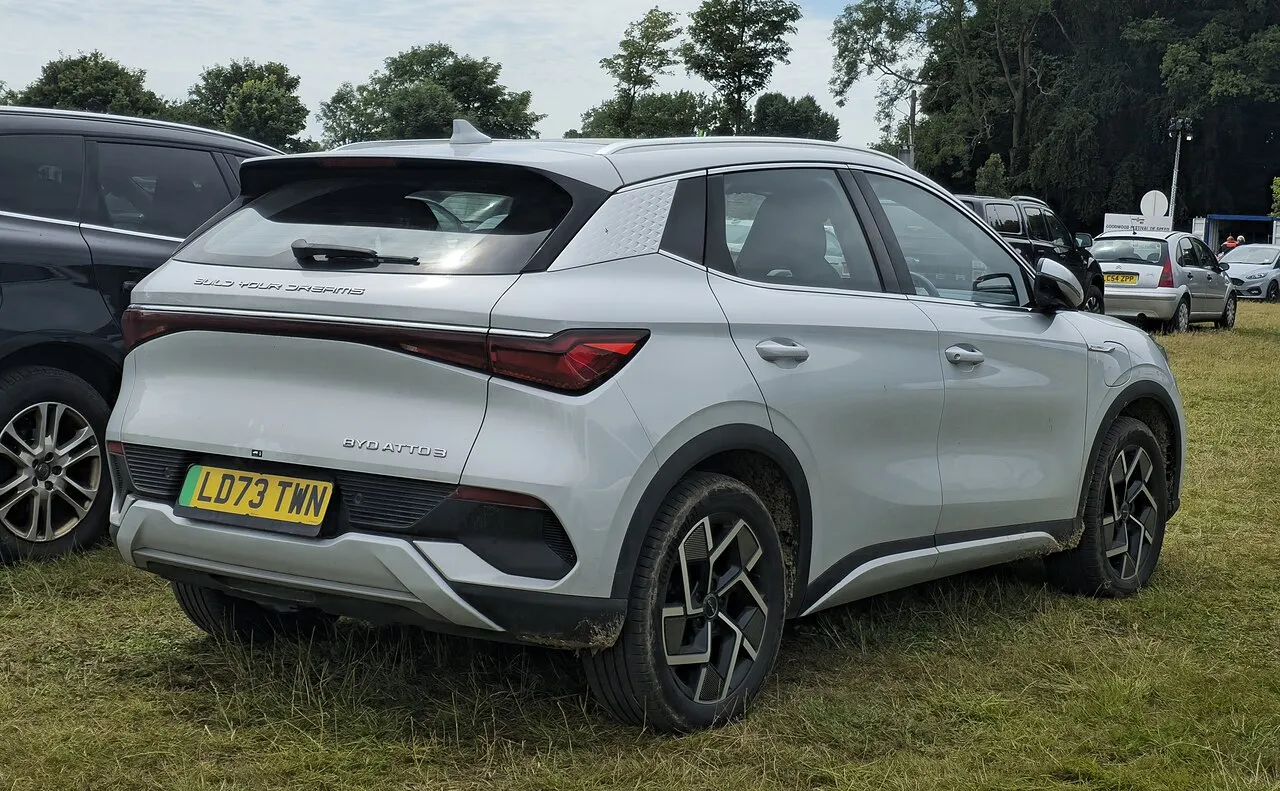
The short answer: The Kia EV5 is the stronger family choice when rear-seat space, larger dimensions and faster charging matter most. The BYD ATTO 3 is easier to place in tighter spaces and has a simpler, lighter package, but its published charging capability is lower.
For a family SUV, the Kia EV5 makes the stronger case on the figures available here. It is longer, taller and has a longer wheelbase than the BYD ATTO 3, which should make it the more promising choice for rear-seat room and bulky family equipment. Its European version also has a larger usable battery and a much higher published DC charging peak. The BYD remains the smaller and lighter SUV, with a 60.5-kWh LFP battery in Extended Range form and a 7-kW AC charger.
The comparison needs a market warning. The figures available for the two vehicles come from Europe, China and Canada, and the range ratings use different standards. The European BYD ATTO 3 and Kia EV5 figures use WLTP. The Chinese BYD figures use CLTC. Those range results should not be treated as equivalent. The Canadian EV5 entry contains dimensions and curb weight, but no battery, range or charging figures.
How the two SUVs compare on size
The European 2025 Kia EV5 measures 4,615 mm long, 1,875 mm wide and 1,715 mm tall, with a 2,750-mm wheelbase. The European 2025 BYD ATTO 3 measures 4,455 mm long, 1,875 mm wide and 1,615 mm tall, with a 2,720-mm wheelbase. That gives the EV5 160 mm more length, 100 mm more height and 30 mm more wheelbase, while both are the same width in these European versions. EVDB is the source for the EV5 figures, while OpenEV Data and EVDB are the sources for the ATTO 3 figures.
Those differences matter in the places families use an SUV every day. A longer wheelbase can create more room between the axles for the passenger compartment, while the extra overall height can help with an upright seating position and access to the rear seats. The extra length can also create more opportunity for cargo space behind the second row. The published figures do not include rear legroom, rear shoulder room, cargo volume or cargo-floor dimensions, so a precise judgment about child-seat clearance, three-person rear seating or stroller fit has not been published.
Width is more evenly matched. Since both European versions are 1,875 mm wide, the EV5 does not have a published width advantage for placing three passengers across the rear bench or fitting multiple child seats. Door opening shape, seat contours and the position of the rear belt hardware can change how useful that width feels, but those details are not included here. Families making a purchase decision should therefore treat the EV5's greater length, height and wheelbase as useful indicators of cabin potential rather than as proof of a particular seating arrangement.
The Canadian 2026 EV5 entry is slightly different: 4,620 mm long, 1,880 mm wide, 1,720 mm tall and based on a 2,750-mm wheelbase. NHTSA vPIC is the source for those figures. They describe a larger vehicle than the European EV5 in each exterior dimension, but the Canadian entry does not include charging, battery or range figures. It should not be merged with the European Air or GT-Line version when comparing energy use or road-trip capability.
Rear-seat practicality for a family
The EV5 has the clearer starting advantage for families who regularly carry rear-seat passengers. Its longer body and wheelbase indicate a vehicle designed around more interior volume than the ATTO 3. The 100-mm height difference also gives the Kia a taller profile. That can make it easier to lift children into rear-facing seats and leave room for passengers to sit behind them, although no seat or access measurements are published.
The ATTO 3's smaller footprint may be useful in urban garages, narrow parking spaces and crowded school pickup areas. Its 4,455-mm length is 160 mm shorter than the European EV5, and its 1,615-mm height is 100 mm lower. Those dimensions can make the BYD less cumbersome to position. The tradeoff is that the available figures give it less exterior space to work with for rear passengers and cargo.
Families should also distinguish body size from confirmed seating capacity. Both vehicles are identified as SUVs, but the figures here do not describe the number of rear seating positions, the presence of a flat floor, the availability of a center armrest or the way child restraints fit. Those details can decide whether an SUV works for two children, three children or a mix of passengers and adults. They should be checked directly for the market and trim under consideration.
Cargo usability: what is known and what remains open
The available vehicle figures do not include trunk volume, folded-seat volume, liftgate opening height, cargo-floor length or underfloor storage. As a result, neither SUV can be declared the winner for a stroller, large grocery load or vacation luggage from a published cargo measurement here. The EV5's larger exterior dimensions make it the more likely candidate for greater cargo flexibility, but that conclusion remains an inference from size rather than a measured cargo result.
The ATTO 3's smaller dimensions can still be an advantage for families who value a compact footprint. A shorter vehicle is generally easier to fit in a garage and easier to maneuver around tight parking areas. That convenience may outweigh the potential space advantage of the EV5 for a household that mostly carries one or two passengers and uses the rear area for modest loads.
The battery layout is another practical consideration, but the source figures do not describe cargo-floor height or the space beneath the floor. The BYD uses LFP chemistry in both its 49.9-kWh Standard Range and 60.5-kWh Extended Range versions. The European Kia uses NMC chemistry with an 84-kWh gross battery and a 77.4-kWh usable battery. Chemistry alone does not establish how much room remains for luggage, so families should rely on an actual cargo inspection for that question.
Charging and range for family travel
The European Kia EV5 has the stronger published charging capability. Both the Air and GT-Line use an 84-kWh gross battery with 77.4 kWh usable, an 11-kW AC charging rating and a 200-kW DC peak. EVDB is the source for these figures. The Air is rated at 590 km WLTP, while the GT-Line is rated at 580 km WLTP. The small range difference between trims is reported under the same WLTP standard.
The European BYD ATTO 3 Extended Range uses a 60.5-kWh LFP battery, has a 7-kW AC rating and an 88-kW DC peak. It is rated at 420 km WLTP. The Standard Range version uses a 49.9-kWh LFP battery, a 7-kW AC rating and a 70-kW DC peak, with a 345-km WLTP rating. OpenEV Data and EVDB are credited for the Extended Range figures; OpenEV Data is credited for the Standard Range figures.
In practical terms, the EV5's published 200-kW DC peak gives it more headroom at a compatible fast charger than the ATTO 3's 88-kW or 70-kW ratings. Peak power is not a charging-time promise: the actual result depends on the charging station, battery temperature, state of charge and the vehicle's charging curve. The available figures establish the rated peaks, but they do not include a full charge-time result or a 10-to-80-percent time.
The Kia also has a higher published AC rating, at 11 kW versus 7 kW for the BYD. That can matter for overnight or destination charging where the electrical supply and charging equipment support the vehicle's maximum. The rating does not guarantee that every home installation will deliver that power. Installation limits and the local electrical service still determine what a household can use.
The Chinese ATTO 3 figures show why market and test standard must stay attached to every range claim. Its Extended Range version is rated at 510 km CLTC and its Standard Range version at 430 km CLTC, while the European versions are rated at 420 km and 345 km WLTP respectively. The battery and charging ratings are otherwise the same between the listed market versions. CLTC and WLTP are different test standards, so the two sets of range numbers cannot be used as a direct market-to-market ranking.
Which version makes sense for a family?
The EV5 Air is the most balanced choice in the figures available. It combines the same battery and charging ratings as the GT-Line with the highest published European range: 590 km WLTP. The GT-Line is rated at 580 km WLTP and weighs 1,910 kg, compared with 1,835 kg for the Air. The available figures do not explain the equipment differences behind the trims, so the choice between them should focus on the features and seating details confirmed for the buyer's market.
The BYD ATTO 3 Extended Range is the more convincing BYD for family travel because it has the larger battery, longer published European range and higher DC peak of the two ATTO 3 versions. It weighs 1,750 kg, compared with 1,690 kg for the Standard Range. Both use front-wheel drive, 150 kW of power and 310 Nm of torque, with a published 0-to-100-km/h time of 7.3 seconds.
For a family that prioritizes interior room and road-trip charging, the Kia has the stronger case. For a family that prioritizes a shorter vehicle and accepts slower published charging, the BYD may fit more easily into daily routines. The rear-seat and cargo decision still needs an in-person check because the measurements that would confirm those specific use cases have not been published here.
Frequently asked questions
Which is larger, the Kia EV5 or BYD ATTO 3?
The Kia EV5 is longer, taller and has a longer wheelbase than the European BYD ATTO 3. Both are 1,875 mm wide in the listed European versions.
Which SUV charges faster?
The European Kia EV5 has an 11-kW AC rating and a 200-kW DC peak. The European BYD ATTO 3 is rated at 7 kW AC, with a 70-kW or 88-kW DC peak depending on version.
Which has more range?
The European Kia EV5 Air is rated at 590 km WLTP, while the EV5 GT-Line is rated at 580 km WLTP. The BYD ATTO 3 Extended Range is rated at 420 km WLTP. Chinese ATTO 3 figures use the different CLTC standard.
Which is better for cargo?
The EV5's greater length, height and wheelbase suggest more cargo potential, but cargo volume and cargo-floor measurements have not been published here. An in-person check is needed.
Related stories

How to Build a Flexible EV Charging Routine for Work
Build charging around the miles you need for your next drive, using home, work, or public charging as your schedule allows. Keep a practical buffer.

How to Check EV Charger Plug Compatibility Before a Trip
Match your EV’s connector and charging limits to each route stop. Learn what charger labels mean, when an adapter may work, and what to confirm before you leave.

How to Estimate Electric Car Range While Towing
Estimate towing range from your vehicle’s normal range, then adjust for trailer shape, speed, weather and hills. Use the result to plan charging stops.