Kia EV4 vs Hyundai IONIQ 6: A Family Buyer's Comparison
Compare Kia EV4 and Hyundai IONIQ 6 body styles, family seating considerations, luggage access and charging, with market-specific figures clearly explained.
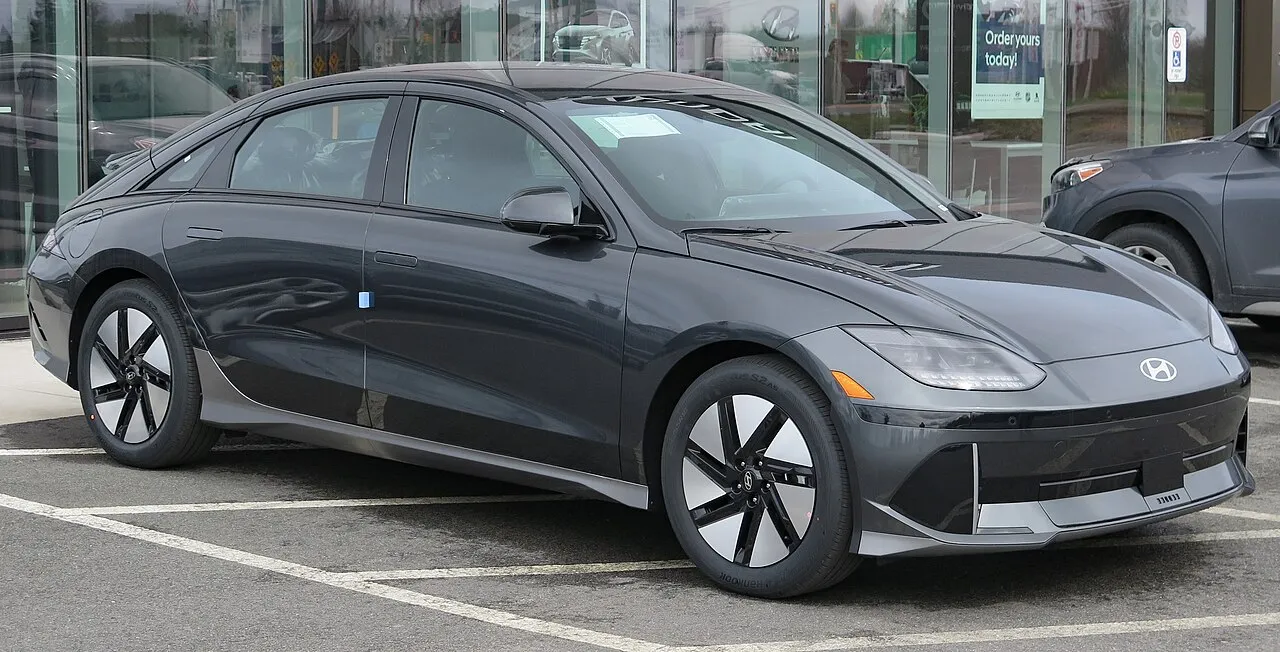
The short answer: The Kia EV4 hatchback is the stronger starting point when luggage access drives the decision; the Hyundai IONIQ 6 deserves attention when higher peak DC charging capability matters. Rear-seat suitability needs a separate fit check, and Canadian, US and European versions must be considered separately.
The Kia EV4 hatchback is the stronger starting point for families prioritizing access for bulky luggage, while the Hyundai IONIQ 6 deserves attention for its higher published peak DC charging capability in the European versions compared below. Neither has an established rear-seat advantage from exterior dimensions alone. The right choice depends on the body style, market and version, followed by a check with the passengers and equipment the car will carry.
For an American buyer, the distinction between markets matters immediately. The US Hyundai range ratings below come from EPA ratings, while the Canadian Kia and Hyundai figures come from Natural Resources Canada. European charging figures describe European versions. Those figures help explain the choices, but they do not establish the equipment or performance of a US-market EV4.
Start with the body style and market
The IONIQ 6 is a sedan. The EV4 comparison needs more care: the Canadian versions are identified as sedans, while European versions include a Hatchback Standard Range and versions carrying the Fastback name. A recommendation about hatchback luggage access therefore applies to that body style, not automatically to every EV4.
That distinction changes the family-use question. A hatchback opens the rear of the passenger compartment, allowing a bulky object to pass through a different opening than a sedan trunk. A sedan's separate trunk can accommodate everyday bags, but its opening can become the constraint before the available storage space is fully used. Neither observation establishes which vehicle holds more luggage.
The Fastback name also should not substitute for checking how the luggage compartment opens. Body shape and cargo access are related, but a sloping rear profile alone does not establish the opening's dimensions or whether a particular stroller will pass through it.
Key figures, with their markets kept separate
The table groups comparable ratings and identifies the source for each version. EPA, NRCan and WLTP are separate range standards. Charging power is a capability figure, not a range test result, and a Level 2 full-charge estimate is not a DC fast-charging time.
| Vehicle and version | Market and model year | Range and test standard | Charging figure and basis | Source |
|---|---|---|---|---|
| Kia EV4 Light sedan | Canada, 2026 | 391 km, NRCan | 5.9 hours, Level 2 full-charge estimate | Natural Resources Canada |
| Kia EV4 Wind sedan | Canada, 2026 | 552 km, NRCan | 8.1 hours, Level 2 full-charge estimate | Natural Resources Canada |
| Kia EV4 Wind Premium sedan | Canada, 2026 | 515 km, NRCan | 8.1 hours, Level 2 full-charge estimate | Natural Resources Canada |
| Kia EV4 GT-Line sedan | Canada, 2026 | 488 km, NRCan | 9.1 hours, Level 2 full-charge estimate | Natural Resources Canada |
| Hyundai IONIQ 6 Long Range, 18-inch wheels | Canada, 2025 | 550 km, NRCan | 7.5 hours, Level 2 full-charge estimate | Natural Resources Canada |
| Hyundai IONIQ 6 RWD, 18-inch wheels | US, 2025 | 342 mi, EPA | 7.5 hours, Level 2 full-charge estimate | US EPA fueleconomy.gov |
| Hyundai IONIQ 6 RWD, 20-inch wheels | US, 2025 | 291 mi, EPA | 7.5 hours, Level 2 full-charge estimate | US EPA fueleconomy.gov |
| Kia EV4 81.4 kWh | Europe, 2025 | 625 km, WLTP | 11 kW AC; 135 kW peak DC; power figures, no range test standard applies | EVDB |
| Hyundai IONIQ 6 84 kWh RWD sedan | Europe, 2026 | 680 km, WLTP | 11 kW AC; 263 kW peak DC; power figures, no range test standard applies | EVDB |
Rear-seat accommodation needs a physical check
Neither overall size nor body-style naming settles rear-seat comfort. Wheelbase describes the distance between the axles; it does not directly measure usable knee room. Roof height likewise cannot establish headroom without accounting for seat position, floor height and the shape of the roof above the passenger.
For a family using child seats, the useful comparison starts with the front seats adjusted for the adults who normally occupy them. A rear-facing child seat can affect the space available ahead of it, while the door opening influences how easily an adult can position and secure a child. These relationships cannot be resolved by a range rating or an exterior measurement.
For older children and adults, assess head clearance, thigh support and foot space together. A passenger may have adequate knee clearance yet find the seating position uncomfortable. The middle seat also deserves its own check if it will be used regularly; comfort in an outer seat does not establish comfort across the entire bench.
There is therefore no defensible rear-seat winner here. The EV4's hatchback option does not prove a roomier passenger compartment, and the IONIQ 6's sedan body does not establish inferior family accommodation. Actual passenger fit should remain a deciding condition for either car.
Luggage access can matter more than capacity
For bulky family equipment, focus on the route into the car. A stroller has to clear the opening before its folded size becomes relevant. The opening's shape, the load floor and the room needed to rotate the stroller can matter as much as the space behind the rear seats.
This gives the European EV4 hatchback a practical reason to enter the shortlist. Its body style offers a different loading arrangement from the IONIQ 6 sedan. It does not establish a larger cargo compartment, a lower loading edge or an easier lift; those are separate questions.
Keep the rear seats in their normal passenger positions during the comparison. Space created by folding a seat is useful only when that seat is available. For a family carrying passengers and luggage simultaneously, the meaningful result is whether the usual load fits with everyone aboard.
Home charging and road-trip charging favor different checks
The Canadian NRCan ratings make a useful comparison within one standard. The EV4 Wind and IONIQ 6 Long Range with the smaller wheel option have closely matched rated ranges, while their full-charge estimates differ. That does not establish equal real-world range or identical charging behavior; it shows why the exact trim deserves more attention than the badge.
A full-charge estimate also differs from the time needed to replace energy used during an ordinary day. At home, the relevant question is whether the car can replenish that energy during its usual parking window. Charging depends on both the vehicle's AC capability and the power the charging installation can deliver.
For European versions, EVDB gives the IONIQ 6 a higher peak DC charging capability than the EV4 version in the table, while their AC ratings match. That supports considering the Hyundai for frequent fast-charging travel. It does not establish a particular stop duration: peak power is a maximum, and charging power varies during a session.
Battery temperature, starting charge level and charger capability all affect the result. A higher peak can be useful, but it cannot be converted directly into a proportional reduction in waiting time. These European figures also should not be carried across to Canadian or US versions without confirming the exact vehicle.
Which belongs on the family shortlist?
Choose the EV4 hatchback as the starting point when awkward luggage is the main concern, then confirm passenger fit and loading access. For the Canadian EV4 sedan, use the trim-specific NRCan figures and assess its trunk directly. Consider the IONIQ 6 when its sedan layout suits the household and charging capability carries more weight, particularly for the European version discussed here.
For US shoppers, the EPA-rated IONIQ 6 wheel configurations demonstrate why version selection matters even within one model. Keep that same discipline throughout the comparison: match the market, body style and trim first, then judge seating, luggage access and charging against the family's actual routine.
Frequently asked questions
Is every Kia EV4 in this comparison a hatchback?
No. The Canadian EV4 versions are identified as sedans. European versions include a Hatchback Standard Range and versions named Fastback, so luggage-access conclusions must stay specific to the body style.
Which Canadian versions have similar rated range?
Natural Resources Canada rates the 2026 Kia EV4 Wind at 552 km and the 2025 Hyundai IONIQ 6 Long Range with 18-inch wheels at 550 km. Both use the NRCan standard; these are Canadian ratings.
Which European version has higher peak DC charging power?
EVDB reports 263 kW peak DC charging for the European 2026 Hyundai IONIQ 6 84 kWh RWD and 135 kW for the European 2025 Kia EV4 81.4 kWh. Peak power alone does not establish total charging time.
Can EPA and WLTP range figures be compared directly?
They should not be treated as equivalent. The US IONIQ 6 figures use EPA ratings, the Canadian figures use NRCan, and the European range figures use WLTP.
Related stories

How to Build a Flexible EV Charging Routine for Work
Build charging around the miles you need for your next drive, using home, work, or public charging as your schedule allows. Keep a practical buffer.

How to Check EV Charger Plug Compatibility Before a Trip
Match your EV’s connector and charging limits to each route stop. Learn what charger labels mean, when an adapter may work, and what to confirm before you leave.

How to Estimate Electric Car Range While Towing
Estimate towing range from your vehicle’s normal range, then adjust for trailer shape, speed, weather and hills. Use the result to plan charging stops.