Hyundai INSTER or Kia EV2: Size, Range and Charging
The INSTER has the smaller footprint; the EV2 offers a higher WLTP range in its larger-battery trims. Seating layouts and US ratings remain unconfirmed.
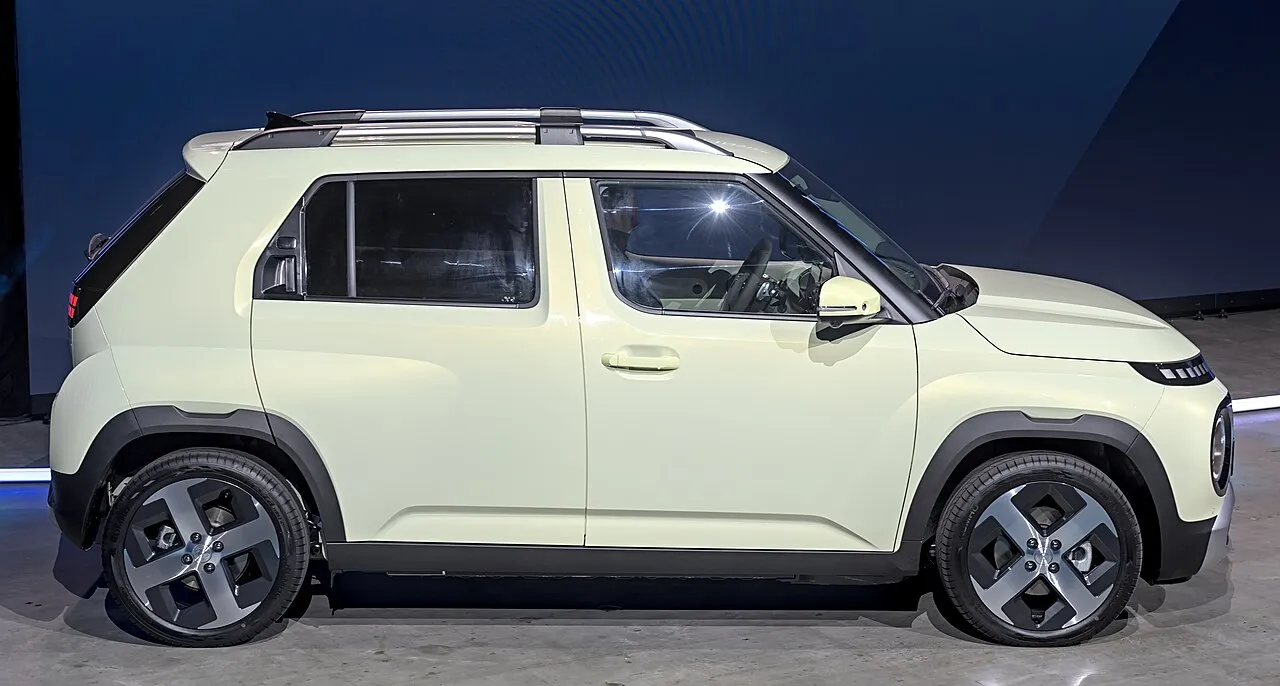
The short answer: Choose the Hyundai INSTER if a smaller exterior footprint matters most. Consider the Kia EV2 if its larger body or the higher WLTP range of its 61.0 kWh trims better suits your needs; published seating layouts are needed before judging passenger flexibility.
The Hyundai INSTER is the smaller choice on the outside, while the Kia EV2 offers the higher published WLTP range in its 61.0 kWh versions. That makes the initial choice fairly clear: start with the INSTER if fitting into tight streets and parking spaces is the priority, and look at the EV2 if you want a larger body and more rated range. Neither conclusion settles passenger space. Seating layouts have not been published in the figures covered here, so shoppers should check the actual cabin arrangement before deciding which vehicle works better for passengers.
These are figures for different markets and model years: European 2025 INSTER trims and UK 2026 EV2 trims. Their range figures use the same WLTP test standard, which makes them useful for comparing published ratings. They are not US range ratings or promises of distance on a particular trip. Charging information also takes different forms for the two vehicles, so a peak power figure for one cannot be read as a charging time for the other.
Published size, range and charging figures
EVDB is the source for the European 2025 INSTER figures. The UK 2026 EV2 figures are credited to the Editorial entry. WLTP is the test standard for every range figure in the table; no test standard is stated for the dimensions, battery capacities or charging figures. Battery capacities marked gross refer to total capacity, while usable capacity is identified separately where published.
| Vehicle, trim, market and model year | Source | Battery capacity | Rated range, WLTP | Length × width × height | AC charging | DC charging |
|---|---|---|---|---|---|---|
| Hyundai INSTER Standard 42 kWh; Europe; 2025 | EVDB | 44.6 kWh gross; 42 kWh usable | 327 km | 3,825 × 1,610 × 1,575 mm | 11 kW | 120 kW peak |
| Hyundai INSTER Long Range 49 kWh; Europe; 2025 | EVDB | 51.8 kWh gross; 49 kWh usable | 370 km | 3,825 × 1,610 × 1,575 mm | 11 kW | 120 kW peak |
| Kia EV2 First Edition 42.2 kWh; UK; 2026 | Editorial entry | 42.2 kWh gross | 314 km | 4,060 × 1,800 × 1,575 mm | 11 kW | 29 minutes, 10–80% |
| Kia EV2 Air 61.0 kWh; UK; 2026 | Editorial entry | 61 kWh gross | 444 km | 4,060 × 1,800 × 1,575 mm | 11 kW | 30 minutes, 10–80% |
| Kia EV2 GT-Line 61.0 kWh; UK; 2026 | Editorial entry | 61 kWh gross | 421 km | 4,065 × 1,800 × 1,585 mm | 11 kW | 30 minutes, 10–80% |
| Kia EV2 GT-Line S 61.0 kWh; UK; 2026 | Editorial entry | 61 kWh gross | 415 km | 4,065 × 1,800 × 1,585 mm | 11 kW | 30 minutes, 10–80% |
Which one is easier to fit into a small space?
The INSTER is a hatchback measuring 3,825 mm long and 1,610 mm wide in both European trims shown. The EV2 is an SUV measuring 4,060 mm long in Air and First Edition form, or 4,065 mm in GT-Line and GT-Line S form. Every EV2 trim shown is 1,800 mm wide. Those exterior dimensions make the INSTER the more natural starting point for a shopper with a narrow parking space or limited room to maneuver. A shopper should still measure the parking space itself, including room to open the doors and reach the charge port.
Exterior height does little to separate the standard bodies: the INSTER, EV2 Air and EV2 First Edition are each 1,575 mm tall. The EV2 GT-Line and GT-Line S are 1,585 mm tall. Height alone does not establish headroom, seating position or how easy either cabin is to enter. Likewise, the EV2’s longer and wider body does not prove that its passenger area or cargo area is larger in a way that matters to a particular household. Exterior measurements describe the space a vehicle occupies, not how its interior is divided.
Wheelbase adds another useful limit to assumptions about size. EVDB gives the INSTER a 2,580 mm wheelbase, while the Editorial entry gives the EV2 a 2,565 mm wheelbase across the UK trims shown. Although the EV2 is longer overall, its published wheelbase is shorter. Wheelbase is the distance between the axles; it cannot, by itself, establish legroom or usable floor space. The sensible comparison is therefore exterior fit first, followed by a direct check of passenger and cargo space when those details are available.
What can be said about seating?
A seating count and seat layout have not been published for either vehicle in these figures. That leaves several practical questions open: how many people each version seats, how the rear seats are arranged, and what happens to passenger room when carrying cargo. Those questions are especially relevant in a small vehicle, where a comfortable position for one occupant may affect the space available to someone else. Avoid treating the EV2’s SUV label or the INSTER’s hatchback label as a substitute for an actual seating diagram.
If seating flexibility is central to the purchase, check the exact market and trim rather than assuming every version shares the same cabin configuration. Verify the number of seats, the rear-seat arrangement and the usable cargo setup with a vehicle-specific description or an in-person inspection. This is also the point to check whether the people and items you routinely carry fit together. The exterior figures help narrow the shortlist, but they cannot answer that combined passenger-and-cargo question.
How do their rated ranges compare?
EVDB rates the European 2025 INSTER Standard at 327 km WLTP and the Long Range at 370 km WLTP. The Editorial entry gives the UK 2026 EV2 First Edition a 314 km WLTP rating. Its 61.0 kWh versions are rated at 444 km for Air, 421 km for GT-Line and 415 km for GT-Line S. On these published WLTP figures, the EV2 Air has the highest rating, while the smaller-battery EV2 First Edition has the lowest. Choosing a model name alone would miss those differences between trims.
The larger gross battery capacity of the EV2’s 61.0 kWh trims helps explain why they are the range-focused options here. The INSTER figures also show why battery labels require care: its Standard trim is called 42 kWh but has a 44.6 kWh gross battery and 42 kWh usable capacity. Its Long Range trim has 51.8 kWh gross and 49 kWh usable. Only gross capacity is stated for the EV2 trims, so the battery figures should not be treated as a like-for-like comparison of energy available for driving.
Even among EV2 trims with the same stated 61 kWh gross capacity, the WLTP ratings differ. That is a reason to compare the exact trim being considered rather than applying the Air rating to every EV2. WLTP ratings offer a consistent published test basis here, but a journey’s distance between charges will depend on conditions and use. For an American shopper, these European and UK WLTP figures should remain labeled as such; a US-rated range for either vehicle has not been published here.
What do the charging figures actually tell you?
Both vehicles have an 11 kW AC charging figure across the trims shown. AC charging is relevant when the vehicle uses an AC source, such as a compatible home or destination charger. The 11 kW figure describes a charging capability, not a guaranteed rate at every outlet. The available electrical supply and charging equipment can limit what the vehicle receives. It also does not say how long a full charge takes, because a charging session’s starting level and target level matter.
The DC figures answer different questions. EVDB gives both INSTER trims a 120 kW peak DC charging figure. A peak describes the highest stated power, not the power sustained throughout a session. The Editorial entry instead gives the EV2 a stated 10–80% DC charging time: 29 minutes for First Edition and 30 minutes for each 61.0 kWh trim. Those times describe a particular portion of a charge. They do not establish the EV2’s peak DC power, and the INSTER’s peak does not establish its 10–80% time.
That distinction matters on a road trip. A vehicle that briefly reaches a high peak may spend much of a session below it, while a 10–80% time captures a broader charging interval under the stated conditions. Without the same kind of DC charging result for both vehicles, there is no sound basis here to declare either one faster at a charging stop. The useful comparison is the charging information each source actually publishes, alongside the range of the exact trim under consideration.
Which should a shopper shortlist?
Shortlist the INSTER when the smaller published length and width directly address a parking or maneuvering constraint. Its two European trims offer different WLTP ranges while sharing the same exterior dimensions and stated AC and peak DC charging figures. Shortlist the EV2 when its larger exterior size is acceptable and the higher WLTP ratings of its 61.0 kWh trims are valuable. Keep the First Edition separate from those larger-battery versions when comparing range.
Before making a final choice, confirm the seating layout and the cabin space of the particular trim. If charging stops are a deciding factor, seek directly comparable DC charging times rather than equating a peak power figure with a session time. The published dimensions and WLTP ratings identify meaningful differences; they leave passenger flexibility and a direct charging-speed comparison unresolved.
Frequently asked questions
Which is smaller, the Hyundai INSTER or Kia EV2?
The European 2025 INSTER trims are 3,825 mm long and 1,610 mm wide, according to EVDB. The UK 2026 EV2 trims are 4,060 or 4,065 mm long and 1,800 mm wide, according to the Editorial entry.
Which has the highest published WLTP range?
The UK 2026 Kia EV2 Air 61.0 kWh has the highest figure here at 444 km WLTP, according to the Editorial entry.
How many people can the INSTER and EV2 seat?
Seating counts and layouts have not been published in the figures covered here. Confirm the arrangement for the specific market and trim.
Can their DC charging speeds be compared directly?
No direct session-time comparison is available here. EVDB gives the European 2025 INSTER trims a 120 kW peak, while the Editorial entry gives the UK 2026 EV2 trims 29- or 30-minute 10–80% charging times.
Related stories

How to Build a Flexible EV Charging Routine for Work
Build charging around the miles you need for your next drive, using home, work, or public charging as your schedule allows. Keep a practical buffer.

How to Check EV Charger Plug Compatibility Before a Trip
Match your EV’s connector and charging limits to each route stop. Learn what charger labels mean, when an adapter may work, and what to confirm before you leave.

How to Estimate Electric Car Range While Towing
Estimate towing range from your vehicle’s normal range, then adjust for trailer shape, speed, weather and hills. Use the result to plan charging stops.