How to Choose Between BYD Electric Cars and SUVs
Compare BYD's European electric models by WLTP range, battery size, charging power and dimensions to find the hatchback, sedan or SUV that fits your needs.
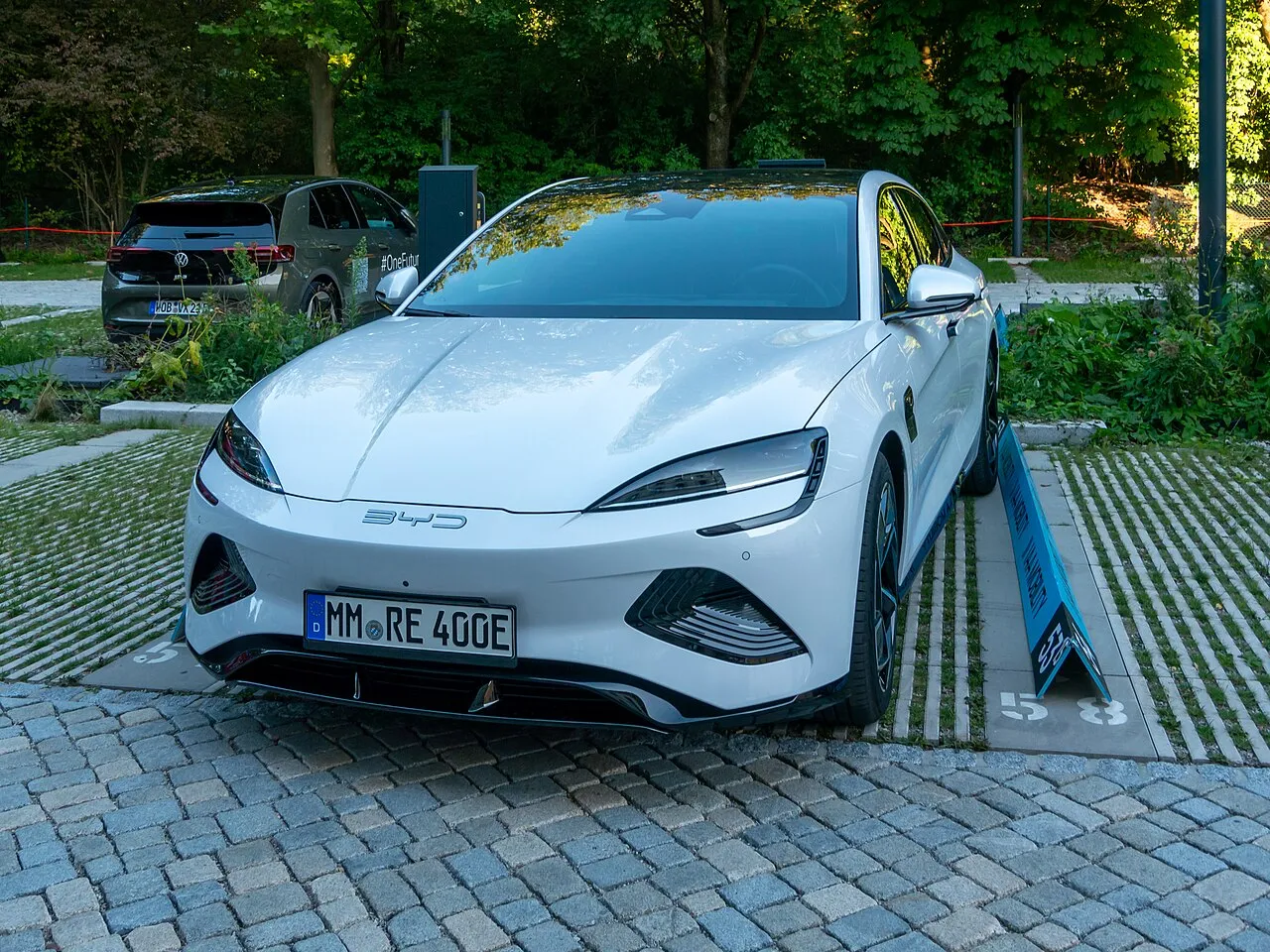
The short answer: Choose the DOLPHIN for a compact hatchback, the ATTO 2 or ATTO 3 for a smaller SUV, the SEAL or HAN for a sedan, and the SEALION 7 or TANG for a larger SUV. Among the 2025 European versions compared here, the SEAL Design RWD has the longest WLTP rating at 580 km, while the SEALION 7 Excellence AWD has the highest peak DC charging rating at 230 kW.
Start with the body style and size you need, then compare versions within that model. The DOLPHIN is the hatchback choice. The ATTO 2 and ATTO 3 are smaller SUVs; the SEAL and HAN are sedans; and the SEALION 7 and TANG are larger SUVs. For longer rated range, the SEAL Design RWD stands out among the 2025 European versions below. For the highest stated peak DC charging power, look at the SEALION 7 Excellence AWD.
These are European-market vehicles with WLTP range ratings. An American shopper should keep that market and test standard attached to every figure: the kilometer ratings are useful for comparing the European versions shown here, but they are not EPA ratings. Charging power is also a vehicle rating, not a promised charging time.
BYD electric models at a glance
The table uses European-market 2025 versions so that every range figure follows the same WLTP test standard. Battery figures show gross capacity followed by usable capacity where the sources distinguish them. Dimensions are length × width × height. Each row credits the source for that version’s figures.
| Model and version | Market and model year | Battery, gross / usable | Rated range and standard | AC / peak DC charging | Size, mm | Source |
|---|---|---|---|---|---|---|
| DOLPHIN Standard | Europe, 2025 | 44.9 / 44 kWh | 340 km WLTP | 7 / 60 kW | 4,290 × 1,770 × 1,550 | OpenEV Data |
| DOLPHIN Design | Europe, 2025 | 63 / 60.4 kWh | 435 km WLTP | 11 / 95 kW | 4,290 × 1,770 × 1,550 | EVDB |
| ATTO 2 Standard | Europe, 2025 | 51.1 / 45.1 kWh | 312 km WLTP | 11 / 65 kW | 4,310 × 1,830 × 1,675 | EVDB |
| ATTO 3 Standard Range | Europe, 2025 | 49.9 / 49.9 kWh | 345 km WLTP | 7 / 70 kW | 4,455 × 1,875 × 1,615 | OpenEV Data |
| ATTO 3 Extended Range | Europe, 2025 | 60.5 / 60.5 kWh | 420 km WLTP | 7 / 88 kW | 4,455 × 1,875 × 1,615 | OpenEV Data and EVDB |
| SEAL Dynamic | Europe, 2025 | 61.4 / 61.4 kWh | 460 km WLTP | 11 / 110 kW | 4,800 × 1,875 × 1,460 | OpenEV Data |
| SEAL Design RWD | Europe, 2025 | 82.5 / 82.5 kWh | 580 km WLTP | 11 / 150 kW | 4,800 × 1,875 × 1,460 | EVDB |
| SEALION 7 Comfort RWD | Europe, 2025 | 71.8 / 69 kWh | 502 km WLTP | 11 / 150 kW | 4,830 × 1,925 × 1,620 | EVDB |
| SEALION 7 Excellence AWD | Europe, 2025 | 91.3 / 87 kWh | 542 km WLTP | 11 / 230 kW | 4,830 × 1,925 × 1,620 | EVDB |
| HAN Ev | Europe, 2025 | 85.4 / 83 kWh | 521 km WLTP | 11 / 120 kW | 4,995 × 1,910 × 1,495 | EVDB |
| TANG Ev AWD | Europe, 2025 | 108.8 / 104 kWh | 530 km WLTP | 11 / 170 kW | 4,970 × 1,955 × 1,745 | EVDB |
Which BYD makes sense for a smaller vehicle?
The DOLPHIN has the shortest body among the models in the table, at 4,290 mm long. Its hatchback shape also separates it from the SUVs and sedans. The version matters: OpenEV Data gives the 2025 European Standard a 44 kWh usable battery and 340 km WLTP rating, while EVDB gives the 2025 European Design a 60.4 kWh usable battery and 435 km WLTP rating. Both have the same exterior dimensions in their respective source figures, so the Design’s principal advantage in this comparison is its longer rated range. Its 11 kW AC and 95 kW peak DC ratings also exceed the Standard’s 7 kW and 60 kW ratings.
For a compact SUV shape, the ATTO 2 Standard is close to the DOLPHIN in length but taller and wider. EVDB puts the 2025 European ATTO 2 Standard at 4,310 mm long, 1,830 mm wide and 1,675 mm tall, with 312 km of WLTP range. That makes body shape and exterior proportions the reasons to consider it alongside the DOLPHIN; its WLTP rating is lower than either DOLPHIN version in the table. Dimensions describe the outside of a vehicle, however, and cannot establish how much usable passenger or cargo space each has.
The ATTO 3 is the next step in exterior length. OpenEV Data gives both 2025 European versions a length of 4,455 mm. The Standard Range has a 345 km WLTP rating and the Extended Range has a 420 km WLTP rating. Their stated peak DC charging powers also differ, at 70 kW and 88 kW respectively. If the ATTO 3’s size suits you, choose between those versions by deciding how much the additional rated range matters to your trips.
Which model offers the longer rated range?
Among the 2025 European versions in the table, EVDB’s SEAL Design RWD has the highest WLTP figure: 580 km. Its 82.5 kWh usable battery is larger than the DOLPHIN Design’s 60.4 kWh and the ATTO 3 Extended Range’s 60.5 kWh. This is a choice for someone who wants a sedan and places a high priority on rated range, with the understanding that the SEAL is substantially longer than either smaller model.
The SEAL range also shows why a model name alone is insufficient. OpenEV Data gives the 2025 European SEAL Dynamic a 61.4 kWh usable battery and 460 km WLTP rating. EVDB rates the 2025 European SEAL Excellence at 530 km WLTP, despite its 82.5 kWh usable capacity matching the Design RWD’s stated usable capacity. The Excellence has a 390 kW power rating and a 3.8-second zero-to-100-km/h figure, while EVDB gives the Design RWD 230 kW and 5.9 seconds. A shopper prioritizing the longest WLTP rating would therefore pick the Design RWD from those versions; a shopper prioritizing the stated acceleration figure would look at the Excellence.
EVDB also gives the 2026 European SEAL Design RWD a 590 km WLTP rating. Keep its model year attached to that number when comparing it with the 2025 Design RWD’s 580 km WLTP rating. In either case, these remain European WLTP figures rather than estimates of an American EPA rating.
How do the larger BYD SUVs compare?
The SEALION 7 offers two distinct 2025 European choices in EVDB’s figures. The Comfort RWD has 69 kWh usable capacity, 502 km WLTP range and a 150 kW peak DC rating. The Excellence AWD increases those figures to 87 kWh usable, 542 km WLTP and 230 kW peak DC. Both have the same stated exterior dimensions: 4,830 mm long, 1,925 mm wide and 1,620 mm tall. The Excellence adds rated range and a higher charging peak without changing the dimensions shown here.
The TANG Ev AWD is longer, wider and taller than the SEALION 7 in EVDB’s 2025 European figures. Its 104 kWh usable battery is the largest in the table, yet its 530 km WLTP rating is below the SEALION 7 Excellence AWD’s 542 km WLTP rating. Battery capacity alone therefore does not tell a shopper which version has the higher rated range. EVDB gives the TANG a 170 kW peak DC rating, between the two SEALION 7 versions’ peaks. Choose between these SUVs first by their exterior size and the version-specific range and charging figures that matter to you.
What should you make of the sedans?
The SEAL and HAN occupy different points in the size comparison. EVDB puts the 2025 European HAN Ev at 4,995 mm long, compared with 4,800 mm for the 2025 European SEAL Design RWD. The HAN Ev’s 521 km WLTP rating and 120 kW peak DC rating are below the SEAL Design RWD’s 580 km WLTP and 150 kW figures. The larger exterior does not, by itself, mean a longer rated driving range.
There are also different HAN versions to distinguish. OpenEV Data gives the 2025 European HAN Flagship a 521 km WLTP rating, the same WLTP figure EVDB gives the 2025 European HAN Ev, but the two sources report different usable battery capacities and AC charging ratings for those named versions. Keep the trim and source with each figure rather than treating every HAN as having identical charging and battery characteristics.
How should you read the charging and battery figures?
AC charging and peak DC charging answer different questions. The AC figure is the vehicle’s stated AC power rating; the peak DC figure is its stated maximum DC power. For example, EVDB rates the 2025 European SEALION 7 Excellence AWD at 11 kW AC and 230 kW peak DC. Neither figure says how long a charging stop will take. A peak is a maximum rating, so it should not be treated as the power sustained throughout a session.
Gross and usable battery capacity also serve different purposes in a comparison. EVDB reports 91.3 kWh gross and 87 kWh usable for the 2025 European SEALION 7 Excellence AWD. Comparing that version’s usable capacity with another version’s gross capacity would mix two different measures. Read the paired values in the table consistently, and use the WLTP column when the question is rated range.
Finally, market matters as much as model year. OpenEV Data gives the 2025 China-market ATTO 2 Superior a 401 km CLTC rating, while EVDB gives the 2025 European ATTO 2 Standard a 312 km WLTP rating. Those are different versions assessed under different standards. The CLTC and WLTP numbers should not be ranked as though they were results from one test. For the same reason, none of the European WLTP ratings here should be presented as an EPA range for an American buyer.
Frequently asked questions
Which 2025 BYD version in this comparison has the longest rated range?
EVDB rates the 2025 European SEAL Design RWD at 580 km WLTP, the highest WLTP figure among the 2025 European versions compared here.
Which BYD version has the highest peak DC charging rating?
EVDB gives the 2025 European SEALION 7 Excellence AWD a 230 kW peak DC charging rating. Peak power does not specify a charging time.
What is the smallest BYD model by exterior length here?
The DOLPHIN is 4,290 mm long in the 2025 European versions shown, according to OpenEV Data and EVDB.
Can the ATTO 2’s China CLTC range be compared directly with its European WLTP range?
No. OpenEV Data’s 401 km CLTC figure is for a 2025 China-market Superior, while EVDB’s 312 km WLTP figure is for a 2025 European Standard. The versions and test standards differ.
Related stories

How to Build a Flexible EV Charging Routine for Work
Build charging around the miles you need for your next drive, using home, work, or public charging as your schedule allows. Keep a practical buffer.

How to Check EV Charger Plug Compatibility Before a Trip
Match your EV’s connector and charging limits to each route stop. Learn what charger labels mean, when an adapter may work, and what to confirm before you leave.

How to Estimate Electric Car Range While Towing
Estimate towing range from your vehicle’s normal range, then adjust for trailer shape, speed, weather and hills. Use the result to plan charging stops.