Ford's Next Electric Pickup Adopts Three Cybertruck Ideas
Ford's planned electric pickup uses 48-volt power, large castings and fewer computers as Cybertruck sales fall, according to Torque News.
The short answer: According to Torque News, Ford's electric pickup planned for late 2027 will use a 48-volt electrical system, large aluminum castings and five Ford-designed computers. Ford has not confirmed steer-by-wire for the truck.
Ford's planned electric pickup will use three approaches also found in the Tesla Cybertruck: a 48-volt electrical system, large aluminum body castings and a simpler computer architecture, according to Torque News. Ford aims to bring the pickup to market in late 2027 for around $30,000, the outlet reports. For buyers, the connection matters less for how the truck will look than for Ford's plan to reduce parts, wiring and assembly work in an affordable EV.
Torque News reports that Cybertruck sales fell sharply after the pickup's first year on the market and that Tesla is ending production. Its account says one version remains available to order at $109,990. Those claims frame an unusual outcome: ideas used in a pickup with falling sales may still influence how another automaker builds an electric truck at a much lower target price. Ford's planned price and launch remain future targets, while the Cybertruck figures describe the market as Torque News reported it.
Why Ford is using 48 volts
Most vehicles have long used a 12-volt system for equipment such as lights, windows, screens and pumps. Torque News describes the Cybertruck as the first production vehicle in America to use a 48-volt low-voltage system. The benefit is electrical: at the same power, raising voltage from 12 to 48 volts cuts the current needed to roughly one-quarter. Lower current can allow thinner wiring, reducing the amount of copper a vehicle needs.
That change reaches well beyond a dashboard feature. Wiring runs throughout a pickup to serve equipment in the cabin and elsewhere in the vehicle. Reducing the copper required for those runs can help cut weight and cost, two concerns for an electric truck intended to meet an aggressive price target. Torque News reports that Ford's Universal EV platform, announced in February 2026 as the basis for its affordable electric pickup, will also operate at 48 volts.
There is a direct connection between the companies' work on the idea. According to Torque News, Elon Musk sent Tesla's 48-volt design document to other automakers in December 2023, and Ford CEO Jim Farley publicly acknowledged receiving it. The outlet also reports that Alan Clarke, who leads advanced EV development at Ford and previously worked at Tesla, has called 48-volt systems the future of automotive technology. Ford's decision to use 48 volts is confirmed in the outlet's account; the document and personnel links do not, by themselves, establish how Ford developed its system.
Two castings in place of 146 stamped parts
The Cybertruck uses large aluminum castings at the front and rear of its body, according to Torque News. Ford is taking a related approach for its new electric pickup. The outlet reports Ford's comparison with the gasoline-powered Maverick: its front and rear structure uses 146 stamped parts, while the new pickup will replace them with two aluminum castings. Ford calls its approach unicasting.
Replacing many pieces with large castings changes the manufacturing job. A collection of stamped parts has to be made and joined into the finished structure; Ford's plan reduces the number of separate pieces in those areas to two. Torque News connects that reduction to faster, less costly assembly and Ford's roughly $30,000 target. The 146-to-two comparison concerns the front and rear structure of the Maverick and the planned electric pickup, rather than every part of either vehicle's body.
The comparison also shows why the Cybertruck's influence is more specific than its appearance. A buyer would not necessarily see the castings in everyday use, yet the way Ford builds those structures could affect the economics of the truck. Ford is using a manufacturing approach associated with Tesla's pickup while developing a vehicle for a different price point. Whether the planned savings help Ford reach that price will become clearer as the truck approaches launch.
Fewer computers and less wiring
Ford's third confirmed overlap is the way its electric pickup organizes electronics. Torque News describes the Cybertruck as using a zonal architecture, in which a smaller number of computers handle functions near them. Ford's new platform will replace dozens of controllers from outside companies with five computers designed by Ford, according to the outlet. The goal is to simplify a network that otherwise needs many individual controllers connected by extensive wiring.
Ford says the new platform's wiring harness is more than 4,000 feet shorter and 22 pounds lighter than the harness in the Mustang Mach-E, Torque News reports. The Mach-E is the comparison vehicle for those figures; they are not measurements of a Cybertruck harness. Together with the 48-volt system and large castings, the shorter harness illustrates Ford's effort to remove weight and complexity from several parts of the vehicle rather than relying on a single change.
Torque News also says the architecture could make the pickup easier to improve through software updates. That possibility follows from Ford's decision to design the five computers itself and consolidate functions that would otherwise sit across many controllers. The reported wiring reduction is a concrete measure of the platform change. The effect on future updates will depend on how Ford uses that architecture after the pickup reaches customers.
Steering remains a possibility, not a Ford plan
The Cybertruck has steer-by-wire: the steering wheel sends an electronic instruction to turn the front wheels instead of using a physical connection, according to Torque News. The system lets Tesla use a quicker steering ratio, while rear-wheel steering helps the large pickup maneuver in tight spaces. Torque News notes that Lexus also offers steer-by-wire on its RZ electric SUV, so the concept is not exclusive to Tesla.
Its appearance in a future Ford truck is uncertain. Torque News cites an Automotive News report that suppliers are preparing to produce drive-by-wire steering and braking components in Michigan starting in 2027. It also cites The Drive's suggestion that a future F-150, expected around 2028, could use the technology. Neither account amounts to a Ford confirmation. In particular, Torque News does not establish that the affordable electric pickup scheduled for late 2027 will have steer-by-wire.
For prospective buyers, that distinction separates the features Ford has described for its new platform from a potential feature of another truck. Torque News also reports a Rivian job posting for a steering program manager, but a hiring post does not set a launch date or confirm a production application. Steer-by-wire may spread to more vehicles; its use in either Ford pickup discussed here remains unannounced in the outlet's account.
Cybertruck's body has been a different story
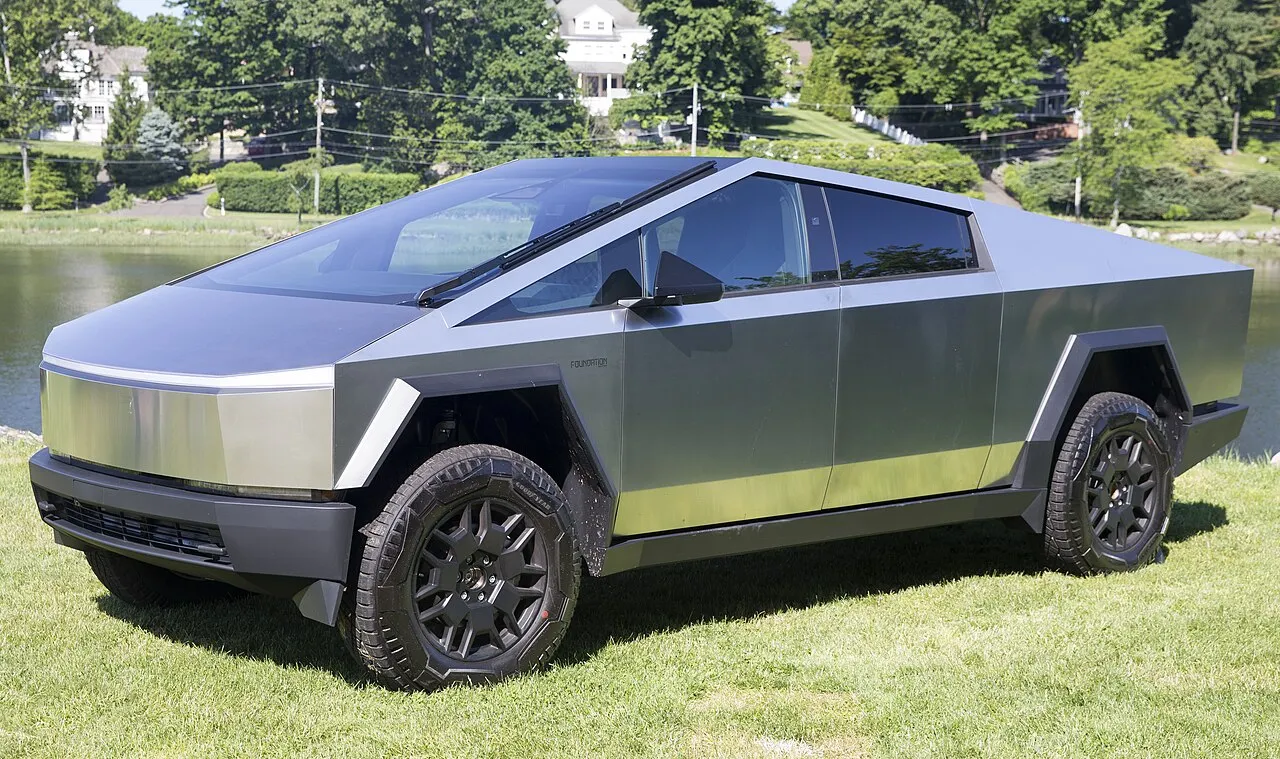
Tesla's stainless steel exterior is the most visible Cybertruck feature in Torque News' account. The outlet describes thick, hard panels that contribute to the vehicle's structure and do not need paint. That material is difficult to stamp into curves like conventional truck sheet metal, helping explain the Cybertruck's flat surfaces and sharp angles. Torque News says it is unaware of another automaker that has announced a stainless steel exoskeleton for a pickup.
Torque News reports that about 39,000 Cybertrucks were sold in 2024, making it America's best-selling electric pickup that year. It puts 2025 sales at 20,237, a drop of almost half. The outlet connects the truck's distinctive design with its limited appeal, although those sales figures alone cannot establish why buyers chose other vehicles. They do show why Ford's adoption of manufacturing and electrical ideas should be considered separately from Tesla's exterior design.
For range context, the US EPA rates the 2026 Cybertruck AWD and Dual Motor AWD at 325 miles, while the 2026 Long Range rear-wheel-drive version with 20-inch Cyber Wheels is rated at 335 miles. Those are US EPA ratings for specific versions, not a range claim for the one version Torque News says remains on the order page. Ford's planned pickup has no range figure in the reported details, so its range cannot yet be compared with those Cybertruck ratings.
The next milestone is Ford's planned late-2027 launch. Its announced platform choices give a concrete indication of how the company intends to pursue a lower-priced electric pickup: fewer structural pieces, less wiring and a consolidated set of computers. The eventual price, production configuration and buyer experience will determine what those choices deliver. For now, Torque News' report identifies three Cybertruck approaches headed for Ford's pickup, while steer-by-wire and a stainless steel exterior remain outside Ford's confirmed plan.
Frequently asked questions
Which Cybertruck ideas will Ford's electric pickup use?
According to Torque News, Ford's planned pickup will use a 48-volt electrical system, large aluminum castings and five Ford-designed computers.
When is Ford's electric pickup expected, and what will it cost?
Torque News reports a planned launch in late 2027 and a target price of around $30,000.
Has Ford confirmed steer-by-wire for the pickup?
No. Torque News discusses the possibility for a future F-150 but reports no Ford confirmation for that truck or the planned electric pickup.
What is the US EPA-rated range of the 2026 Cybertruck?
The US EPA rates the AWD and Dual Motor AWD versions at 325 miles and the Long Range rear-wheel-drive version with 20-inch Cyber Wheels at 335 miles.
Related stories
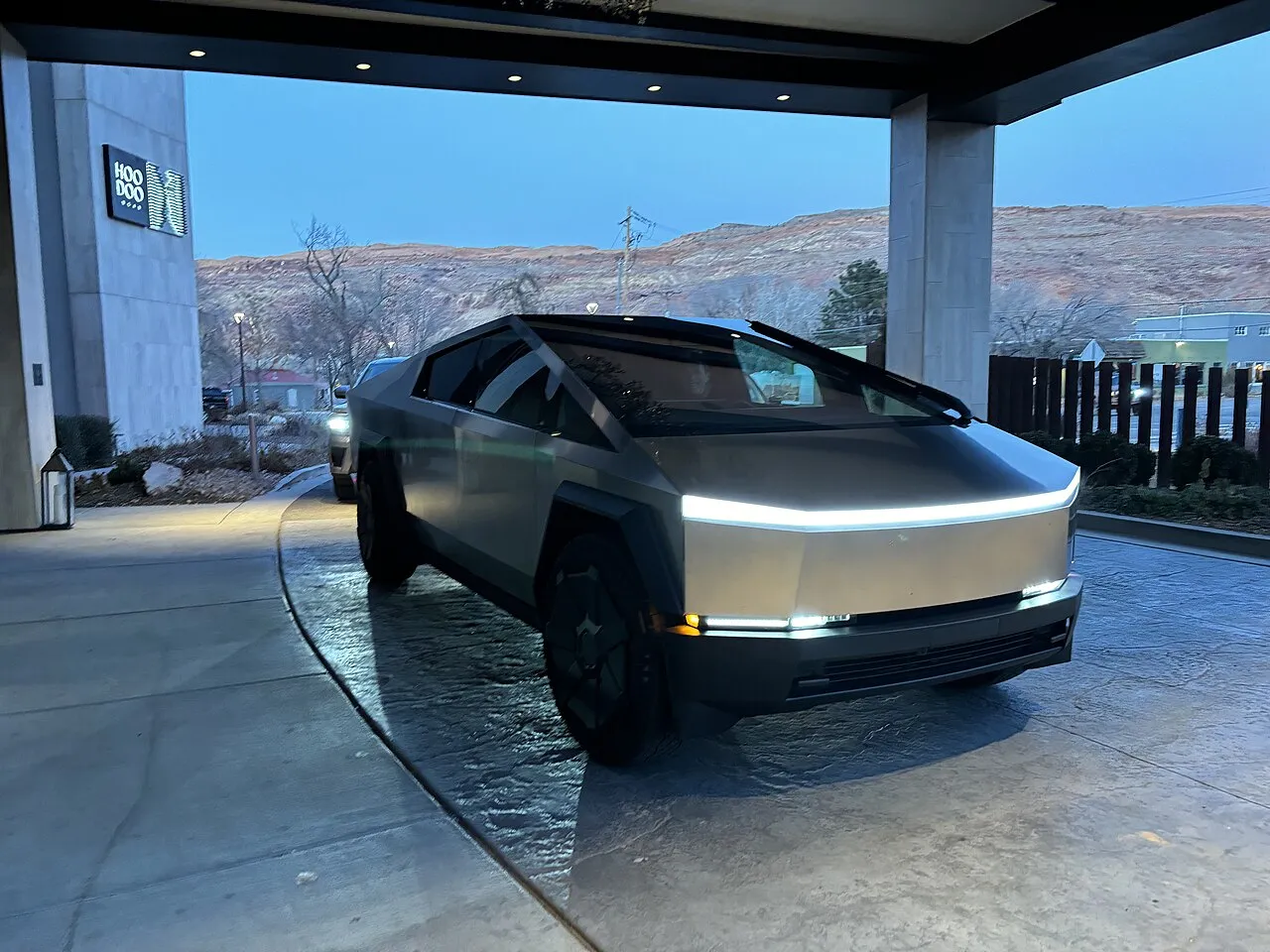
Used Cybertruck Sold Faster Than Other Pickups in October
A used Cybertruck averaged 39.1 days to sell in October, the quickest pace among pickups in an iSeeCars study. The ranking does not show what buyers paid.

Ford Starts LFP Cell Deliveries for Fathom Pickup Prototypes
Ford has begun sending Michigan-made LFP cells to build Fathom pickup prototypes, marking a step toward in-house battery production and a planned 2027 pack plant.

Cybertruck Leads Used Truck Sales as EVs Sell Faster
A study of October used vehicle sales found EVs averaged 45.6 days on the market, with the Cybertruck leading pickups and 16 EVs in the top 25.