Choosing Between the BYD ATTO 3 and Hyundai KONA Electric
Compare the BYD ATTO 3 and Hyundai KONA Electric on parking size, charging and range, with clear limits on what exterior dimensions reveal about space.
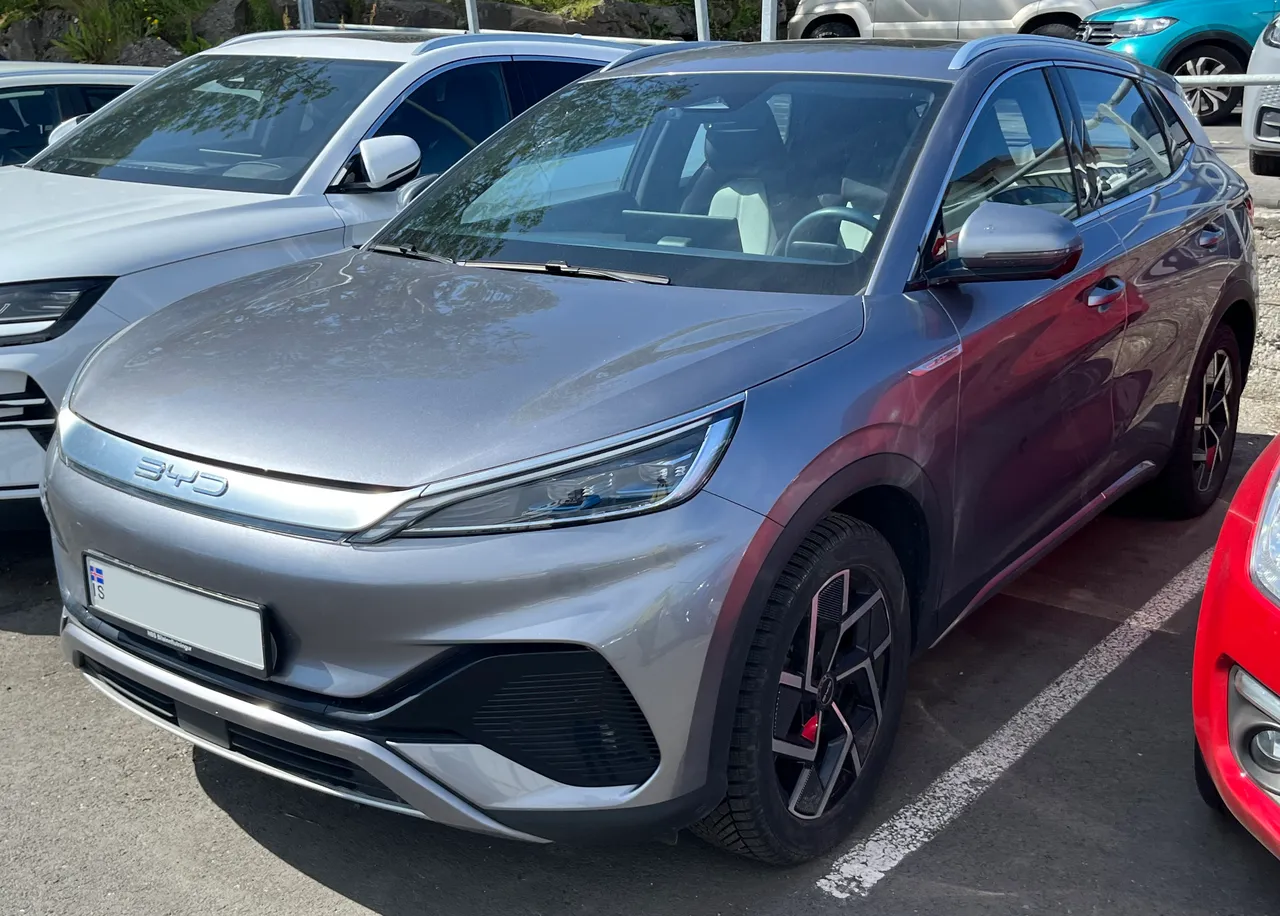
The short answer: The Hyundai KONA Electric has the smaller parking footprint and higher peak charging ratings in the European versions compared here. The BYD ATTO 3 has a longer wheelbase and larger exterior dimensions, but those measurements alone cannot establish which SUV offers better passenger accommodation or more luggage space.
The Hyundai KONA Electric is the stronger starting point for shoppers prioritizing a smaller parking footprint, while the BYD ATTO 3 warrants consideration from buyers comfortable with a larger vehicle. In the European versions compared here, the KONA also has higher AC and peak DC charging ratings. The ATTO 3’s longer wheelbase does not, by itself, establish a passenger-space advantage, and neither vehicle can be declared the luggage-space winner without comparable cargo measurements.
For American readers, market and version distinctions matter throughout this comparison. European dimensions and charging figures describe those European versions. US EPA range ratings describe particular US configurations. A shared model name is not enough to transfer every measurement, charging capability or range result between them.
Dimensions, range and charging at a glance
The European figures below are credited to OpenEV Data and EVDB, except the ATTO 3 Standard Range figures, credited to OpenEV Data. The US wheel-specific ratings and charging times come from US EPA fueleconomy.gov. Each row identifies the market, model year and range test standard. WLTP and EPA apply to range; exterior measurements and charging power are separate technical figures, not results from those range tests.
| Vehicle and version | Market, model year and range standard | Length × width × height; wheelbase | Battery capacity, gross / usable | Rated range | AC / peak DC charging | Level 2 full-charge time | Source |
|---|---|---|---|---|---|---|---|
| BYD ATTO 3 Extended Range | Europe; 2025; WLTP | 4,455 × 1,875 × 1,615 mm; 2,720 mm | 60.5 / 60.5 kWh | 420 km WLTP | 7 / 88 kW | Not published by these sources | OpenEV Data; EVDB |
| BYD ATTO 3 Standard Range | Europe; 2025; WLTP | 4,455 × 1,875 × 1,615 mm; 2,720 mm | 49.9 / 49.9 kWh | 345 km WLTP | 7 / 70 kW | Not published by this source | OpenEV Data |
| Hyundai KONA Electric Long Range | Europe; 2025; WLTP | 4,180 × 1,800 × 1,570 mm; 2,600 mm | 64 / 58 kWh | 484 km WLTP | 7.2 / 100 kW | Not published by these sources | OpenEV Data; EVDB |
| Hyundai KONA Electric Standard Range | Europe; 2025; WLTP | 4,180 × 1,800 × 1,570 mm; 2,600 mm | 39.2 / 36 kWh | 305 km WLTP | 7.2 / 100 kW | Not published by these sources | OpenEV Data; EVDB |
| Hyundai KONA Electric, 17-inch wheels | US; 2025; EPA | Not published in this EPA entry | Not published in this EPA entry | 261 miles EPA | Not published in this EPA entry | 6.7 hours | US EPA fueleconomy.gov |
| Hyundai KONA Electric, 19-inch wheels | US; 2025; EPA | Not published in this EPA entry | Not published in this EPA entry | 230 miles EPA | Not published in this EPA entry | 6.9 hours | US EPA fueleconomy.gov |
Parking: the KONA has the smaller exterior
OpenEV Data and EVDB describe the European 2025 KONA Electric Long Range and Standard Range as shorter, narrower and lower than the European 2025 ATTO 3 versions. That gives the Hyundai a straightforward advantage when the limiting factor is the vehicle’s exterior envelope. Less length leaves more room within a fixed garage or parking space, while less width can make positioning easier.
Exterior width still needs careful interpretation. Mirror clearance and room to open a door are different requirements from fitting the body between painted lines. The measurements above do not establish mirror-to-mirror clearance or how far either vehicle’s doors must open for comfortable entry. A parking decision should account for the driver getting out after the vehicle is positioned.
Length also does not establish maneuverability. Turning circle, steering behavior and visibility affect how easily a vehicle enters a space, but the exterior measurements cannot resolve those questions. The supported conclusion is narrower: the European KONA occupies a smaller footprint. It is not evidence that every parking maneuver will require less effort.
Passenger accommodation: wheelbase is only a clue
The European 2025 ATTO 3 has the longer wheelbase according to OpenEV Data and EVDB. Wheelbase measures the distance between the axles and helps describe a vehicle’s proportions. A longer wheelbase can create opportunities for cabin space, but designers also make decisions about seating position, dashboard depth, seat thickness and the division between passenger and cargo areas.
Consequently, the ATTO 3’s larger exterior should not be translated into a claim of superior rear legroom. Comparable passenger measurements have not been published by the sources credited here. The same limitation applies to headroom: a taller roof outside does not reveal the distance between a passenger’s head and the interior roof lining.
For a household choosing between these SUVs, accommodation means fitting the actual occupants comfortably. Front-seat adjustment affects the space behind it, and a child seat can impose different requirements from an adult passenger. A useful comparison keeps the front seat in the driver’s normal position before assessing rear-seat access and comfort. Neither wheelbase nor overall height can substitute for that check.
Luggage space: no supported capacity winner
Comparable luggage capacities have not been published by the sources credited here, so there is no supported numerical cargo ranking. The ATTO 3’s greater exterior length does not establish how much usable storage sits behind its rear seats. Nor does the KONA’s smaller exterior establish that a particular stroller, suitcase or mobility aid will fail to fit.
Cargo usefulness depends on the shape of the space as well as its volume. The opening, floor shape and available height determine whether a bulky item can be loaded and carried with the seats in their normal position. Folding the rear seats answers a different question from carrying passengers and luggage together.
For buyers whose routine includes bulky equipment, the decisive comparison is whether that equipment fits in the seating arrangement they need. Until comparable cargo measurements are available, neither SUV earns a luggage-space recommendation from exterior size alone.
AC charging: distinguish power from charging time
OpenEV Data and EVDB give the European 2025 KONA Electric versions a slightly higher AC charging rating than the European 2025 ATTO 3 versions. That is a modest power advantage, but it does not establish a universal difference in overnight charging time. Battery capacity, the energy being replaced and the power available from the charging installation all matter.
AC power passes through the vehicle’s onboard charger. A higher-rated wall unit cannot force the vehicle to accept more than its own limit, and a lower-powered installation can prevent it from reaching that limit. For everyday use, the practical question is whether the available charging window can restore the energy used between sessions.
The US EPA’s wheel-specific 2025 KONA entries include Level 2 full-charge times, shown separately in the table. Those times belong to those US configurations. They should not be attached to the European Long Range or Standard Range versions simply because the model name matches. A full-charge time also describes a different task from replenishing a partly depleted battery overnight.
DC charging: the KONA leads on peak power
For the European 2025 versions, OpenEV Data and EVDB credit the KONA with higher peak DC charging power than either ATTO 3 battery option. OpenEV Data also gives the ATTO 3 Extended Range a higher peak than the Standard Range. These ratings distinguish maximum charging capability, but they do not establish the duration of a highway charging stop.
Peak power is the highest rate a vehicle can accept under suitable conditions. Charging power changes as the battery fills and can be affected by battery temperature and the charging station. A useful stop-time comparison requires charging behavior over a comparable portion of the battery, not just the maximum power reached.
Connector compatibility is another market-specific consideration. OpenEV Data and EVDB identify CCS2 for the European versions compared here. American shoppers should confirm the connector and charging capabilities of the particular US vehicle before choosing charging equipment; European connector information does not establish US compatibility.
Which SUV better matches everyday use?
The European KONA has the clearer advantage for a tight parking space and the stronger published peak charging figures. The ATTO 3 offers a larger exterior and longer wheelbase, which make it worth assessing for cabin fit without guaranteeing more usable passenger or luggage room.
Range does not produce a single winner across battery choices. Under WLTP, the European 2025 KONA Long Range exceeds the ATTO 3 Extended Range, while the ATTO 3 Standard Range exceeds the KONA Standard Range. US EPA results must remain a separate comparison. Choose the exact market and battery version first, then weigh its parking footprint, accommodation and charging requirements against the way the vehicle will actually be used.
Frequently asked questions
Which is smaller, the BYD ATTO 3 or Hyundai KONA Electric?
For the European 2025 versions, OpenEV Data and EVDB give the KONA Electric dimensions of 4,180 mm long, 1,800 mm wide and 1,570 mm high. The ATTO 3 measures 4,455 mm long, 1,875 mm wide and 1,615 mm high, making the KONA smaller in every exterior dimension compared.
Does the BYD ATTO 3 have more passenger or luggage space?
Its longer wheelbase and larger exterior do not establish that conclusion. Comparable passenger measurements and luggage capacities have not been published by the sources credited here.
Which SUV has the higher DC charging rating?
For Europe’s 2025 versions, OpenEV Data and EVDB credit both KONA Electric battery options with 100 kW peak DC charging. The ATTO 3 Extended Range is rated at 88 kW by OpenEV Data and EVDB, while OpenEV Data rates the Standard Range at 70 kW. Peak power alone does not establish charging-stop duration.
What are the US EPA range ratings for the wheel-specific KONA Electric versions?
US EPA fueleconomy.gov rates the US 2025 KONA Electric with 17-inch wheels at 261 miles and the version with 19-inch wheels at 230 miles. These EPA ratings should be kept separate from European WLTP figures.
Related stories

Choosing an EV That Feels Easy to Place at Low Speeds
Compare accelerator response, sightlines, turning circle and parking aids in the places that matter: tight lots, driveways and slow, confined streets.

How to Build a Flexible EV Charging Routine for Work
Build charging around the miles you need for your next drive, using home, work, or public charging as your schedule allows. Keep a practical buffer.
How to Check EV Charger Plug Compatibility Before a Trip
Match your EV’s connector and charging limits to each route stop. Learn what charger labels mean, when an adapter may work, and what to confirm before you leave.