BYD SEAL vs Tesla Model 3: Which Sedan Fits Your Routine?
Compare BYD SEAL and Tesla Model 3 charging, range and dimensions, with market-specific figures and a clear look at what they mean for everyday ownership.
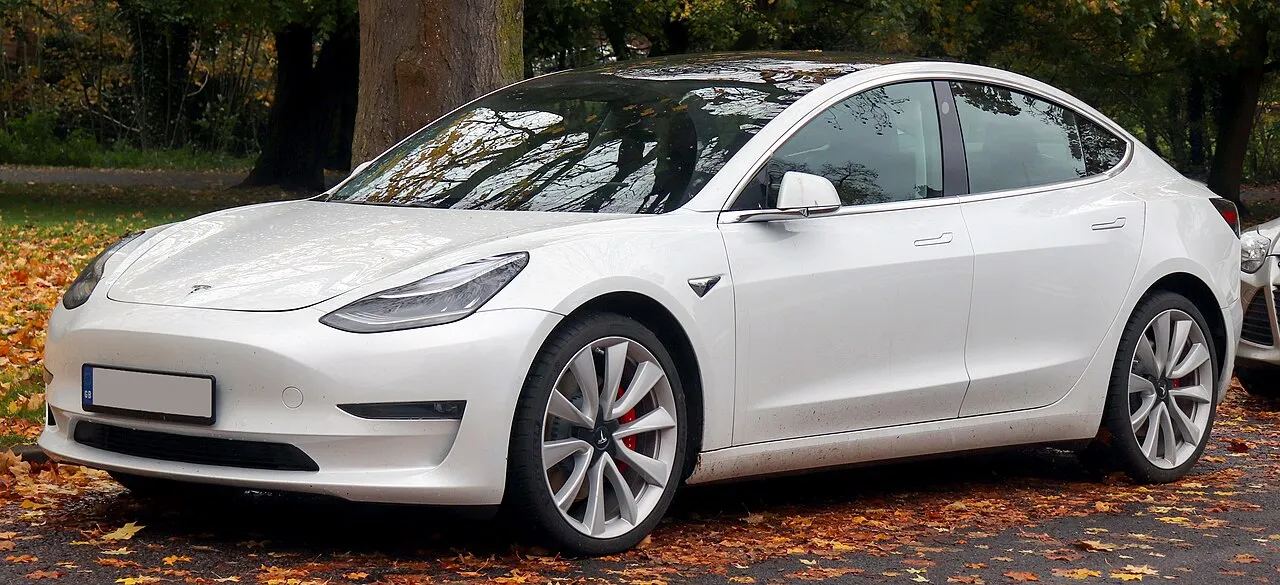
The short answer: For the European versions compared here, the Tesla Model 3 has longer WLTP-rated range, and the Premium AWD has a higher peak DC charging rating than the BYD SEAL Design RWD. Choosing between them still requires checking local charging compatibility and trying the cabin and cargo spaces, because range, charging power and exterior dimensions do not establish everyday usability.
The Tesla Model 3 has the stronger range figures in this European comparison, while its Premium AWD version also has a higher peak DC charging rating than the BYD SEAL Design RWD. Those advantages can matter for travel, but the ownership decision also depends on compatible charging near home and along regular routes. Neither a range rating nor an exterior measurement establishes which sedan has the more convenient controls or storage layout.
For an American shopper, the first distinction is market. US EPA ratings describe US versions of the Model 3; the SEAL figures below describe European versions. European charging hardware, trim names and WLTP range ratings should not be treated as descriptions of a US-market car.
Compare the exact market and version first
EVDB attributes a longer WLTP range to both European Model 3 Premium versions than to the European SEAL Design RWD. Within that comparison, the test standard and model year match. That makes the rated-range comparison more useful than putting a US EPA number beside a European WLTP number and treating the units as the only difference.
The table keeps each figure attached to its market, model year and source. EPA and WLTP identify the range test standard; battery capacity and charging power are separate technical figures, rather than range-test results. A dash means no figure is stated here.
| Vehicle and trim | Market and model year | Rated range and standard | Usable battery | AC / peak DC charging | Level 2 full-charge time | Source |
|---|---|---|---|---|---|---|
| Tesla Model 3 Premium AWD | Europe, 2026 | 691 km, WLTP | 79 kWh | 11.5 kW / 250 kW | — | EVDB |
| Tesla Model 3 Premium RWD | Europe, 2026 | 750 km, WLTP | 79 kWh | — / — | — | EVDB |
| BYD SEAL Design RWD | Europe, 2026 | 590 km, WLTP | 82.5 kWh | 11 kW / 150 kW | — | EVDB |
| BYD SEAL Dynamic | Europe, 2025 | 460 km, WLTP | 61.4 kWh | 11 kW / 110 kW | — | OpenEV Data |
| Tesla Model 3 Premium RWD | US, 2027 | 363 mi, EPA | — | — / — | 11.7 hours, EPA source | US EPA fueleconomy.gov |
The US Model 3 row serves a different purpose from the European comparison: it gives an American buyer a domestic reference. Its EPA range should remain separate from the European WLTP results. Converting kilometers to miles would change the unit, but it would not reconcile the test procedures.
Charging access matters before peak charging power
A charging-power rating describes a vehicle capability. Charging access describes whether an owner can use a particular station. The latter depends on the vehicle’s connector, the station’s compatibility and any network access requirements. A higher peak rating cannot compensate for an incompatible charger or a location that does not fit the journey.
OpenEV Data identifies CCS2 as the connector for the European 2025 SEAL Dynamic. That detail belongs to that version and market. It should not be carried across to every SEAL, or used to infer compatibility with an American charging site. Likewise, a Tesla badge alone is insufficient evidence that a particular vehicle can use every station bearing the same brand.
For shoppers comparing actual cars, the useful check is specific: confirm the charging inlet on the vehicle, then confirm access at the stations that would support ordinary trips. Connector shape, an adapter and network authorization can be separate questions. Resolving them gives the peak-power comparison practical meaning.
Home charging depends on the whole connection
For the European 2026 versions, EVDB gives the Model 3 Premium AWD an AC charging rating of 11.5 kW and the SEAL Design RWD a rating of 11 kW. These are closely matched vehicle-side ratings. They do not mean either car will draw that power from every home charging installation.
AC charging depends on the electricity available at the site, the charging equipment and the vehicle’s onboard charger. The limiting part of that chain sets the available power. A difference between the cars’ maximum AC ratings may therefore have little consequence at a home where the electrical installation limits both vehicles below their respective maximums.
US EPA fueleconomy.gov gives the US 2027 Model 3 Premium RWD a Level 2 full-charge time of 11.7 hours. That is a full-charge reference, not the time every owner must spend plugged in each day. Replacing the energy used during a shorter trip is a different task from replenishing a full battery.
The practical ownership question is whether the available charging window can restore the energy used between plug-ins. Someone with dependable overnight access may place less weight on peak DC power than someone relying on public charging. That distinction follows from the charging routine, rather than the badge.
Peak DC power does not establish stop duration
EVDB gives the European 2026 Model 3 Premium AWD a peak DC charging rating of 250 kW, compared with 150 kW for the European 2026 SEAL Design RWD. The Tesla therefore has the higher stated peak capability in this comparison. Those figures alone do not establish how long either car takes to complete a particular charging stop.
Charging power changes during a session. Battery temperature, starting charge level, the charger’s output and the vehicle’s charging curve all affect the energy added over time. A peak is a maximum point, while a useful stop-time comparison requires performance across the relevant portion of the battery’s charge.
This also makes trim identification important. OpenEV Data gives the European 2025 SEAL Dynamic a peak DC rating of 110 kW. Treating every SEAL as having the Design RWD’s charging capability would obscure a meaningful difference. The same care applies when transferring a charging claim between Model 3 versions.
Battery capacity and rated range answer different questions
According to EVDB, the European 2026 SEAL Design RWD has an LFP battery with 82.5 kWh of usable capacity. The European 2026 Model 3 Premium AWD and Premium RWD use NMC batteries with 79 kWh usable. Despite its larger usable battery, the SEAL has the shorter WLTP-rated range in this group.
That illustrates why battery capacity should not stand in for range. Capacity describes stored energy available for use; rated range reflects how far the vehicle travels under a particular test procedure. Vehicle efficiency also matters. Neither capacity nor chemistry alone establishes real-world range, charging duration or long-term battery condition.
Exterior size cannot settle cabin and storage preferences
EVDB gives the European 2026 SEAL Design RWD a length of 4,800 mm, width of 1,875 mm and wheelbase of 2,920 mm. For both European 2026 Model 3 Premium versions, EVDB gives 4,720 mm, 1,850 mm and 2,875 mm respectively. These dimensional figures are separate from the WLTP range test.
The SEAL is consequently longer and wider in this comparison, with a longer wheelbase. That helps frame parking-space considerations, but it does not establish rear-seat comfort, trunk usefulness or storage accessibility. Seat design, interior packaging and the shape of an opening can matter more to a particular task than exterior size.
Cabin controls require a similarly direct assessment: try the functions used regularly and check whether they are comfortable to operate from the driving position. For storage, try the objects the car must carry. The defensible choice combines those observations with compatible charging and the correct market-specific range figures; the published numbers establish only part of that decision.
Frequently asked questions
Which has the longer rated range, the BYD SEAL or Tesla Model 3?
For Europe’s 2026 versions, EVDB gives the Tesla Model 3 Premium RWD 750 km WLTP and Premium AWD 691 km WLTP, compared with 590 km WLTP for the BYD SEAL Design RWD. These figures should not be treated as equivalent to US EPA ratings.
Which has the higher peak DC charging rating?
EVDB gives the European 2026 Tesla Model 3 Premium AWD a 250 kW peak DC rating and the European 2026 BYD SEAL Design RWD a 150 kW rating. Peak power alone does not establish charging-stop duration.
Does the BYD SEAL have a larger battery?
In EVDB’s European 2026 comparison, the SEAL Design RWD has 82.5 kWh of usable battery capacity, while the Model 3 Premium AWD and Premium RWD each have 79 kWh usable.
Is the BYD SEAL larger than the Tesla Model 3?
EVDB gives the European 2026 SEAL Design RWD greater length, width and wheelbase than the European 2026 Model 3 Premium AWD and Premium RWD. Those exterior dimensions do not establish which has the more useful cabin or cargo layout.
Related stories

How to Confirm EV Charging Access in an Apartment Building
Before buying an EV, confirm who controls your parking space, whether charging is allowed, and what electrical work the building can support.

How to Build a Flexible EV Charging Routine for Work
Build charging around the miles you need for your next drive, using home, work, or public charging as your schedule allows. Keep a practical buffer.

How to Check EV Charger Plug Compatibility Before a Trip
Match your EV’s connector and charging limits to each route stop. Learn what charger labels mean, when an adapter may work, and what to confirm before you leave.