BYD M9 Plug-In Hybrid Takes Aim at Kia Carnival in Australia
BYD’s M9 plug-in hybrid offers Australian families an alternative to the Kia Carnival, with two trims and a Premium model focused on second-row comfort.
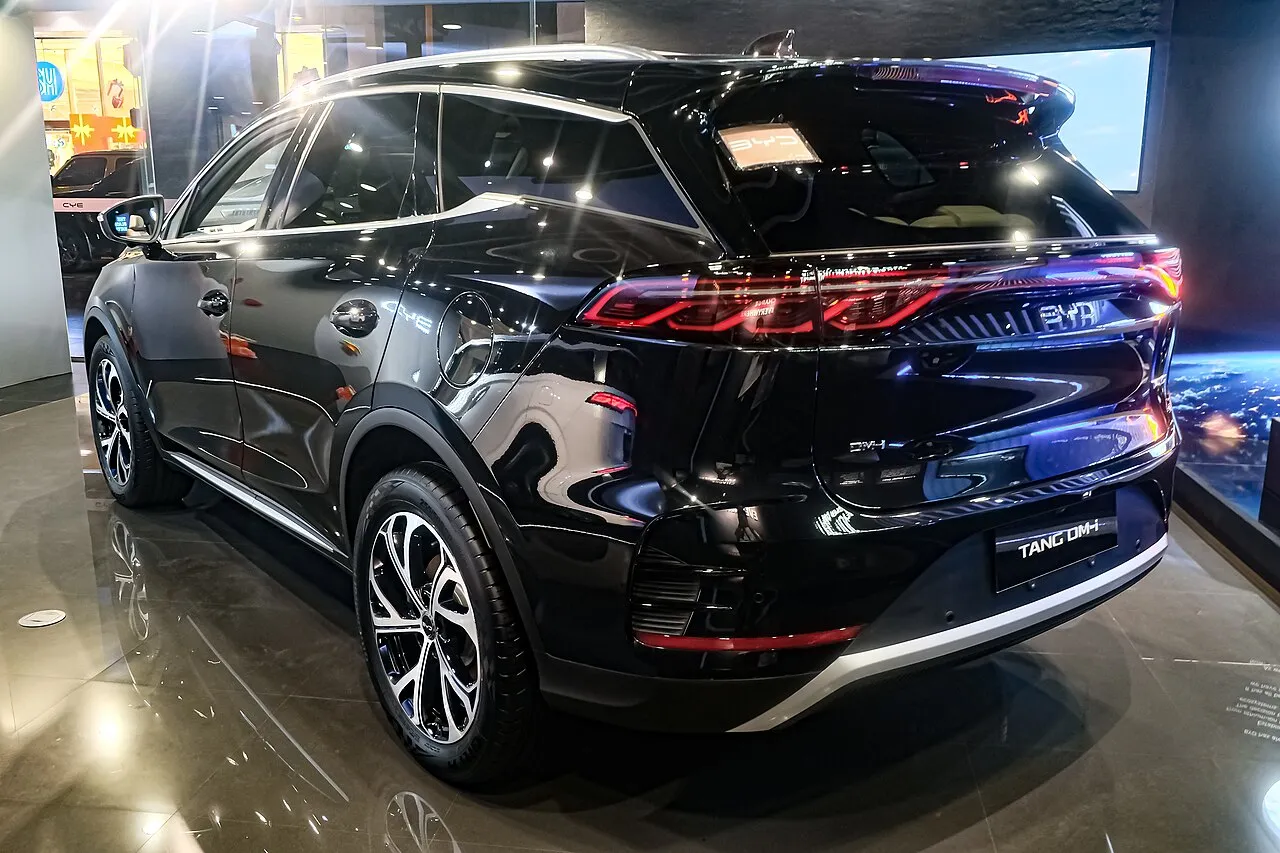
The short answer: The BYD M9 is a three-row plug-in hybrid offered in Australia in Dynamic and Premium trims. According to CarExpert, the Premium costs A$11,000 more and adds a larger battery, greater electric driving range, faster DC charging and more comfort equipment.
BYD’s M9 is entering Australia’s family people-mover market with a plug-in hybrid powertrain and an equipment-heavy Premium trim, offering an alternative to the Kia Carnival. According to CarExpert, both M9 versions can operate on electric power alone, giving buyers a charging option that the Carnival’s conventional hybrid powertrain does not offer.
The Chinese-built M9 comes in Dynamic and Premium trims. CarExpert reports that the Premium costs A$11,000 more than the Dynamic, with the difference covering a larger battery, more electric driving range, faster DC charging and additional cabin equipment. That makes the upgrade a decision about both the plug-in system and passenger comfort.
The positioning matters in a segment where the Carnival is Australia’s best-selling people mover, according to CarExpert. The outlet sees the M9 as a potential challenger, particularly against more expensive Carnival variants. Its assessment was not a direct comparison test, however, so the competitive case rests on the M9’s powertrain, equipment and cabin accommodations.
A plug-in alternative in a varied market
CarExpert reports that Australia’s Kia Carnival hybrid range starts at A$56,310 before on-road costs for a trim aimed at fleet and rental customers. The higher-equipped Carnival HEV GT-Line carries an official price of A$76,840 before on-road costs, although the outlet reports dealer asking prices above A$90,000 for the flagship.
Those prices describe substantially different Carnival offerings. CarExpert considers the M9 Premium more comparable in equipment to the GT-Line than to the entry-level Carnival hybrid. The Kia is an eight-seater, while the M9 Premium’s cabin has two front seats, two individual middle-row seats and three third-row seats.
The Hyundai Staria Lounge HEV is another conventional hybrid alternative, priced in Australia from A$73,740 before on-road costs, according to CarExpert. Like the Carnival hybrid, it has no plug-in option. The M9’s ability to accept external charging is therefore a meaningful distinction from both Korean-brand rivals.
Other plug-in choices already compete for family buyers. CarExpert reports that the Turkish-built Ford Tourneo PHEV starts at A$73,340 before on-road costs and uses the same powertrain as the Transit Custom PHEV commercial van. The Chinese-built GAC M8 PHEV starts at A$76,590 before on-road costs and also emphasizes passenger comfort.
For buyers considering a fully electric people mover, CarExpert identifies the Denza D9 as another option, starting at A$85,990 before on-road costs. It offers front-wheel-drive and all-wheel-drive versions. These are Australian-market prices; they establish the local competitive setting for the M9 rather than US pricing or availability.
Premium adds more than a larger battery
Inside the M9 Premium, the dashboard centers on a 15.6-inch touchscreen with Apple CarPlay, Android Auto and built-in Google Maps, according to CarExpert. Drivers can sign into a Google account to access saved destinations and preferences, or use the mapping system without signing in.
The screen also handles smart charging settings, the cabin’s heating and cooling storage box, suspension adjustments and a surround-view camera system. CarExpert rates the camera system highly, particularly for a vehicle of this size, and notes that less expensive Carnival versions do not all include a 360-degree camera.
Drivers can select Comfort or Sport suspension modes through the display and adjust steering and braking assistance settings. A permanent climate-control panel occupies the bottom of the screen, while shortcuts and a favorites row offer access to frequently used functions. Lane-keeping assistance and driver-monitoring settings are accessible through a drop-down menu.
Physical steering-wheel buttons operate cruise control, media and display functions. A column-mounted gear selector frees space in the center console. Airflow direction, however, is adjusted through the touchscreen rather than conventional manually aimed vents. CarExpert identifies that arrangement as a usability drawback despite the screen’s range of functions.
Storage includes large door bottle holders, a compartment beneath the center console, cupholders and a console bin with a removable tray. There are USB connections and a 12-volt outlet. The heating and cooling box can keep contents warm or cold and has a nearby touch-control panel as an alternative to operating it through the main display.
Second-row comfort is a central attraction
According to CarExpert, the Premium’s leather-trimmed front seats have electric adjustment, heating and ventilation. The driver also gets a massage function, although the front passenger does not. Other features include configurable ambient lighting, illuminated vanity mirrors and a panoramic sunroof.
A digital rearview mirror is also fitted. CarExpert highlights its usefulness when the rear entertainment screen is lowered, since the display otherwise occupies part of the driver’s view toward the back of the cabin. The entertainment equipment is one of several features aimed at passengers beyond the front row.
The Premium’s individual second-row seats offer electric adjustment, heating, ventilation and massage. Climate-control panels mounted on both sliding doors allow rear passengers to adjust temperature, fan speed and airflow. They can also operate the sunroof blind without relying on someone in the front seats.
Each middle-row passenger gets a fold-out tray table, with overhead vents, reading lights and grab handles also fitted. Seat controls concealed within the armrests operate the massage functions and a zero-gravity seating mode. The front passenger seat can move forward to make room for a reclined, lounge-style arrangement behind it.
CarExpert praises the available room to stretch out but identifies a drawback in the glossy, touch-sensitive seat-control panels: fingerprints and glare can make them less pleasant to use. That is a practical qualification to a cabin whose appeal depends heavily on its adjustable seating and electronic controls.
A second 15.6-inch touchscreen serves rear-seat entertainment and can be operated by touch or remote control. According to CarExpert, it supports apps including Amazon Music, Spotify and YouTube, along with karaoke. The rear windows have dark tint, but there are no rear-window sunshades.
Family practicality has some qualifications
The second-row seats have ISOFIX attachment points and top-tether anchors. CarExpert cautions that the top-tether points sit far enough beneath the seats to require an extension strap. That detail matters alongside the more visible comfort features when assessing the M9’s suitability for children.
Access to the third row is through the gap between the middle-row seats. CarExpert describes that walkway as fairly generous, but reports no easy access route created by moving the captain’s chairs out of the way. The arrangement makes the central passage the key route to the rear bench.
CarExpert found the third row spacious, with useful legroom, footroom and headroom even with the second-row seats positioned comfortably. The rear backrests adjust electrically, with independent adjustment on each side. Cupholders, a USB-A charging port and air vents extend passenger amenities to the back row.
Child-seat accommodation is more restricted there: CarExpert reports one ISOFIX position and one top-tether anchor in the third row, rather than mounting provisions across all three seats. The center seat also uses a ceiling-mounted belt. For family buyers, those details sit alongside the M9’s central proposition: plug-in driving capability paired with a Premium cabin that places particular emphasis on its two middle-row passengers.
Frequently asked questions
Is the BYD M9 fully electric?
No. According to CarExpert, the M9 is a plug-in hybrid offered in Dynamic and Premium trims, both capable of electric-only driving.
What does the M9 Premium add over the Dynamic?
CarExpert reports that the Premium costs A$11,000 more in Australia and adds a larger battery, more electric driving range, faster DC charging and additional equipment.
How many seats does the BYD M9 Premium have?
The cabin arrangement described by CarExpert seats seven: two in front, two in individual second-row seats and three in the third row.
Does the M9 Premium support Apple CarPlay and Android Auto?
Yes. According to CarExpert, its 15.6-inch central touchscreen supports both, along with built-in Google Maps.
Where can child seats attach in the M9 Premium?
CarExpert reports ISOFIX points and top-tether anchors in the second row, plus one ISOFIX position and one top-tether anchor in the third row. The outlet cautions that the second-row top-tether locations require an extension strap.
Related stories

GWM Haval H7 PHEV Undercuts Toyota RAV4 PHEV in Australia
GWM’s Haval H7 PHEV pairs a lower Australian starting price with more power and claimed electric range, while Toyota counters with safety features and fuel economy.
Updated Volvo XC60 PHEV Claims Up to 124 Miles of EV Range
Volvo’s updated XC60 plug-in hybrid pairs a 37.9-kWh battery with claimed electric range of up to 124 miles, while retaining a gasoline engine.
2028 Volvo XC60 T8 Gets 78 Miles of EPA Electric Range
Volvo’s updated XC60 T8 pairs a 37.9-kWh battery with 455 hp and 78 miles of EPA electric range, extending the life of its aging plug-in hybrid SUV.