BYD DOLPHIN vs Volkswagen ID.3: Size and Charging
Compare the European BYD DOLPHIN and Volkswagen ID.3 on size, WLTP range and charging, with a clear look at what the published figures cannot tell shoppers.
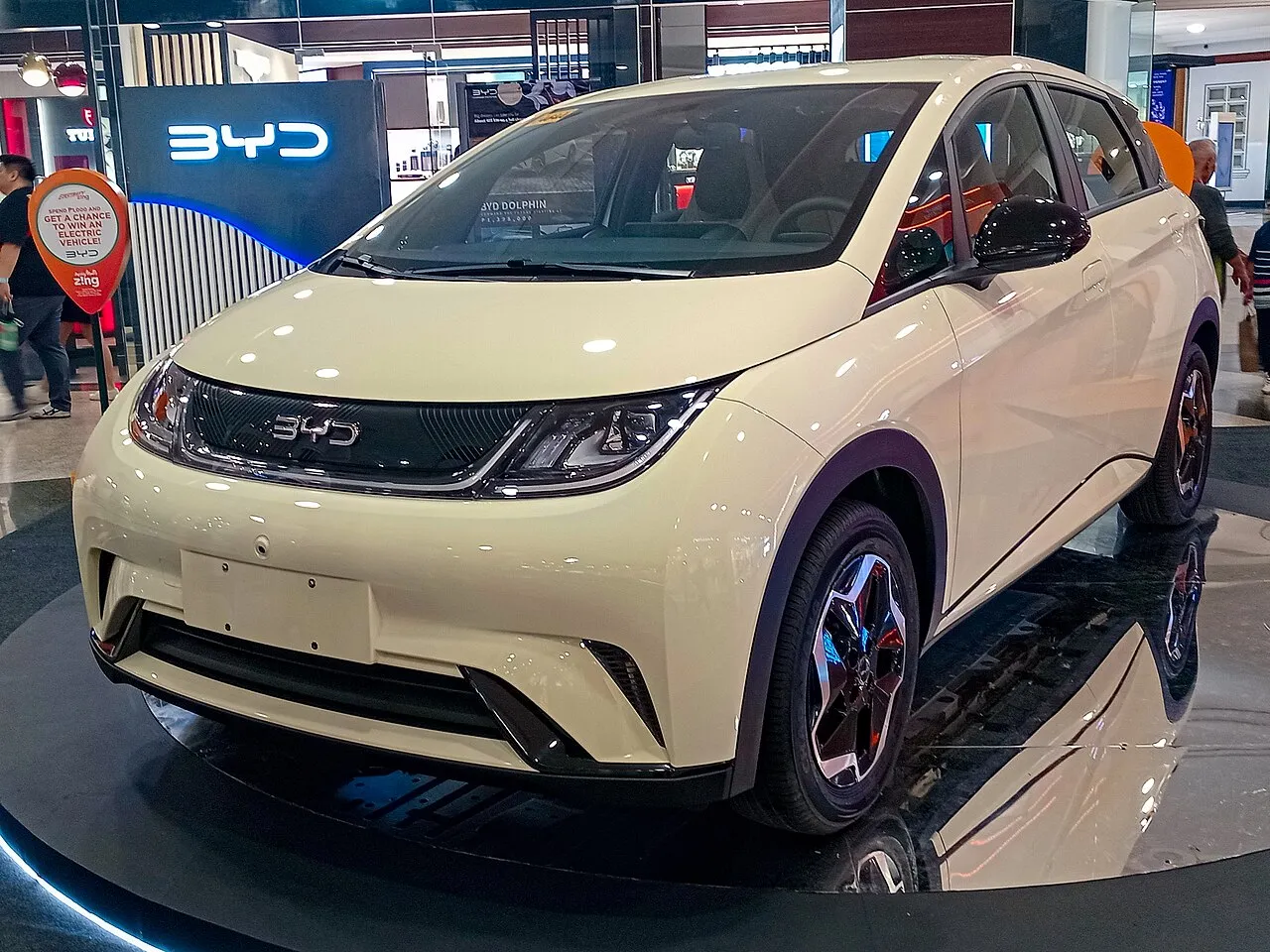
The short answer: The 2025 European DOLPHIN and ID.3 are close in exterior size, but the ID.3 offers higher peak DC charging power across these versions. Choose by trim and charging needs; cargo volume has not been published for these versions.
The Volkswagen ID.3 is the stronger choice here if higher peak DC charging power or a longer WLTP-rated range is the priority. The BYD DOLPHIN offers a similarly sized exterior, and its Design and Premium Extended Range trims have WLTP ratings close to the ID.3 Pro. Cargo volume has not been published for these versions, so neither car can be called the more useful luggage carrier from the figures here. These are 2025 European-market versions: their WLTP ratings and CCS2 charging details should be read in that context by American shoppers.
How the versions compare
The table combines figures credited to OpenEV Data and EVDB. Every vehicle figure refers to a 2025 European-market version. Range is rated under WLTP; battery capacity, dimensions and charging power are vehicle figures, rather than WLTP test results. Usable battery capacity describes the portion available for driving, while gross capacity describes the larger total. Charging figures distinguish AC power from peak DC power.
| 2025 Europe version and source | Exterior size and wheelbase, mm | Battery, gross / usable kWh | WLTP rated range | AC / peak DC charging, kW |
|---|---|---|---|---|
| BYD DOLPHIN Boost — OpenEV Data | 4,290 L × 1,770 W × 1,550 H; 2,700 wheelbase | 44.9 / 44 | 310 km WLTP | 7 / 60 |
| BYD DOLPHIN Design — EVDB | 4,290 L × 1,770 W × 1,550 H; 2,700 wheelbase | 63 / 60.4 | 435 km WLTP | 11 / 95 |
| BYD DOLPHIN Premium Extended Range — OpenEV Data | 4,290 L × 1,770 W × 1,550 H; 2,700 wheelbase | 60.5 / 60 | 427 km WLTP | 11 / 88 |
| BYD DOLPHIN Standard — OpenEV Data | 4,290 L × 1,770 W × 1,550 H; 2,700 wheelbase | 44.9 / 44 | 340 km WLTP | 7 / 60 |
| Volkswagen ID.3 GTX — OpenEV Data and EVDB | 4,261 L × 1,809 W × 1,552 H; 2,765 wheelbase | 82 / 77 | 600 km WLTP | 11 / 175 |
| Volkswagen ID.3 Pro — OpenEV Data and EVDB | 4,261 L × 1,809 W × 1,552 H; 2,765 wheelbase | 62 / 58 | 428 km WLTP | 11 / 135 |
| Volkswagen ID.3 Pro S — OpenEV Data and EVDB | 4,261 L × 1,809 W × 1,552 H; 2,765 wheelbase | 82 / 77 | 559 km WLTP | 11 / 135 |
Exterior size: close overall, with different proportions
OpenEV Data and EVDB give each DOLPHIN version in the table the same exterior measurements: 4,290 mm long, 1,770 mm wide and 1,550 mm high, with a 2,700 mm wheelbase. They give each ID.3 version dimensions of 4,261 mm long, 1,809 mm wide and 1,552 mm high, with a 2,765 mm wheelbase. The DOLPHIN is slightly longer, while the ID.3 is wider and has the longer wheelbase. Their published heights are nearly the same.
For a narrow parking space or garage, width may matter more than the small difference in length. For passengers, a longer wheelbase can create room between the axles, but it does not establish how much knee room either car has. Seat design and cabin packaging also matter. Likewise, exterior height alone cannot settle headroom. Treat these measurements as a way to identify which vehicle may fit a physical space, then check the actual cabin and the clearance needed to open its doors and hatch.
Cargo space: the unresolved hatchback question
Cargo volume has not been published for the versions compared here. That prevents a reliable comparison of trunk capacity or maximum space with the rear seats folded. It also means the similar exterior sizes should not be used as a shortcut to declare a winner for luggage. The shape of the load opening, the height of the cargo floor and how the rear seats fold can change whether a particular item fits, even when two cars occupy similar space on the road.
For a shopper who routinely carries a stroller, large suitcase or bulky equipment, a measurement in the same units and under the same cargo-space convention would be a useful next step. A hands-on fit check with the item itself answers a different question: whether it can pass through the hatch and sit where needed. Until comparable cargo figures are available, the defensible conclusion is simply that this part of the DOLPHIN–ID.3 decision remains open.
What the WLTP range figures reveal
All the range ratings in the table use WLTP, so they can be compared as ratings under one test standard. OpenEV Data gives the DOLPHIN Standard 340 km WLTP and Boost 310 km WLTP, despite both having 44 kWh of usable battery capacity. That difference is a reminder to compare complete trims, not battery size alone. EVDB gives the DOLPHIN Design 435 km WLTP; OpenEV Data gives the Premium Extended Range 427 km WLTP. Their battery capacities and charging figures also differ, so those two names should not be treated as interchangeable.
OpenEV Data and EVDB give the ID.3 Pro 428 km WLTP, Pro S 559 km WLTP and GTX 600 km WLTP. The Pro sits close to the DOLPHIN Design and Premium Extended Range on this measure. The Pro S and GTX carry 77 kWh of usable capacity and have substantially higher WLTP ratings than the DOLPHIN versions here. The GTX also has a different drive layout: OpenEV Data and EVDB identify it as all-wheel drive, while the Pro and Pro S are rear-wheel drive. OpenEV Data identifies the DOLPHIN Standard, Boost and Premium Extended Range as front-wheel drive.
WLTP is a useful common basis for comparing these European versions, but a rating is not a promise of distance on a particular trip. Speed, weather, terrain and cabin heating or cooling affect energy use. An American reader should also avoid reading a WLTP distance as an EPA rating. No EPA rating appears in this comparison, so it cannot establish how these cars would rank under that different test standard.
AC charging at home and DC charging on trips
For AC charging, OpenEV Data gives the DOLPHIN Standard and Boost a 7 kW rating and the Premium Extended Range an 11 kW rating; EVDB gives the Design an 11 kW rating. OpenEV Data and EVDB give every ID.3 version in the table an 11 kW AC rating. A higher onboard AC rating can matter when a suitable AC charger is available, but the car cannot draw more than the equipment and electrical supply can deliver. Where the available charging power is lower, the difference between a 7 kW and an 11 kW car may have little practical effect.
At a DC fast charger, the distinction is larger. OpenEV Data gives the DOLPHIN Standard and Boost 60 kW peak DC charging, and the Premium Extended Range 88 kW; EVDB gives the Design 95 kW. OpenEV Data and EVDB give the ID.3 Pro and Pro S 135 kW and the GTX 175 kW. Those are peak power figures, not sustained charging rates or complete charging-session times. Battery temperature, state of charge and the charger itself influence how power changes during a stop. The figures favor the ID.3 for peak capability, but they do not establish a time saving for a particular route.
Connector fit also deserves a separate check. OpenEV Data identifies CCS2 for the DOLPHIN Standard, Boost and Premium Extended Range. OpenEV Data and EVDB identify CCS2 for the ID.3 GTX, Pro and Pro S. A connector is not identified here for the DOLPHIN Design. These are European-market charging details; an American shopper should verify the connector and charging access of the exact vehicle under consideration before planning around local chargers.
Which hatchback fits which priority?
Choose among the named trims before choosing between the badges. If the main goal is the highest WLTP rating or the highest peak DC charging power in this group, the ID.3 GTX leads both measures according to OpenEV Data and EVDB. The Pro S offers a higher WLTP rating than the Pro while sharing its 135 kW peak DC figure. For a comparison centered on similar WLTP ratings, look at the ID.3 Pro alongside the DOLPHIN Design and Premium Extended Range, then consider their different AC and peak DC charging ratings.
If the decision turns on parking width, the published exterior measurements favor the narrower DOLPHIN. If it turns on cargo or rear-seat usefulness, the figures here cannot settle it. That leaves a straightforward shopping sequence: identify the exact European trim, compare its WLTP and charging figures under the labels above, then confirm cabin fit, luggage fit and charger compatibility for the car and location in question.
Frequently asked questions
Which has the higher WLTP-rated range, the DOLPHIN or the ID.3?
It depends on trim. OpenEV Data and EVDB give the 2025 European ID.3 GTX 600 km WLTP, the highest rating here. The ID.3 Pro has 428 km WLTP, close to the DOLPHIN Design at 435 km WLTP according to EVDB.
Which is wider, the BYD DOLPHIN or Volkswagen ID.3?
For the 2025 European versions compared, OpenEV Data and EVDB give the ID.3 a width of 1,809 mm and the DOLPHIN a width of 1,770 mm.
Which car has more cargo space?
Cargo volume has not been published for these versions, so their luggage capacity cannot be ranked from these figures.
Which supports higher peak DC charging power?
The ID.3 versions do. OpenEV Data and EVDB give the 2025 European ID.3 Pro and Pro S 135 kW and the GTX 175 kW, while the DOLPHIN versions range from 60 to 95 kW according to OpenEV Data and EVDB. Peak power does not establish total charging time.
Related stories

How to Build a Flexible EV Charging Routine for Work
Build charging around the miles you need for your next drive, using home, work, or public charging as your schedule allows. Keep a practical buffer.

How to Check EV Charger Plug Compatibility Before a Trip
Match your EV’s connector and charging limits to each route stop. Learn what charger labels mean, when an adapter may work, and what to confirm before you leave.

How to Estimate Electric Car Range While Towing
Estimate towing range from your vehicle’s normal range, then adjust for trailer shape, speed, weather and hills. Use the result to plan charging stops.